
TL;DR
- Fleas appear exclusively on villagers between April-November (North) or November-May (South)
- Use precise net positioning to avoid triggering conversations while catching fleas
- Check all villagers daily and watch for visual indicators like hopping black dots
- Villagers express gratitude when cured rather than showing net-hit annoyance
- Fleas contribute to museum completion and can be sold for 70 Bells each
When villagers in Animal Crossing: New Horizons start scratching incessantly, they’re signaling a unique opportunity for bug collectors. This common behavior indicates flea infestation, presenting one of the game’s more challenging insect capture scenarios that requires specific knowledge and timing.
Among the 80 available insect species in New Horizons, fleas belong to the exclusive category requiring special conditions for appearance, similar to ants attracted by rotten food or flies drawn to trash. While most insects roam freely across your island—fluttering near flowers, scaling tree trunks, hiding beneath rocks, or even navigating waterways—fleas operate differently. These pests don’t appear in open environments but instead parasitize your animal neighbors, making them substantially more elusive than typical bugs.
Fleas currently maintain year-round activity across both hemispheres with alternating seasonal patterns. Northern Hemisphere players can encounter them from April through November, while Southern Hemisphere residents face flea infestations from November until May. This seasonal rotation means one hemisphere always has access while the other experiences a temporary reprieve.
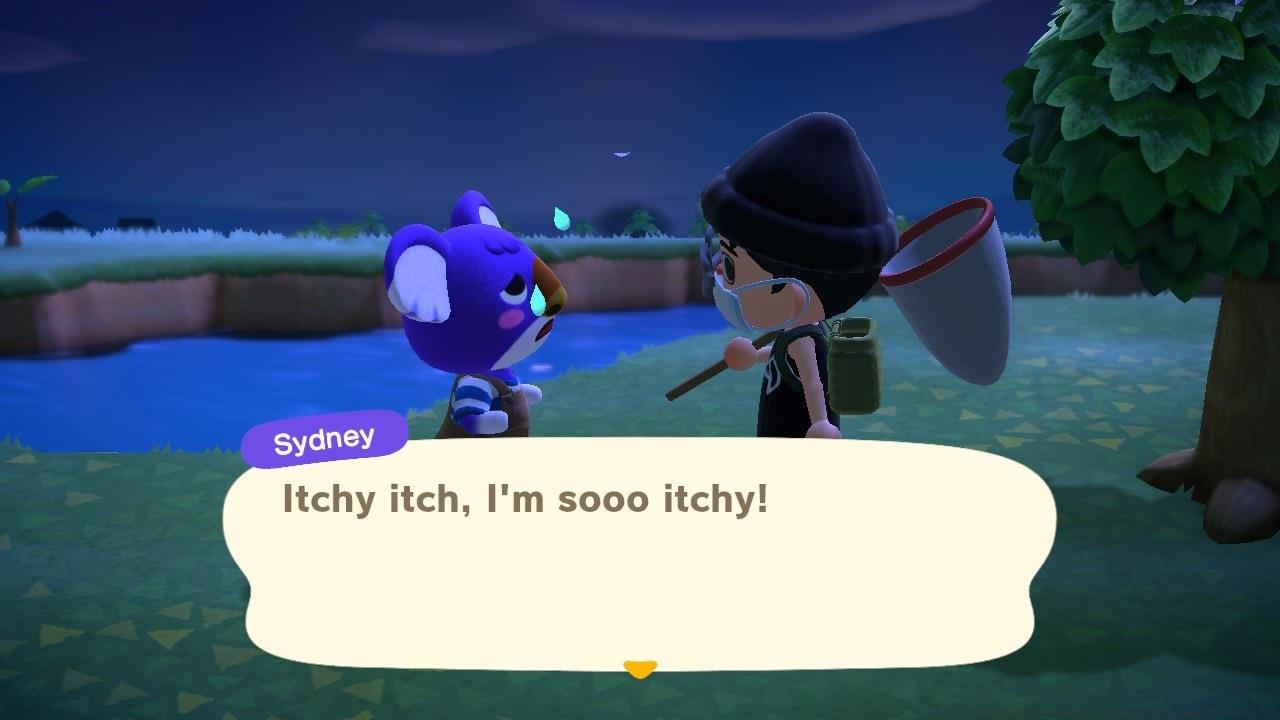
Visual identification is crucial—watch for tiny dark specks jumping around villagers who frequently scratch themselves.
The singular method for acquiring fleas involves extracting them directly from afflicted villagers’ fur. Regular interaction with island residents becomes essential—daily conversations not only strengthen relationships but also serve as your primary detection method for flea outbreaks.
Before initiating dialogue, observant players might detect miniature ebony particles leaping around a villager’s head and shoulders. These visual cues provide advance warning of infestation before the character verbally complains about itching sensations.
Success requires careful net handling rather than brute force. Position yourself at optimal distance—close enough for accurate targeting but far enough to prevent automatic conversation triggers. If you accidentally engage in dialogue, rest assured the fleas remain in place awaiting your capture attempt.
Unlike standard net interactions that typically irritate villagers, eliminating fleas generates appreciation. Characters will thank you for removing what they describe as a “curse,” providing both satisfaction and completion credit toward your insect collection.
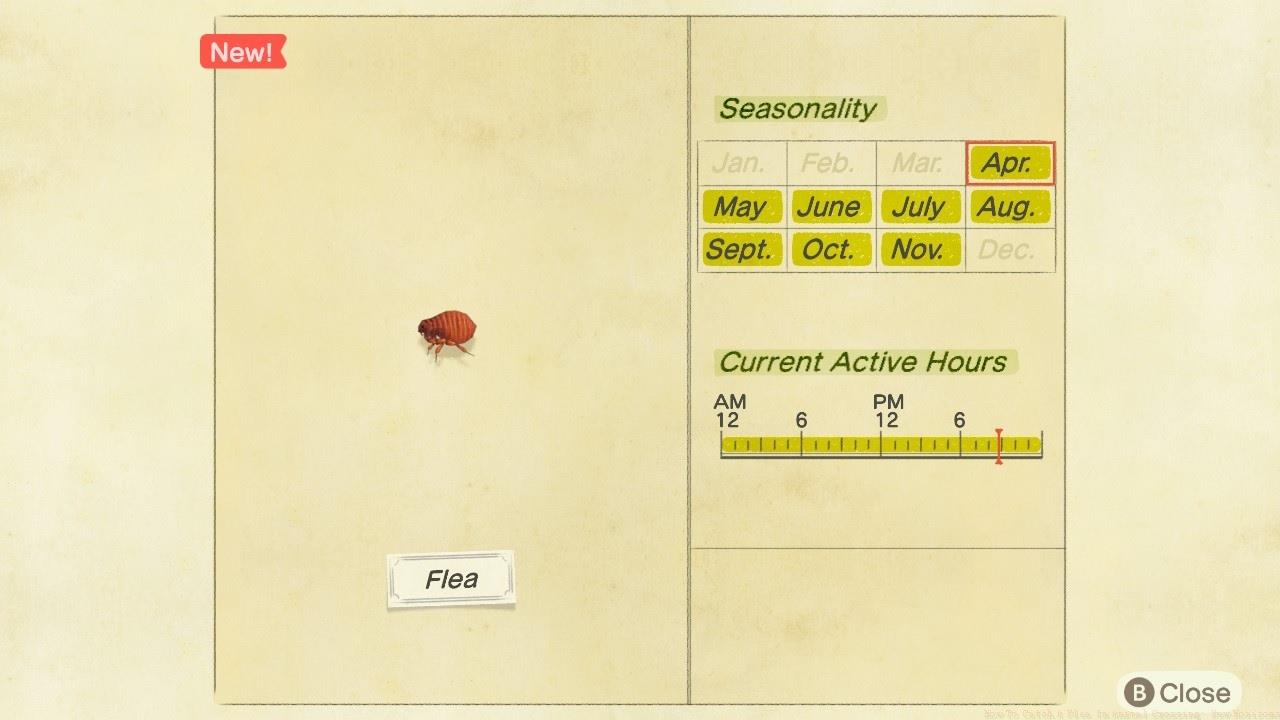
The captured flea displays distinctive characteristics that differentiate it from other insects in your collection.
Fleas maintain all-day availability whenever villagers are active outdoors, but their seasonal nature imposes strict temporal constraints. Current April conditions permit Northern Hemisphere captures through November, while Southern Hemisphere players must act before May concludes.
Reference the comprehensive monthly availability chart below for both hemispheres:
- Northern Hemisphere: April, May, June, July, August, September, October, November
- Southern Hemisphere: November, December, January, February, March, April, May
Once captured, fleas serve multiple purposes within your New Horizons experience. They contribute to Blathers’ museum collection when donated, complete your Critterpedia catalog, and can be sold to Nook’s Cranny for 70 Bells each. While not the most valuable insect, their rarity makes them worthwhile additions to any collection.
Many players struggle with timing and positioning—the most frequent error involves standing too close and triggering unwanted conversations. Maintain approximately two character lengths distance when swinging your net to avoid this frustration.
Advanced strategies include creating a daily villager inspection routine. Systematically check each resident during morning rounds, paying particular attention to visual flea indicators before initiating dialogue. This method maximizes detection efficiency while minimizing time investment.
Seasonal awareness proves critical—mark your in-game calendar for hemisphere-specific start and end dates. Southern Hemisphere players should prioritize flea hunting during their limited November-May window, while Northern Hemisphere enthusiasts have more flexible April-November opportunities.
For comprehensive gaming strategies beyond insect collection, explore our Complete Guide to master other gaming domains. Understanding seasonal patterns and character interactions in Animal Crossing can enhance your approach to various gaming scenarios.
Action Checklist
- Conduct daily villager inspections during morning hours
- Scan for visual indicators (hopping black dots) before conversations
- Position net at optimal distance (2 character lengths) before swinging
- Donate first flea to museum, sell duplicates for 70 Bells each
No reproduction without permission:SeeYouSoon Game Club » How To Catch A Flea In Animal Crossing: New Horizons Master flea catching in Animal Crossing with seasonal timing, villager interactions, and expert techniques