
TL;DR
- House selection occurs early after the Sorting Ceremony and affects your entire gameplay experience
- Each House represents distinct core values: Daring (Gryffindor), Ambition (Slytherin), Curiosity (Ravenclaw), Loyalty (Hufflepuff)
- Common rooms vary dramatically in location, from dungeons to towers, each with unique aesthetics
- Exclusive quests and narrative branches are tied to your chosen House affiliation
- Wizarding World quiz integration allows for personalized sorting recommendations
Making your House selection in Hogwarts Legacy represents one of the most impactful early-game decisions you’ll encounter. This crucial choice unfolds shortly after completing the initial tutorial sequences, culminating in the iconic Sorting Ceremony where the magical Sorting Hat assesses your character’s inherent qualities.
The ceremony mechanics involve the hat being placed upon your character’s head, after which you’ll select from four core personality traits that correspond to specific Houses. These include Daring for Gryffindor, Ambition for Slytherin, Curiosity for Ravenclaw, and Loyalty for Hufflepuff. Your selection here establishes your character’s primary affiliation throughout the entire campaign.
An important integration feature allows players who have completed the official Wizarding World website quiz to sync their results through WB Games account linking. However, the game provides flexibility by permitting manual override regardless of quiz outcomes, ensuring your personal preference remains the deciding factor.
Immediately following your decision, visual confirmation occurs as your character’s robes dynamically transform to display the colors of your chosen House. Gryffindor members sport vibrant red, Slytherin displays deep green, Ravenclaw features regal blue, and Hufflepuff showcases warm yellow tones. The subsequent narrative transition places your character in their designated dormitory, establishing your new home within Hogwarts.
Each Hogwarts House embodies a distinct philosophical framework that influences both narrative tone and character interactions. Gryffindor champions courage and daring, often placing players in morally straightforward heroic scenarios. Slytherin emphasizes ambition and cunning, providing opportunities for power-driven decision-making and resource acquisition strategies.
Ravenclaw focuses on intellectual curiosity and puzzle-solving, with quests frequently involving complex magical theory and investigative gameplay. Hufflepuff prioritizes loyalty and community, fostering relationships with NPCs through supportive interactions and cooperative missions.
A common mistake many players make involves selecting Houses based solely on color preferences or movie affiliations without considering gameplay implications. Each House unlocks exclusive companion characters, dialogue options, and narrative branches that remain inaccessible to other affiliations, making this a genuinely consequential roleplaying decision.
For optimization-focused players, consider that certain Houses provide advantages in specific gameplay styles. Slytherin offers more opportunities for learning dark arts spells, while Ravenclaw provides additional puzzle-centric content that rewards intellectual engagement.
The architectural diversity between House common rooms creates dramatically different player experiences based on location and aesthetic design. Gryffindor and Ravenclaw both occupy elevated positions within their respective towers, though their interior designs reflect contrasting philosophies.
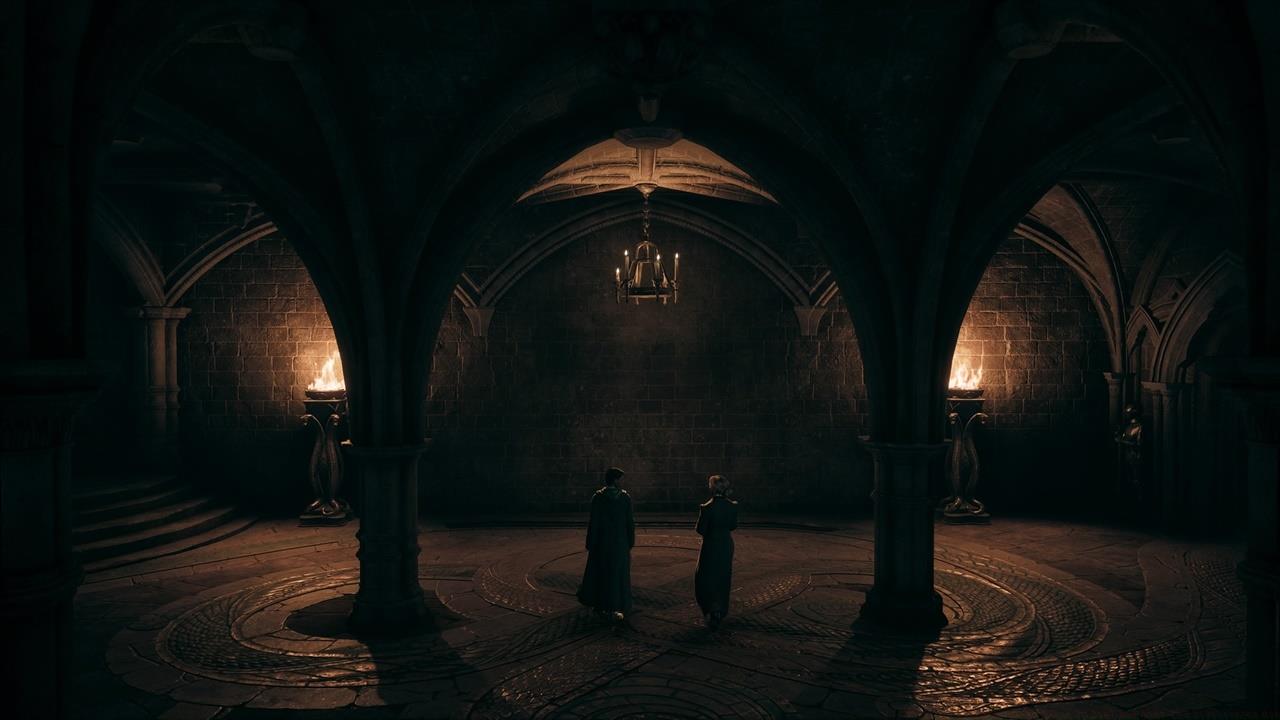
The Slytherin Common Room is located in the bowels of the dungeons, complete with a coiled serpent.
Gryffindor’s common room requires password knowledge for entry, guarded by the enchanted portrait of the Fat Lady. This security measure adds an additional layer of immersion to your daily Hogwarts routine.
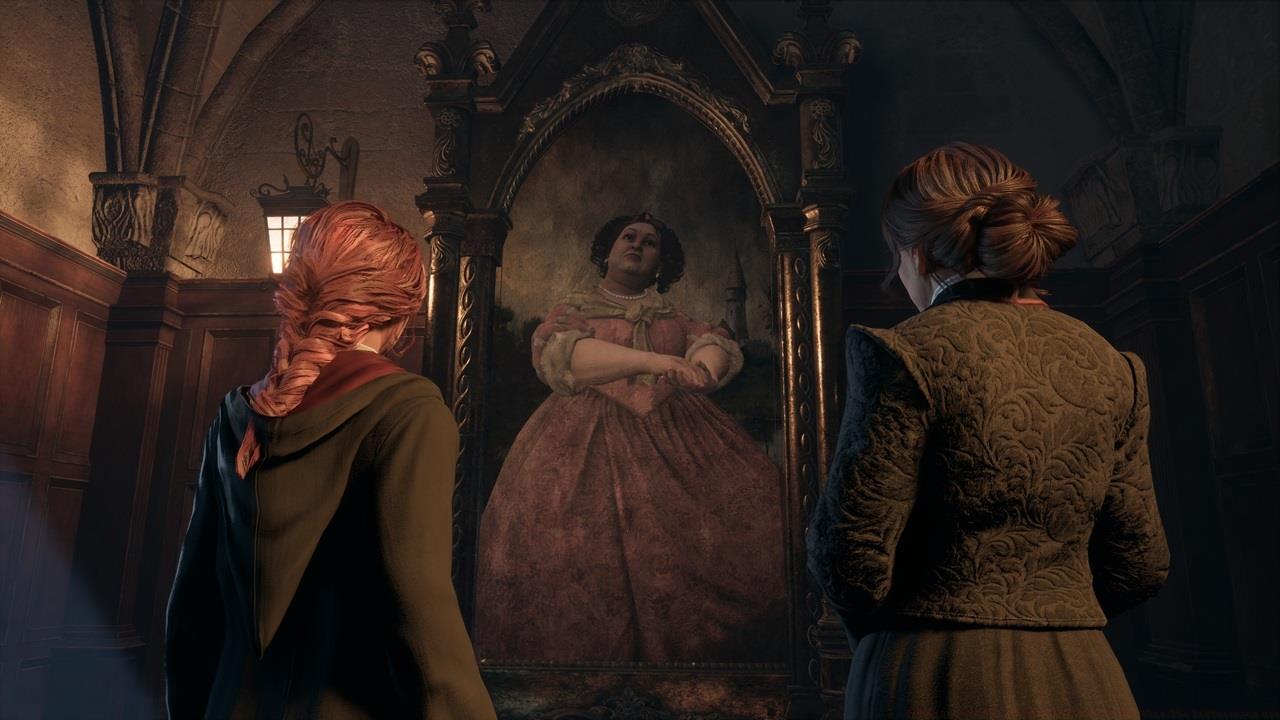
The Fat Lady bars entry to the Gryffindor Common Room. Do you know the password?
Ravenclaw’s tower location provides breathtaking panoramic views of the Hogwarts grounds, complemented by celestial-themed decor and extensive bookshelves that reinforce its scholarly identity.
The Ravenclaw hub is high atop a tower.
Hufflepuff’s common room accessibility stands in stark contrast, situated near the castle kitchens with a cozy, earthy aesthetic featuring abundant plant life and comfortable furnishings.
You’ve got a cozy spot if you’re a Hufflepuff.
Slytherin’s dungeon location creates a distinctive atmospheric experience with greenish lighting, underwater window views into the Black Lake, and serpentine motifs throughout the space. The animated coiled serpent near the entrance responds to player proximity, enhancing the immersive quality of the environment.
Beyond aesthetic differences, each House provides access to unique narrative content that significantly impacts your playthrough. Exclusive questlines tailored to House philosophies offer approximately 2-3 hours of additional content unavailable to other affiliations, making replay value a significant consideration.
Gear customization represents another key differentiator, with uniform-type equipment displaying House-specific insignias and emblematic animals. Gryffindor features the lion motif, Slytherin showcases serpents, Ravenclaw displays eagles, and Hufflepuff incorporates badger symbolism into their apparel designs.
Strategic players should note that certain resource-gathering opportunities align more naturally with specific House locations. Hufflepuff’s kitchen proximity facilitates easier food item acquisition, while Slytherin’s dungeon access may provide shortcuts to certain underground areas of the castle.
Companion availability varies by House, with different characters becoming more accessible based on your affiliation. These relationships can unlock additional side missions, gear rewards, and even affect certain main story outcomes through alliance-building mechanics.
For players concerned about completionism, it’s important to understand that while most content remains accessible regardless of House choice, the exclusive quests represent genuinely unique narrative experiences rather than mere cosmetic variations.
Action Checklist
- Complete Wizarding World quiz before starting game for personalized sorting recommendation
- Research each House’s exclusive questlines and companion characters before deciding
- Consider gameplay style alignment: combat-focused (Gryffindor), strategic (Slytherin), intellectual (Ravenclaw), social (Hufflepuff)
- Visit all common rooms through online videos to assess environmental preferences
- Plan for potential secondary playthrough with different House selection
No reproduction without permission:SeeYouSoon Game Club » Hogwarts Legacy – Which House To Pick And What The Differences Are Master Hogwarts Legacy's House selection with strategic insights on traits, locations, and exclusive content differences