
Master Football Manager 2022 training with advanced strategies and practical optimization techniques for squad development
Introduction to FM22 Training System
Football Manager 2022 presents a sophisticated training system that serves as the foundation for squad development and tactical execution. Mastering these mechanics separates successful managers from those struggling to compete.
FM22 provides unparalleled control over player development pathways. This comprehensive guide reveals how to maximize your team’s potential through strategic training implementation in Football Manager 2022.Football Manager 2022
delivers an extensive player database where targeted training becomes essential for unlocking full potential. Whether developing your star striker’s finishing precision or converting a full-back to central defense for injury coverage, training schedules form the backbone of FM22 success. With expanded training options available, understanding the system’s nuances becomes critical for competitive advantage.
Understanding Training Mechanics
Training in Football Manager directly influences statistical progression, enabling youth development while facilitating veteran adaptation. The system operates on realistic principles where natural aptitude affects improvement rates.
Player training drives attribute enhancement within logical boundaries – your central defender can dedicate extensive time to shooting practice, but without natural striking talent will experience significantly reduced returns compared to specialized forwards.
While delegating training to your assistant manager remains an option, hands-on management yields superior matchday preparation. The AI handles basic training competently but lacks strategic foresight for specific opponent challenges and player development pathways.
Common Mistake: Over-focusing on physical attributes early in preseason – balance physical conditioning with tactical familiarization to avoid matchday coordination issues.
Training Types and Implementation
Football Manager structures training around two primary categories with distinct purposes and implementation strategies.
Individual training targets specific player development. This approach enables attribute specialization while facilitating positional adaptation. Position-specific training regimens concentrate on narrower attribute sets, whereas broader development focuses encompass multiple characteristics. Generally, specialized training produces faster visible improvements while comprehensive development requires extended timeframes.
Team training involves multiple players and concentrates on match components (set pieces, attacking patterns, defensive transitions) alongside tactical system familiarity. Enhanced tactical comprehension directly correlates with improved matchday performance execution.
Positional Conversion Insight: The gradual process of transforming player roles
Optimization Tip: Schedule team training sessions that complement your next opponent’s weaknesses – if facing a team vulnerable to set pieces, increase dead ball training intensity.
Optimizing Coaching Staff
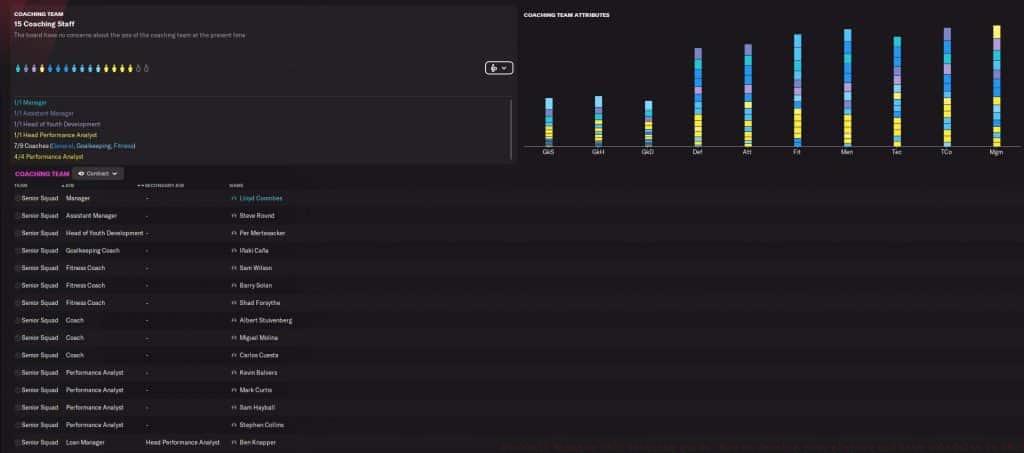 Sports Interactive
Successful managers assemble elite coaching teams. Coaching quality directly influences training methodology effectiveness. Clubs impose staffing limitations across various roles including defensive, attacking, and goalkeeping specialists. Our analysis identifies these standout candidates:
Staff Hiring Strategy: Prioritize coaches with high ‘Judging Player Ability’ and ‘Judging Player Potential’ attributes to better assess training needs and development trajectories.
Common Mistake: Neglecting youth coaches – dedicated youth development staff significantly accelerate prospect growth and should comprise at least 30% of your coaching budget.
Advanced Training Schedules
Extensive Football Manager 2022 experience reveals optimal training schedule patterns. The crucial consideration involves adapting schedules based on weekly match frequency. Weekend-only fixtures demand different preparation than weeks featuring midweek competitions.
Our recommended framework for single-match weeks follows this structure, though customization remains essential. Away teams emphasizing physical play might prioritize attacking set-pieces anticipating possession disadvantages. Additionally, incorporate Penalties training before significant cup matches requiring potential shootouts.
Two-match weeks necessitate modified approaches with increased recovery emphasis. The condensed schedule requires balancing development with fatigue management to maintain performance levels across multiple fixtures.
Advanced Scheduling: Implement ‘recovery sessions’ the day after matches and reduce training intensity two days before important fixtures to maximize freshness.
Advanced Training Strategies
Player Role Optimization: Align individual training with your tactical system’s requirements. If employing a pressing system, focus on Stamina, Work Rate and Aggression for key positions.
Youth Development Pipeline: Establish separate training schedules for youth teams emphasizing attribute development over immediate results. Younger players benefit more from balanced training than specialized focus.
Seasonal Periodization: Structure training across the season with preseason focusing on physical conditioning and tactical familiarization, mid-season emphasizing maintenance and development, and end-season prioritizing recovery and specific opponent preparation.
Attribute Prioritization: Focus training on attributes with room for growth rather than already-high stats. Players develop faster in areas where they have potential for improvement.
This comprehensive guide covers essential Football Manager 2022 training concepts. For additional game insights, explore our complete guide collection. Football Manager 2022 Game Pass availability | Major transfer budgets | FM22 Touch iPad edition | Top wonderkids | Free transfer targets | Tactical systems guide | Scouting methodology
No reproduction without permission:SeeYouSoon Game Club » Football Manager 2022 training guide: How to develop your players and best schedules in FM22 Master Football Manager 2022 training with advanced strategies and practical optimization techniques for squad development