
Exploring Blood Marsh’s evolution from Doom Eternal’s Blood Swamps with strategic insights for veteran players
Blood Marsh Legacy and Evolution
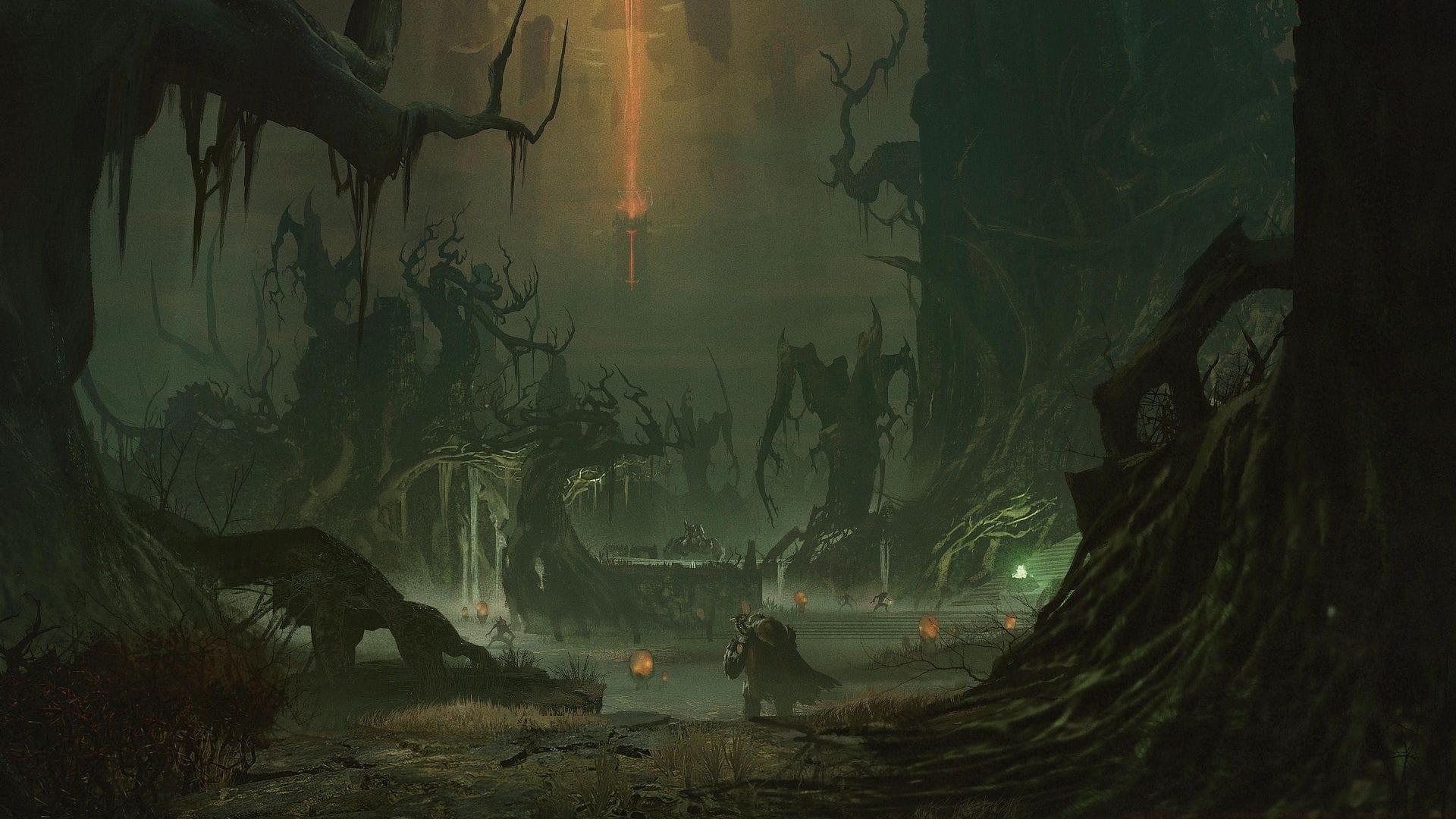
The acclaimed Blood Swamps from Doom Eternal undergoes a dramatic transformation in Doom: The Dark Ages, emerging as the foreboding Blood Marsh. This reimagined battleground showcases id Software’s commitment to expanding the Doom universe while honoring its most memorable locations. The original swamp’s reputation as one of Hell’s most treacherous zones established it as a fan-favorite challenge, making its return particularly significant for series veterans.
Environmental storytelling reaches new heights in this iteration, with the marsh presenting a more mature and evolved version of the terrain. The transition from swamp to marsh indicates deeper, more complex water systems and potentially different tactical considerations for navigation and combat. Unlike the relatively contained swamp environment, marshes typically feature more extensive water coverage and diverse vegetation, suggesting expanded exploration opportunities.
Visual enhancements are immediately apparent in the teaser materials, with Blood Marsh adopting grittier, more desaturated color palettes that amplify the sense of despair and decay. The lifeless flora serves not just as background decoration but as strategic elements that may influence combat encounters and movement patterns. This atmospheric upgrade aligns with the game’s darker thematic direction and the Doom Slayer’s more experienced characterization.
Gameplay Mechanics and Combat Strategy
Combat dynamics receive substantial evolution in Blood Marsh, particularly through the introduction of the Shield Saw – a versatile weapon that fundamentally alters engagement strategies. This tool provides both offensive capabilities and defensive utility, allowing players to adapt to the marsh’s unique challenges more effectively than in previous iterations. The weapon’s dual nature suggests id Software is prioritizing tactical diversity over pure aggression.
Enemy encounters build upon the foundation established in The Ancient Gods Part One, with Marauders returning as key combat tests. These formidable opponents demand precise timing and weapon switching, now complicated by the marsh’s environmental hazards. Advanced players should anticipate modified attack patterns and new behavioral adaptations from familiar foes, requiring updated counter-strategies and movement techniques.
Strategic positioning becomes paramount in the marsh environment, where water elements may impede movement while offering unique defensive opportunities. The terrain’s vertical elements and destructible objects create dynamic combat scenarios that reward environmental awareness. Players should master the interplay between the Shield Saw’s capabilities and the environment to overcome the area’s heightened difficulty curve.
Common mistakes include underestimating the marsh’s mobility restrictions and failing to utilize the Shield Saw’s full defensive potential. Optimal play involves constant environmental scanning, strategic use of elevated positions, and careful resource management during extended encounters. The marsh’s expanded scale means ammunition and health pickups may be more strategically placed, requiring thorough exploration.
Level Design and Player Progression
Blood Marsh represents one of 22 distinct levels in Doom: The Dark Ages, indicating substantial content expansion compared to previous titles. This increased scope allows for more elaborate environmental storytelling and varied gameplay experiences throughout the campaign. Each terrain type appears designed to challenge different player skills, with the marsh focusing on environmental adaptation and tactical flexibility.
Navigation techniques require refinement in the marsh environment, where traditional movement patterns may prove insufficient. The terrain’s water elements and altered topography demand adjusted approaches to traversal, potentially incorporating new mobility options specific to the Doom Slayer’s expanded arsenal. Advanced players should prioritize learning optimal routes through each section to maintain combat efficiency.
The level’s integration within the broader campaign suggests narrative significance beyond its combat challenges. As a spiritual successor to one of Doom Eternal’s most memorable locations, Blood Marsh likely serves as a key moment in the Doom Slayer’s character development arc. The environment’s evolution mirrors the protagonist’s own maturation, creating thematic cohesion between gameplay and storytelling.
Optimization strategies for veteran players include mastering quick weapon switching specific to marsh encounters, developing environmental exploitation techniques, and learning enemy spawn triggers to control engagement pacing. The marsh’s expanded scale means efficient exploration becomes crucial for discovering hidden upgrades and resources that enhance later campaign segments.
No reproduction without permission:SeeYouSoon Game Club » Doom: The Dark Ages is bringing iconic swamps back in the form of Blood Marsh Exploring Blood Marsh's evolution from Doom Eternal's Blood Swamps with strategic insights for veteran players