
TL;DR
- Rogue talents use tier-based progression with interconnected upgrade paths
- Core talents enhance mobility and survivability through critical hit mechanics
- Agility talents provide specialized defense against DoT and crowd control effects
- Proper talent selection can dramatically improve both damage output and survivability
- Advanced strategies require understanding talent synergies and build-specific optimizations
Mastering the Rogue’s talent system in Diablo 4 requires understanding how these passive abilities complement your active skills and overall combat approach. The class specializes in rapid strikes and agile positioning, making talent choices crucial for maximizing effectiveness.
Diablo 4’s Rogue employs a sophisticated tier grouping framework similar to other character classes. You’ll unlock various options by allocating talent points earned through leveling, with certain abilities offering further enhancement through connected upgrade nodes. Each passive provides distinct advantages—some offer general combat improvements while others cater to specialized builds. Many talents integrate with the Imbuement mechanic, allowing you to augment skills with elemental damage types including poison, shadow, or cold effects.
The talent system’s interconnected nature means choices made early can significantly impact your build flexibility later. Understanding how talents synergize with specific weapon types and skill combinations is essential for creating an effective character. The strategic allocation of talent points becomes increasingly important as you progress toward endgame content.
Core tier/grouping talent options
- Siphoning Strikes – Successful critical hits in melee range restore a portion of your health.
Strategic Applications: Stutter Step excels for hit-and-run tactics, allowing you to quickly disengage after delivering burst damage. Sturdy is essential for melee-focused builds that frequently operate within enemy attack ranges. The Siphoning Strikes upgrade creates exceptional sustainability for aggressive playstyles, though it requires consistent critical hit performance to be effective.
Agility tier/grouping talent options
- Reactive Defense – Mitigates additional damage when you’re affected by crowd control impairments.
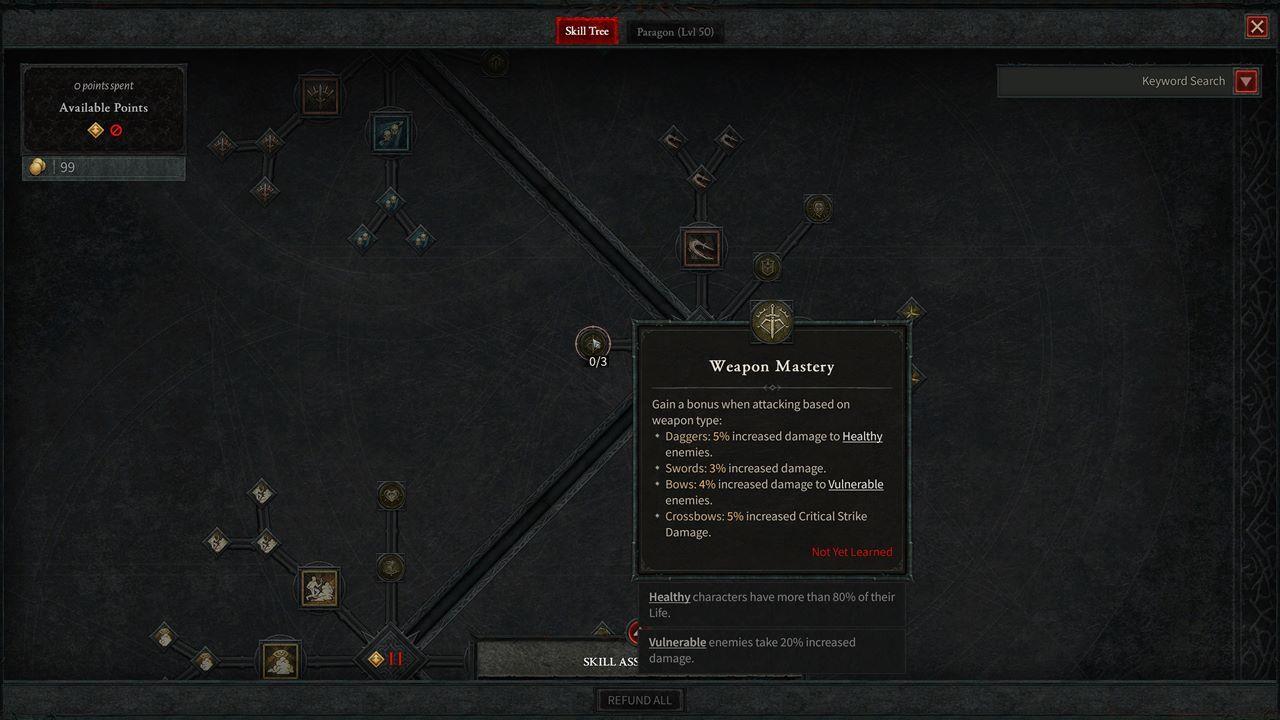
The Diablo 4 Rogue Weapon Mastery talent confers bonuses based on the weapon that you’re using.
Advanced Positioning Strategies: Rugged becomes invaluable in encounters with enemies that apply burning, poisoning, or bleeding effects. Reactive Defense provides crucial protection when you cannot avoid crowd control abilities, though superior positioning should remain your primary defense strategy. These talents work exceptionally well together for builds that anticipate taking incidental damage while focusing on offensive output.
Talent Combination Optimization: The most effective Rogue builds carefully balance talents from different tiers to address both offensive and defensive needs. For maximum effectiveness, pair mobility talents like Stutter Step with defensive options that complement your engagement pattern. Remember that some talents have hidden synergies with specific weapon types or skill modifiers.
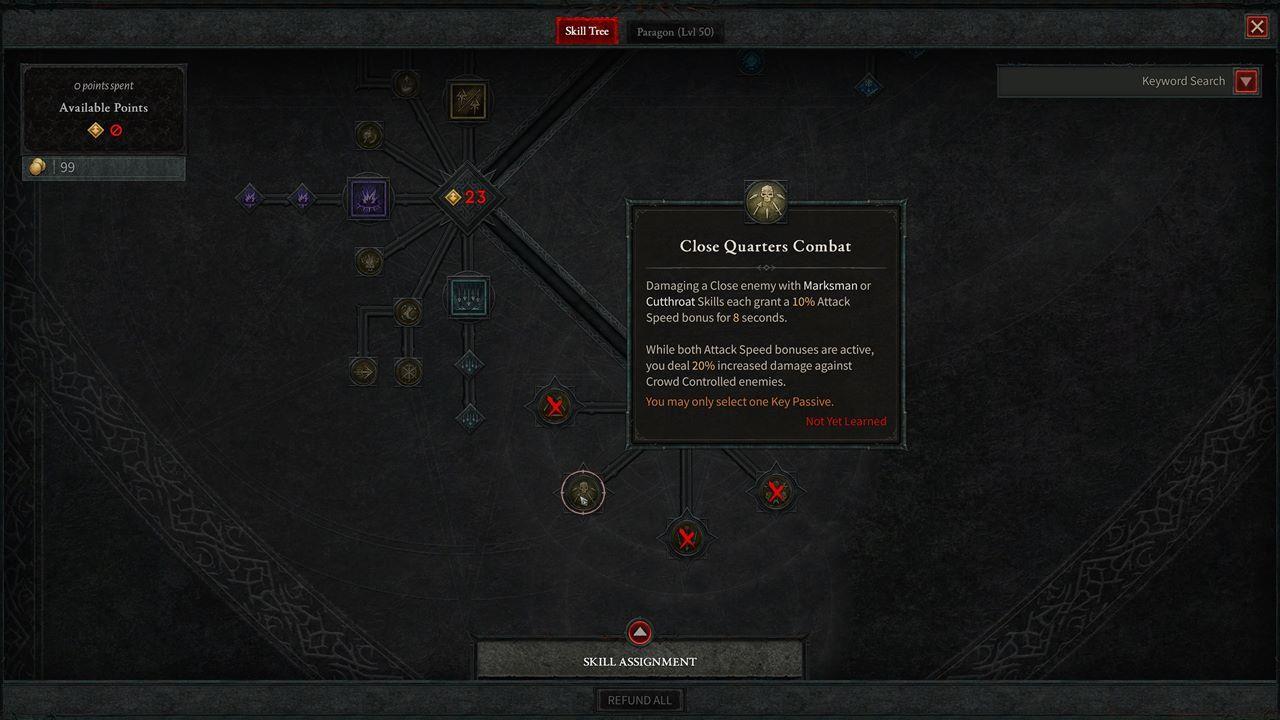
Picking the Close-Quarters Combat Key Passive nets you boons if you can take out foes that are near you.
Common Rookie Mistakes: Many players overlook how talent effectiveness scales with playstyle consistency. Avoid spreading points too thinly across multiple talent trees early game—focus on strengthening your primary combat approach first. Don’t underestimate defensive talents; surviving longer often results in higher overall damage output than pure offense builds.
Endgame Considerations: As you approach level 50 and beyond, talent choices should increasingly specialize toward your finalized build direction. Respec costs escalate with level, making careful planning essential for long-term character development. For those transitioning between playstyles, our Class Guide offers valuable insights on adapting to different combat roles.
Action Checklist
- Analyze your preferred combat range and playstyle before allocating talent points
- Prioritize Core tier talents that enhance your primary damage approach
- Test talent combinations in low-stakes encounters before committing to specialization
- Balance offensive and defensive talents based on content difficulty
- Consult advanced resources like our Complete Guide for endgame optimizations
No reproduction without permission:SeeYouSoon Game Club » Diablo 4 – Rogue Talents Guide Master Diablo 4 Rogue talents with expert build strategies and optimization tips for maximum effectiveness