
TL;DR
- Necromancer talents use tiered progression with essence management as core mechanic
- Core talents balance resource costs with damage output and corpse generation
- Macabre talents enhance minions and provide defensive capabilities
- Strategic talent combinations create specialized summoner or caster builds
- Avoid common mistakes in talent selection that limit late-game effectiveness
Master the dark arts with our comprehensive guide to Diablo 4 Necromancer talent optimization and strategic implementation.
The Diablo 4 Necromancer commands formidable power through bone magic, blood rituals, shadow energies, and debilitating curses to dominate combat encounters. This specialized class possesses unique capabilities to resurrect fallen enemies as loyal servants or construct powerful golems to execute commands. Our detailed talent analysis provides essential insights into perk selection and progression pathways for maximizing your undead army’s potential.
Similar to other Diablo 4 classes, Necromancer talents follow a structured tier progression system. Unlocking advanced options requires strategic talent point investment, with certain abilities offering further enhancement through upgrade paths. We detail these options comprehensively below, highlighting potential upgrades and interconnected talent nodes. For complementary information, explore the Necromancer’s complete ability roster in our skills guide.
Core tier/grouping talent options
- Imperfectly Balanced – Core skills consume 5% additional essence but deliver 10% enhanced damage output.
Strategic Insights: Essence management represents the fundamental resource mechanic for Necromancers. Unliving Energy provides the foundation for sustained spellcasting, while Imperfectly Balanced creates interesting risk-reward decisions for damage optimization. Hewed Flesh becomes increasingly valuable in extended boss encounters where corpse generation enables continuous minion summoning and corpse explosion chains. Avoid stacking multiple essence-cost increasing talents early game when resource generation remains limited.
Macabre and Corpse tier/grouping talent options
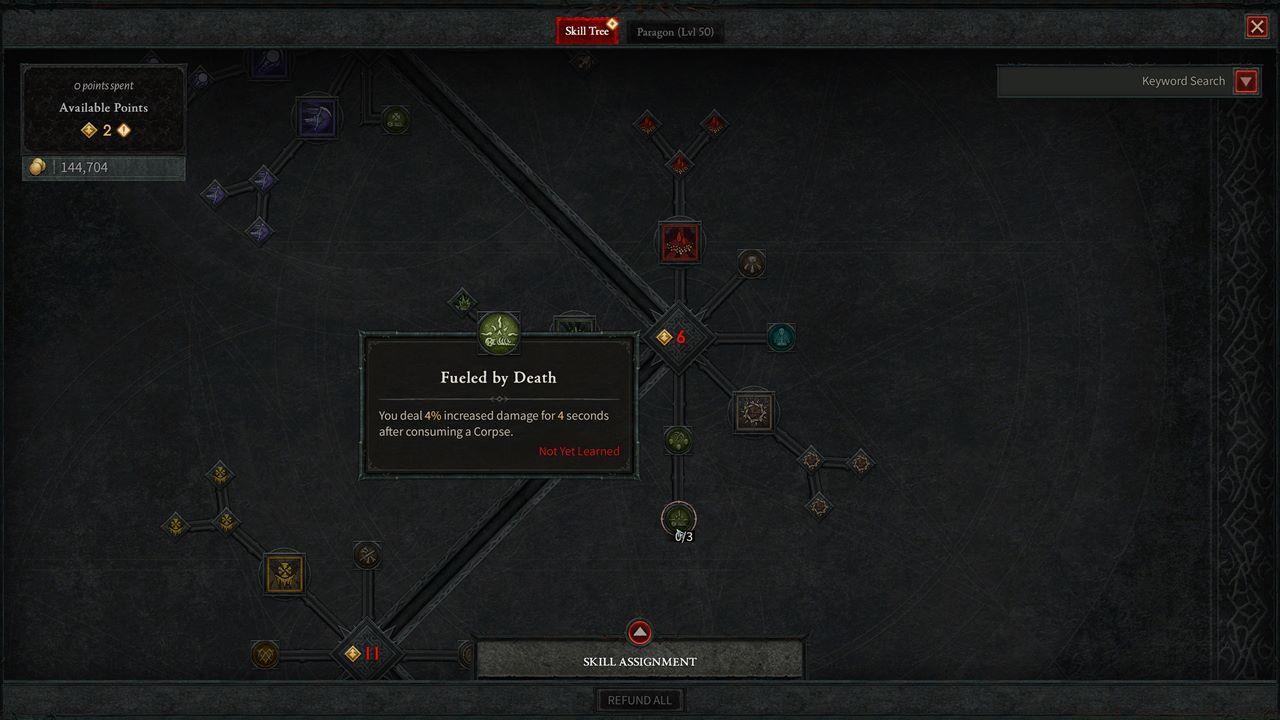
Strategic corpse utilization separates novice practitioners from master Necromancers. The damage amplification from Fueled by Death demonstrates how strategic resource management translates directly to combat effectiveness.
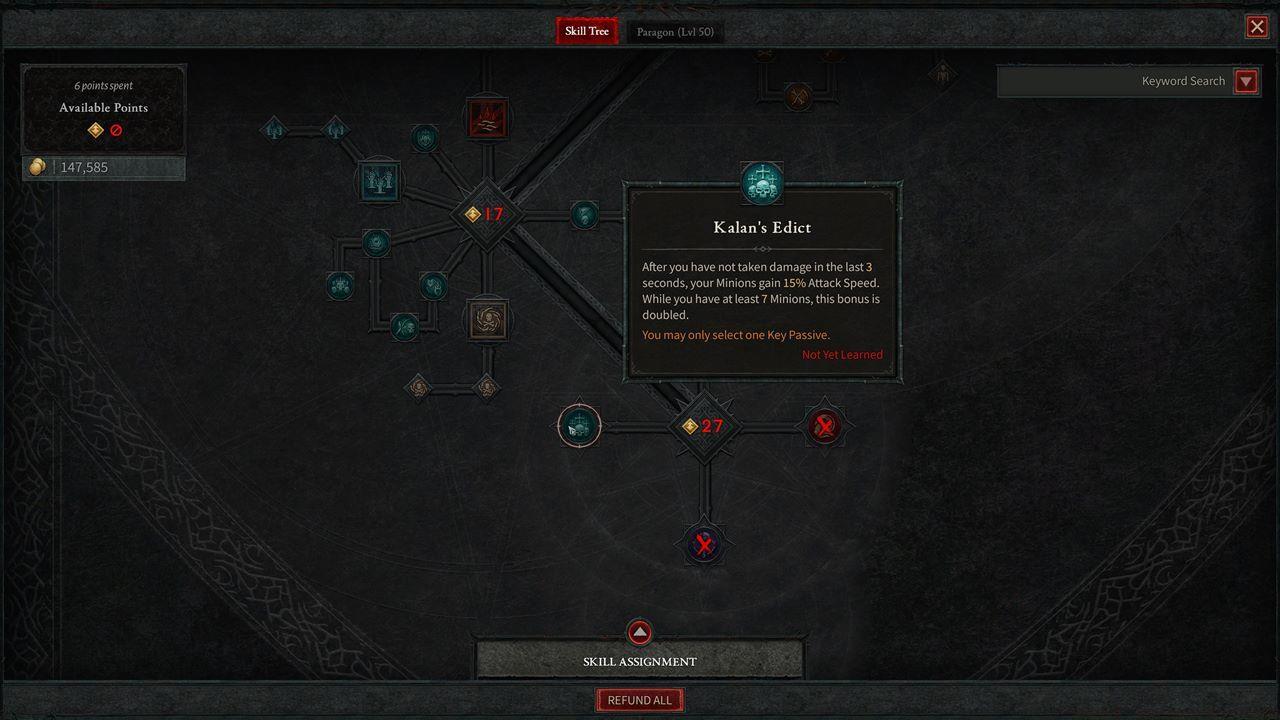
Kalan’s Edict empowers your minions to handle primary combat duties through dramatically improved attack speed. This strategy requires reliable personal survivability since you’ll depend on your undead forces for damage output.
Advanced Minion Tactics: Spiked Armor provides essential defense for close-quarters combat situations, particularly valuable for melee-focused Necromancer builds. Skeletal Warrior Mastery represents a cornerstone talent for summoner specialists, scaling minion effectiveness throughout the game progression. Combine these with corpse generation talents for sustained minion armies that overwhelm enemies through attrition.
Talent Synergy Combinations: Successful Necromancer builds require careful talent coordination rather than isolated selections. Pair Hewed Flesh with minion-enhancing talents for sustained army maintenance, or combine Unliving Energy with high-cost core skills for burst damage potential. Understanding these interactions separates competent players from master tacticians.
Common Optimization Mistakes: Many players underestimate essence regeneration requirements when selecting cost-increasing talents. Others spread talent points too thinly across multiple specializations instead of focusing on complementary ability clusters. Plan your talent progression around your preferred playstyle—summoner focuses require different investments than direct damage casters.
Endgame Preparation: As you approach maximum level, talent respec costs become substantial. Test various combinations during early progression to identify optimal setups for your preferred content, whether solo play, group dungeons, or PvP encounters. The flexibility of Diablo 4’s talent system allows for experimentation, but late-game optimization requires committed specialization.
For broader gameplay context that complements your talent selections, our Class Guide provides essential foundational knowledge for character development.
Action Checklist
- Prioritize Unliving Energy for essence capacity before selecting cost-increasing talents
- Test Hewed Flesh corpse generation rates against various enemy types
- Coordinate minion enhancement talents with corpse generation abilities for sustained armies
- Experiment with talent combinations in early game before committing to late-game specializations
- Analyze combat logs to verify talent effectiveness and adjust selections accordingly
No reproduction without permission:SeeYouSoon Game Club » Diablo 4 – Necromancer Talents Guide Master Diablo 4 Necromancer talents with strategic builds, optimization tips, and common pitfalls to avoid