
TL;DR
- Necromancer ranks easiest for beginners with powerful minion armies and straightforward mechanics
- Sorcerer offers simple elemental magic but requires careful positioning due to limited mobility
- Druid provides balanced offense/defense but demands cooldown management expertise
- Rogue delivers high damage potential through complex combo systems and debuff management
- Barbarian excels at survivability but struggles with solo boss encounters due to lower DPS
Selecting your character class represents one of the most impactful decisions in Diablo 4, particularly for players new to the franchise. This comprehensive guide examines each class’s strengths, weaknesses, and learning curve to help you make an informed choice.
Diablo 4 launches with five distinct classes, each featuring unique mechanics and playstyles. While veteran players typically have preferred archetypes, newcomers often struggle to identify which class aligns with their preferred gaming approach and skill level.
Our analysis covers the advantages and disadvantages of each class, ranked from most beginner-accessible to most challenging. All assessments are based on World Tier 1 difficulty, the game’s introductory mode designed for learning mechanics.
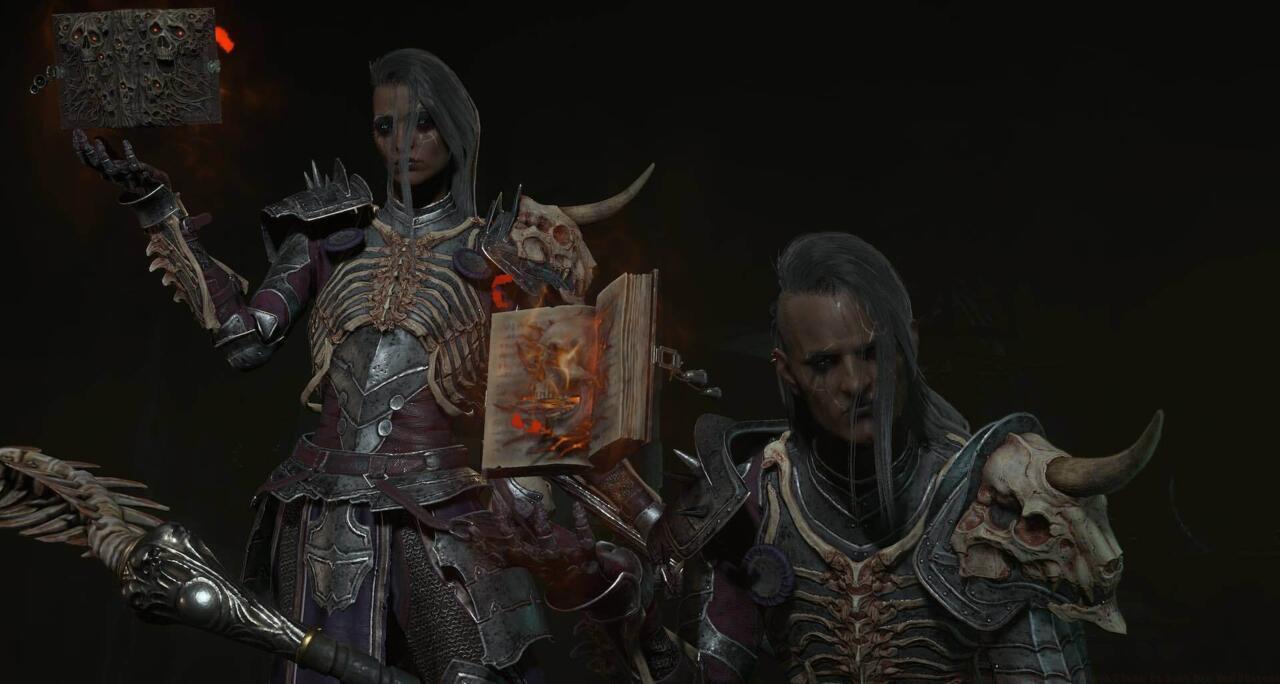
The Necromancer dominates through summoned minions and corpse manipulation.
The Necromancer maintains its status as a beloved Diablo class for compelling reasons. This archetype combines exceptional damage output with relatively straightforward mechanics. Necromancers specialize in raising skeletal minions from fallen enemies and utilizing bone-based attacks against adversaries. Their signature corpse explosion ability generates escalating power as combat progresses and more enemies perish.
The primary advantages of the Necromancer class include the Minion system and Book of the Dead mechanics, enabling selection from diverse undead servant types that expand with character progression. Deploying additional combatants provides significant advantages for inexperienced players, creating the perception of cooperative support even during solo play.
Regarding Necromancer limitations, the principal challenge newcomers encounter involves character fragility—a trait shared with other damage-oriented classes. Maintaining distance and monitoring approaching threats becomes essential; failure to do so results in frequent deaths, particularly on elevated World Tiers.
Pro Tip: Prioritize upgrading skeletal mages in the Book of the Dead, as they provide consistent ranged damage while your melee skeletons engage enemies upfront.
- Necromancer skills
- Necromancer talents
- Necromancer build
- Necromancer Book of the Dead

The Sorcerer delivers slightly reduced damage output compared to Necromancers but features more intuitive ability systems.
The Sorcerer positions just below the Necromancer in accessibility metrics, primarily due to marginally lower damage potential. Despite dealing somewhat less damage, the spell mechanics demonstrate significantly greater accessibility; the mana regeneration system enabling more powerful assaults remains fundamentally straightforward. Sorcerers channel elemental forces to inflict substantial damage across expansive areas, utilizing skills centered on frost, fire, lightning, and additional elements.
Sorcerers possess certain defensive capabilities during combat engagements, but they exhibit restricted mobility compared to other classes and maintain shallower health reserves. Fortunately, most offensive capabilities operate at range, permitting damage application to multiple targets simultaneously, thus reducing vulnerability to swarm tactics. The Enhancement framework for Sorcerers also presents relatively simple mechanics, delivering potent passive enhancements based on currently equipped skills.
Common Mistake: Many new Sorcerers exhaust their mana pool too quickly by spamming high-cost abilities. Instead, alternate between basic and core skills to maintain sustainable damage output.
- Sorcerer skills
- Sorcerer talents
- Sorcerer leveling build
- Sorcerer Enchantments
The Druid achieves exceptional equilibrium between offensive capability and defensive resilience.
The Druid operates as a versatile hybrid class, combining high-damage magical capabilities with bestial forms capable of absorbing more punishment than several alternative classes. During Diablo 4’s beta testing phase, some players expressed concerns regarding the Druid’s offensive limitations compared to other options, but a specialized build emphasizing area-effect assaults and defensive enhancements can produce a competent damage dealer that withstands engagement better than more fragile archetypes.
The Druid’s primary weakness involves extensive cooldown dependencies, requiring strategic timing and damage absorption between major offensive actions. Despite shape-shifting capabilities enabling close-quarters combat proficiency, players may experience significant downtime awaiting ability cooldowns. However, maintaining both defensive capabilities and powerful attacks establishes Druid as an excellent intermediate option for newcomers.
Advanced Strategy: Master the Spirit Boon system early—prioritize Deer for defensive bonuses and Eagle for offensive enhancements to maximize early-game effectiveness.
- Druid skills
- Druid talents
- Druid build
- Druid Spirit Animals
The Rogue delivers exceptional damage potential but demands sophisticated mechanical understanding.
The Rogue unquestionably represents the least beginner-accessible class in Diablo 4 from technical execution perspectives, attributable to this class’s concentration on inflicting massive damage to individual targets and leveraging buff/debuff mechanics strategically. Rogues employ a combination of melee and ranged assaults, many applying status effects like vulnerability. After rendering targets vulnerable, they sustain amplified damage. Optimizing this class necessitates focusing on applying debuffs to enemies before executing higher-damage abilities.
The Rogue must additionally capitalize on the Imbuement framework, permitting infusion of specific abilities with poison, frost, or shadow elements. Imbuement exclusively influences the subsequent two activated abilities, requiring pre-planned combo sequences before activation. The Rogue’s distinctive system involves Specializations, delivering unique bonuses and enhancements contingent upon fulfilling each Specialization’s prerequisites. Constructing skill combinations around various specialization types renders this among the more complex character development processes.
The Rogue’s most significant limitation involves pronounced difficulties managing large enemy groups. While numerous abilities inflict damage across areas, primary offensive capabilities remain single-target focused. Maintaining battlefield mobility through evasion and positioning becomes essential to avoid encirclement. Rogues possess tremendous damage potential, but achieving this demands greater game knowledge than most newcomers possess for initial characters.
Optimization Tip: Start with Shadow Imbuement for area damage capabilities, then transition to Poison for boss encounters as you master the class mechanics.
- Rogue skills
- Rogue talents
- Rogue build
- Rogue Specializations
The Barbarian serves as the primary tank-oriented class, employing extensive melee weapon arsenals to engage adversaries at close range. Barbarians possess the unique capability to cycle through different weapon categories using the Weapon Arsenal system, with various Barbarian skills accessible based on currently equipped arms. While weapon rotation may initially appear complex, the mechanics prove reasonably accessible, particularly as new abilities gradually unlock through level progression.
The most beginner-friendly aspect of the Barbarian involves its tank specialization, substantially improving survival against massive damage volumes. The compromise entails reduced damage output compared to alternative classes, but newcomers playing solo will appreciate the expanded health reservoir. You can select abilities, such as Bleed effects, to enhance Barbarian damage potential.
The rationale for Barbarian’s placement at the list’s conclusion involves significant challenges confronting bosses and more resilient enemies during solo play, attributable to diminished damage output and the necessity of close-quarters engagement. This shouldn’t discourage experimentation, but players may experience frustration with extended enemy elimination timelines.
Progression Strategy: Focus on acquiring the Walking Arsenal key passive at level 15, which provides substantial damage bonuses when cycling between different weapon types effectively.
- Barbarian skills
- Barbarian talents
- Barbarian build
- Barbarian Expertise and Arsenal Weapon Swapping
Explore our comprehensive Battlefield 6 Complete Guide for additional gaming insights and strategy frameworks.
Your ideal Diablo 4 class selection depends heavily on your gaming background and preferred playstyle. Beginners should prioritize the Necromancer for its forgiving mechanics and built-in support system, while experienced players might gravitate toward the Rogue’s complex but rewarding gameplay systems.
Remember that all classes become viable with sufficient investment and understanding. The ranking provided reflects early-game accessibility rather than long-term potential. Many players discover that experimenting with multiple classes during the leveling process provides the most satisfying overall experience.
For additional character development strategies and advanced gameplay mechanics, consult our BF6 Class Selection Guide which covers advanced specialization strategies applicable across multiple game genres.
Action Checklist
- Assess your preferred playstyle: minion management (Necromancer), elemental casting (Sorcerer), hybrid versatility (Druid), technical execution (Rogue), or tank resilience (Barbarian)
- Start with Necromancer if completely new to ARPGs for the most forgiving experience
- Experiment with Sorcerer’s elemental rotations to understand mana management fundamentals
- Master at least one defensive skill for squishier classes before advancing World Tiers
- Consult our BF6 Weapons Unlock Guide for weapon progression strategies applicable to Barbarian and Rogue
No reproduction without permission:SeeYouSoon Game Club » Diablo 4 Best Classes Ranked – Which Class Is Best For New Players Complete Diablo 4 class breakdown with beginner-friendly rankings and advanced optimization strategies