
TL;DR
- Rushdown features five escalating boss fights with no downtime between encounters
- Your score depends on completion speed, deaths avoided, and revive tokens conserved
- Standard and Expert difficulties add modifiers and revive token limitations
- Access requires speaking to Eva Levante first for Guardian Games credit
- Bosses rotate daily during the first week across campaign and seasonal locations
Destiny 2’s Rushdown mode represents the pinnacle challenge introduced for Guardian Games 2025, offering a structured but intense boss rush experience that tests both individual skill and team coordination. Unlike traditional activities, this mode eliminates downtime completely, pushing Guardians to maintain momentum through consecutive engagements.
The activity structure mirrors Pantheon in format but delivers a more accessible difficulty curve, making it approachable for various skill levels while still providing meaningful challenge. Teams face five distinct boss encounters that progressively increase in complexity and health pools, demanding strategic loadout planning from the outset. The absence of rally flags between fights means you cannot replenish ammo or abilities conventionally, requiring careful resource management throughout the entire run.
Scoring operates on a multi-factor system where speed, survival, and efficiency all contribute to your final tally. Each death penalizes your score, while rapid completions and conservative revive token usage provide substantial bonuses. Understanding this scoring matrix is crucial for maximizing your Guardian Games class contribution.
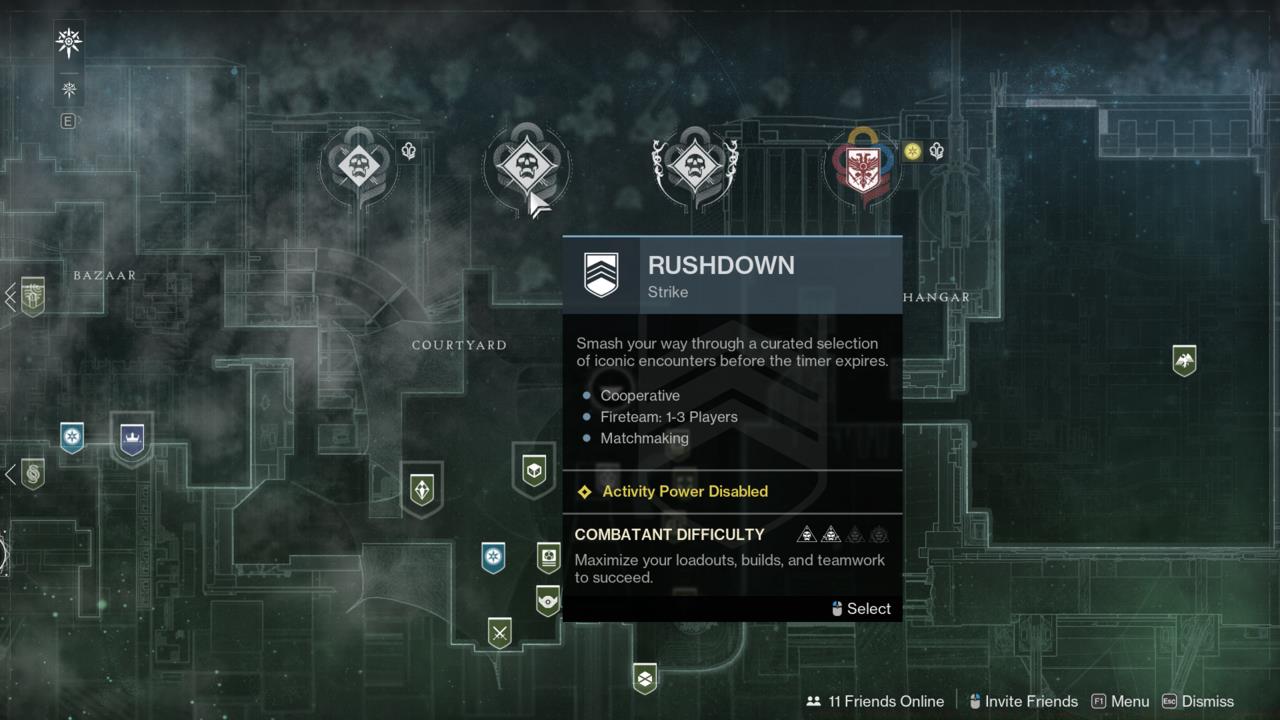
Launching Rushdown from the Tower
Three difficulty tiers accommodate different player capabilities: Warm-Up for learning mechanics, Standard for balanced challenge, and Expert for seasoned fireteams seeking the ultimate test. The higher difficulties introduce modifier combinations that dramatically alter encounter dynamics and require adaptive strategies.
Rushdown draws its boss roster from across Destiny 2’s extensive content library, pulling encounters from campaign missions, seasonal narratives, and exotic questlines. This variety ensures that even veteran Guardians will encounter familiar foes in unexpected contexts, requiring fresh approaches to established mechanics.
The confirmed initial lineup includes Praxis, Voice of Riven, Nightmare of Dominus Ghaul, Nightmare of Zydron, and Savathûn, the Witch Queen. Each presents unique attack patterns and mechanics that teams must quickly identify and counter. The daily rotation during Guardian Games’ first week means staying updated on current bosses is essential for preparation.
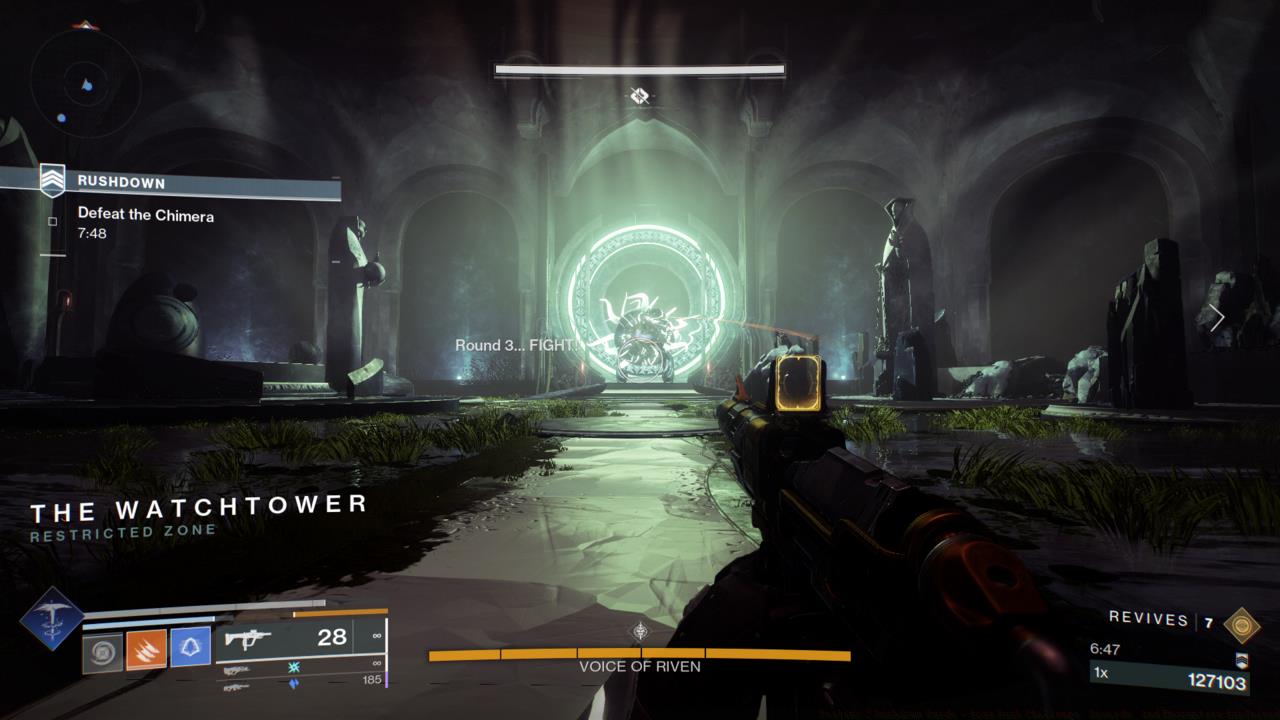
Voice of Riven boss
Location authenticity adds another layer to the experience, as you’ll be transported to the original settings of these encounters. This means potentially revisiting the climax of the Witch Queen campaign or navigating the eerie corridors of the Moon’s haunted sectors. Environmental familiarity can provide tactical advantages for positioning and cover utilization.
Strategic preparation should include assigning specific roles within your fireteam, such as dedicated add-clear specialists, boss damage optimizers, and mechanical objective handlers. This division of labor becomes increasingly important as you progress through the escalating difficulty curve.
Common mistakes include underestimating the resource drain from earlier encounters, failing to communicate revive token status, and not adapting loadouts between runs based on the daily boss rotation. Successful teams typically designate a shot-caller to coordinate transitions and emergency responses.
Rushdown incorporates several gameplay modifiers that significantly impact your approach to each encounter. The revive token system limits how many times your team can recover from defeat, creating tension around every risky maneuver. Conservative teams that minimize deaths reap significant scoring rewards.
The overarching timer creates persistent pressure, though it’s designed to be manageable rather than oppressive. Completing each boss encounter extends your available time, rewarding efficiency rather than punishing deliberate play. Our testing showed competent teams can clear all five bosses in approximately nine minutes on Standard difficulty.
Loadout optimization requires balancing boss damage potential with add-clear capabilities and survivability tools. We recommend weapons with strong ammo economy since you cannot rely on rally banners, along with exotic armor that provides sustained ability regeneration or protective benefits.
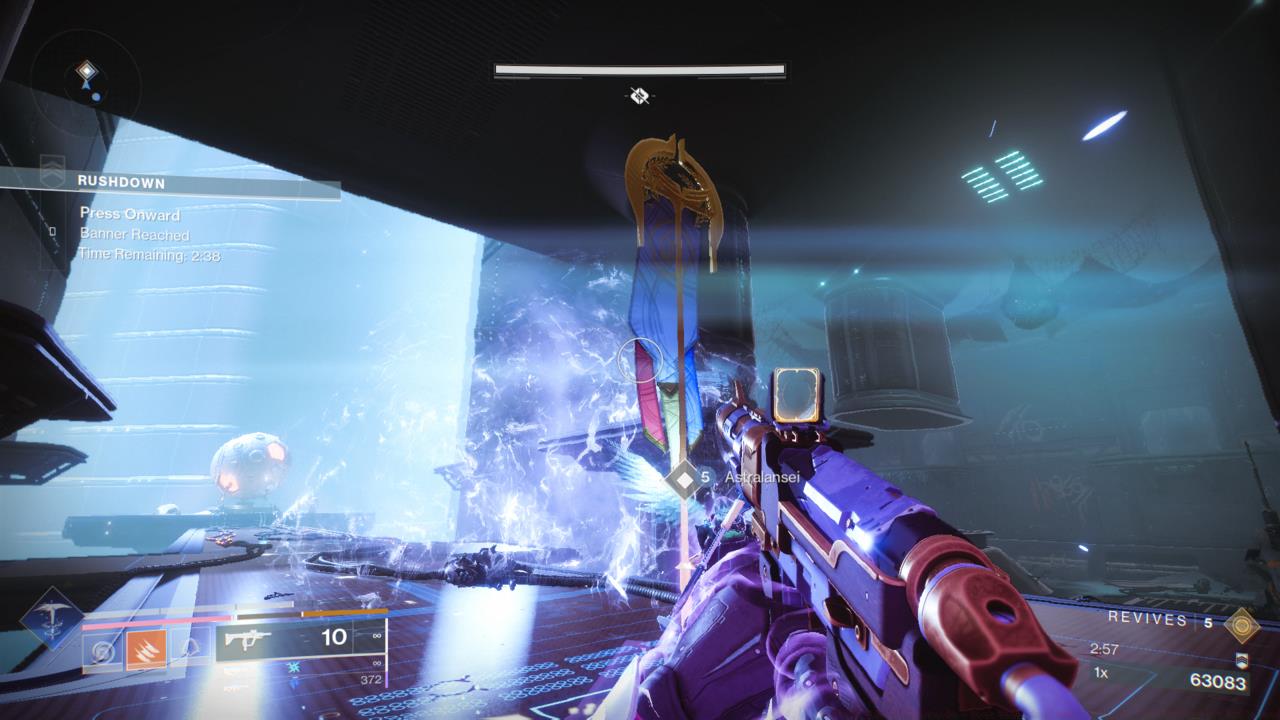
Using the flag to transport to the next boss
Between encounters, teams must quickly locate and activate the Guardian Games flag to advance. This transition phase continues counting against your timer, creating incentive for rapid repositioning. Designating a specific player to handle flag interactions can save precious seconds across multiple transitions.
Advanced optimization involves pre-planning super usage across the entire run, ensuring you have crucial abilities available for the most demanding phases. Teams that coordinate their supers to chain together or cover specific encounter needs typically achieve higher scores and faster clears.
For players without pre-made fireteams, class-based matchmaking provides a viable alternative, though communication limitations may necessitate more self-sufficient loadouts. In these situations, prioritizing survivability over pure damage output often yields better results.
Accessing Rushdown requires an initial conversation with Eva Levante in the Tower courtyard. Overlooking this step invalidates your progress for Guardian Games class scoring, so verification is crucial before embarking on your first run. This requirement ensures proper tracking for the event’s competitive elements.
Expert mode becomes available after completing at least one Standard or Warm-Up run, providing a gateway to greater challenges and rewards. This progression system allows teams to familiarize themselves with mechanics before tackling the heightened difficulty.
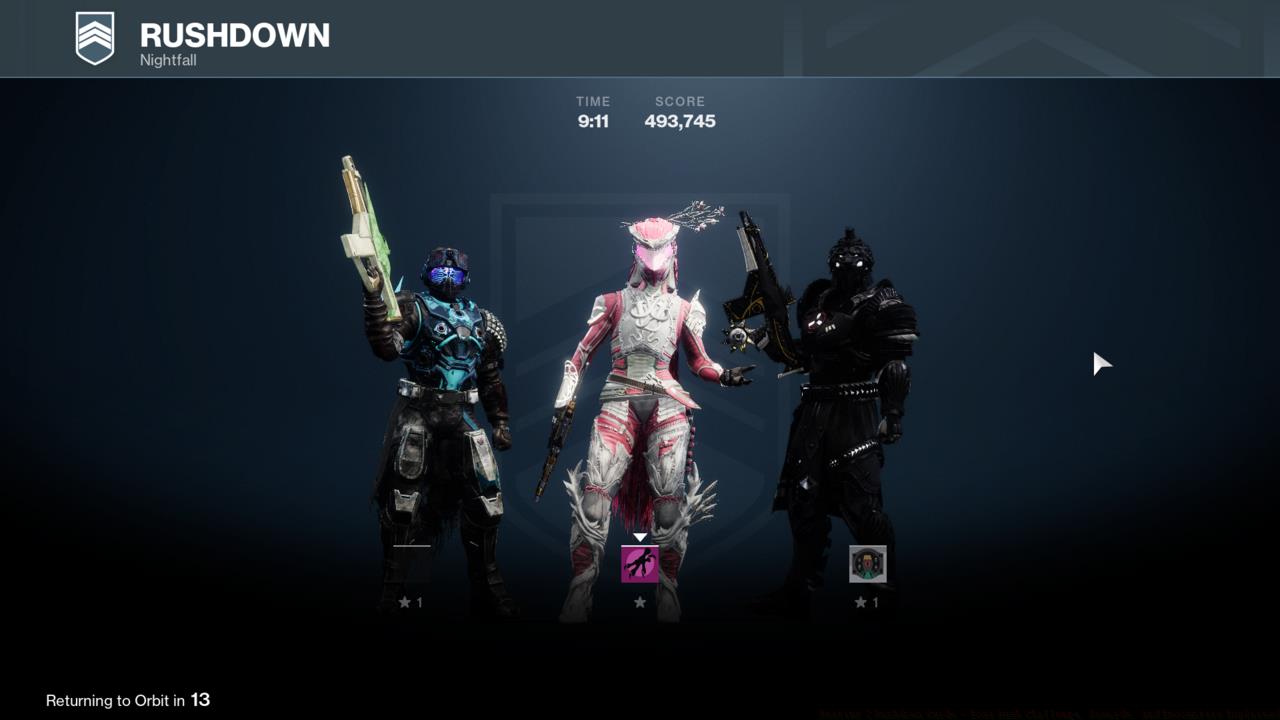
Final score and time screen
Your performance directly contributes to your class’s standing in the Guardian Games, with higher scores providing more significant contributions. The competitive aspect adds stakes beyond personal achievement, encouraging repeated attempts and score optimization.
Rewards include exclusive Guardian Games loot, potential exotic drops, and bragging rights for top-tier performances. The scoring system encourages improvement through multiple runs as teams refine their strategies and execution.
For players looking to expand their Destiny 2 expertise beyond Rushdown, our Complete Guide offers comprehensive coverage of game systems and activities. Those focused on combat effectiveness should consult our Weapons Unlock guide for optimal armament selection, while our Class Guide provides deep insights into subclass optimization.
Action Checklist
- Speak with Eva Levante to activate Guardian Games tracking
- Complete Warm-Up difficulty to learn boss mechanics and transitions
- Coordinate fireteam roles and loadouts before attempting Standard difficulty
- Practice rapid flag transitions between bosses to minimize timer loss
- Attempt Expert mode with optimized loadouts and communication protocols
- Check daily boss rotations and adapt strategies accordingly
No reproduction without permission:SeeYouSoon Game Club » Destiny 2 Rushdown Guide – Boss Rush Challenge, Rewards, And Encounters Explained Master Destiny 2 Rushdown mode with expert strategies for bosses, scoring, and Guardian Games success