
TL;DR
- Litwick spawns in central Kitakami near Infernal Pass and northeast areas primarily at night
- Wild Litwick evolve into Lampent immediately upon leveling up due to high base levels
- Chandelure evolution requires Dusk Stone from Montenevera or random overworld drops
- Time your hunting sessions for evening hours to maximize encounter rates
- Always check behind the Montenevera gym for guaranteed Dusk Stone pickup
The spectral fire-type Pokemon Lampent has made its triumphant return in Pokemon Scarlet and Violet through The Teal Mask expansion content. This ghostly candle Pokemon brings its unique typing and evolution chain back to the modern Pokemon experience.
The Teal Mask, serving as the initial installment of Scarlet and Violet’s two-part DLC package, unveils the picturesque Kitakami region for educational excursions. This fresh territory hosts numerous returning classic Pokemon alongside several brand new additions. Among the veteran creatures making a comeback is the beloved Chandelure from Black and White generations, representing the ultimate evolution stage of the Litwick lineage. As a dual fire-ghost type resembling an elegant chandelier, achieving this final evolutionary form demands acquisition of a specific evolutionary stone. This comprehensive guide covers all essential knowledge for transforming Lampent into the magnificent Chandelure.
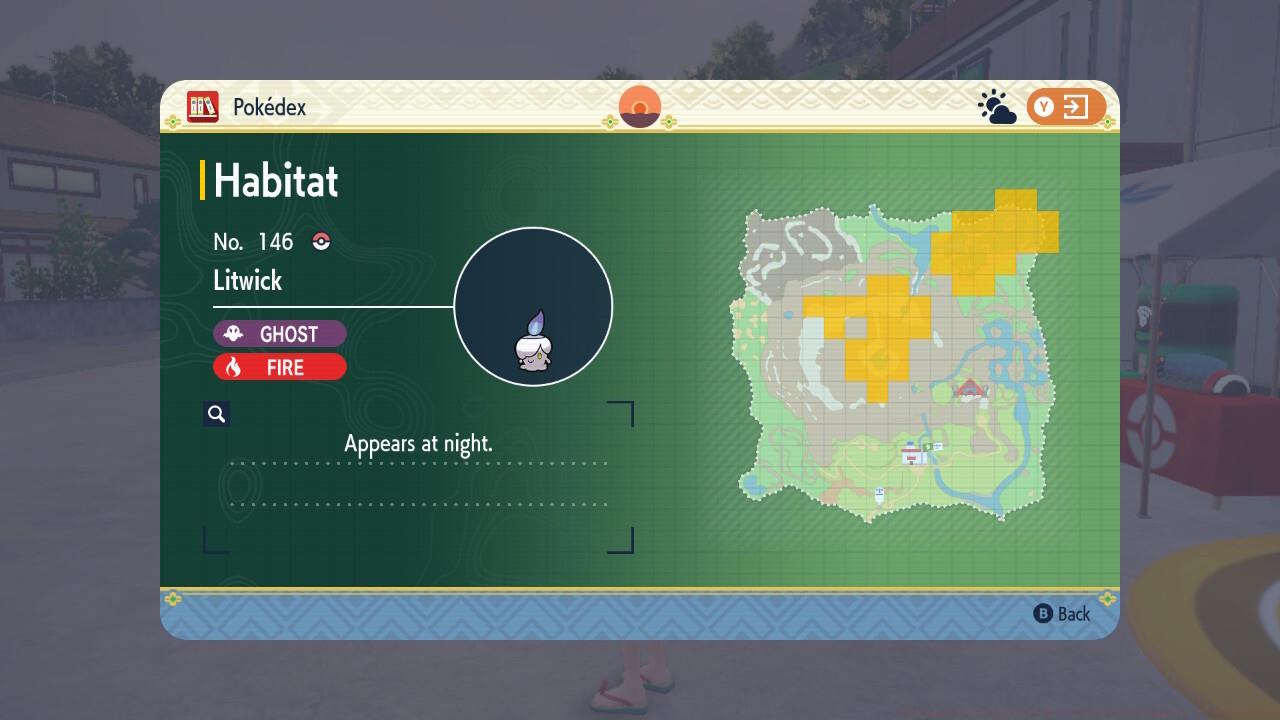
Strategic Litwick hunting locations in Kitakami’s varied terrain.
Your initial objective involves capturing a Litwick specimen. According to Pokedex habitat data, these ghostly candles concentrate in central Kitakami surrounding the Infernal Pass zone, with additional populations inhabiting the northeastern map quadrant. Litwick demonstrates strong nocturnal behavior patterns, with significantly increased appearance rates during nighttime hours. The evolutionary progression sees Litwick transform into Lampent upon reaching level 41, though all wild Litwick specimens in Kitakami already exceed this threshold substantially. This means any captured Litwick will evolve into Lampent after gaining just a single experience level.
For optimal hunting efficiency, plan your exploration sessions around the in-game clock cycle. The transition period from late afternoon into evening typically yields the best results. Many trainers overlook the importance of time management in Pokemon encounters, wasting daylight hours searching for primarily nocturnal species. Additionally, consider using Repel items strategically – higher level wild Pokemon won’t be repelled, increasing your chances of encountering the desired Litwick while filtering out lower-level distractions.
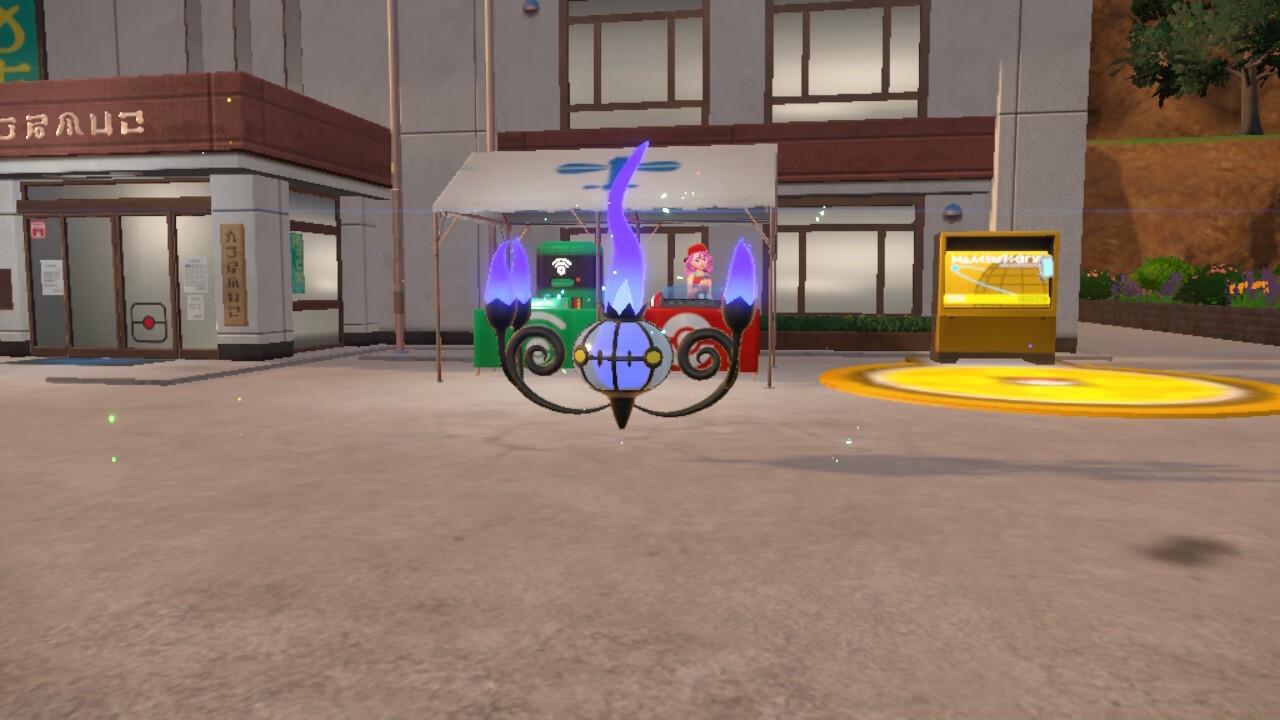
The dramatic transformation from Lampent to Chandelure using evolutionary stones.
Transitioning Lampent into its final Chandelure form necessitates application of a Dusk Stone. These evolutionary catalysts can be obtained through two primary methods. The first approach involves locating a fixed Dusk Stone spawn point in Montenevera within Scarlet and Violet’s primary Paldea region. This guaranteed stone rests inside a Pokeball positioned behind the Montenevera gym building. The alternative method relies on random chance discoveries through overworld Pokeball pickups scattered throughout both Kitakami and Paldea.
Beyond these methods, players can employ additional strategies for Dusk Stone acquisition. Participate in 5-star Tera Raid battles, which occasionally reward evolutionary stones upon completion. The Auction House in Porto Marinada sometimes features Dusk Stones among its rotating inventory, though prices can vary significantly. For completionists aiming to evolve multiple Pokemon, farming the fixed Montenevera location after completing specific story milestones remains the most reliable approach.
The evolution process itself is straightforward but requires attention to detail. Ensure your Lampent isn’t holding any items that might block evolution, such as Everstones. The transformation occurs instantly upon using the Dusk Stone from your inventory, so there’s no need to level up after stone application. Many players mistakenly believe they need to achieve additional level milestones post-stone usage, but this is purely a stone-based evolution.
Seasoned trainers should consider several optimization techniques when pursuing Chandelure. First, capture multiple Litwick to assess individual values and natures – Timid or Modest natures maximize Chandelure’s special attacking potential. Second, utilize the Experience Share mechanic to efficiently level your newly caught Litwick without needing to make it the active battle participant. This protects the fragile ghost-type during its initial development phases.
Common mistakes include attempting evolution during battle (which won’t work) or forgetting to remove the Everstone if you’ve used it for breeding. Another frequent error involves misidentifying the evolution requirements – remember that Litwick to Lampent is level-based, while Lampent to Chandelure requires the Dusk Stone exclusively.
For trainers struggling with random Dusk Stone drops, focus on methodically checking all sparkling overworld items in areas with high item density. The Tagtree Thicket and Casseroya Lake regions in Paldea tend to have concentrated pickups. Dedicated farming routes can yield evolutionary stones within 1-2 hours of focused searching, though RNG factors create variable time investments.
Action Checklist
- Travel to Kitakami during evening/night hours and search central and northeast areas
- Capture Litwick (automatically evolves to Lampent after one level)
- Acquire Dusk Stone from Montenevera gym or random drops
- Use Dusk Stone on Lampent from inventory screen
No reproduction without permission:SeeYouSoon Game Club » Pokemon Scarlet And Violet – How To Evolve Lampent Into Chandelure Complete guide to finding Litwick and evolving it into powerful Chandelure in Pokemon Scarlet and Violet DLC