
TL;DR
- CS2 Premier uses numerical CS Rating instead of traditional rank names, with current conversion benchmarks provided
- Valve has significantly adjusted the rating distribution multiple times since launch, affecting progression curves
- Professional players typically calibrate between 19,500-22,000+ rating points
- Map-specific competitive ranks will be introduced separately from Premier mode
- Focus on consistent performance and team play rather than individual rating fluctuations
Games and Esports Articles CS 2
The transition from CS:GO to CS2 represents a fundamental shift in competitive ranking methodology. Valve has replaced the traditional Skill Group system with a numerical CS Rating in Premier Mode, accompanied by global leaderboard tracking. This new approach provides granular performance measurement while maintaining competitive integrity across the global player base.
Update, January 1, 2024: Valve’s continuous matchmaking refinements have established a stabilized distribution curve. According to Scope.gg’s comprehensive analysis, the current system now reflects a balanced progression model where the majority of competitors cluster within mid-range ratings, creating healthier competitive environments.
Update, November 23: Recent system modifications have introduced rating inflation, with players receiving increased points for victories and reduced deductions for losses. These adjustments aim to create more satisfying progression experiences while maintaining competitive accuracy.
Update, November 12: CSStats’ distribution visualization provides crucial insights into the current competitive landscape. While some data completeness questions remain, the patterns reveal significant insights about player distribution and progression curves in the new ecosystem.
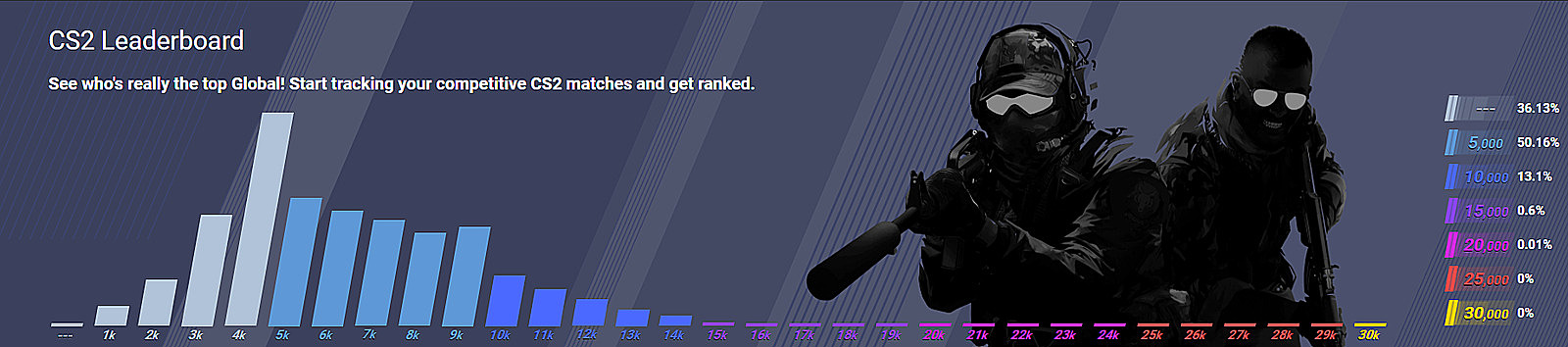
Our analysis leverages Leetify’s 2022 player base chart captured post-rank reset. By examining percentile distributions across both systems, we’ve established these current conversion benchmarks:
| CSGO RANK | PLAYEBASE% | CS2 Rating pts |
| Silver | ~22% | 1,000 – 9,500 |
| Gold Nova | ~33% | 9,500 – 14,500 |
| MG1-MGE | ~21% | 14,500 – 17,000 |
| DMG-LEM | ~12.5% | 17,000 – 20,000 |
| Supreme | ~2.6% | 20,000 – 22,000 |
| Global | ~1% | 22,000+ |
Regional server populations may exhibit slight variations in these benchmarks. Australian and Asian servers often demonstrate different distribution patterns compared to European and North American regions, though the core conversion principles remain consistent.
The progression from CS2’s beta period to its current state reveals Valve’s responsive development approach. Initial community-driven comparisons established foundational conversion metrics that have evolved through systematic refinements.
Original text (During CS2 Beta): Before official labeling implementation, dedicated community members developed conversion methodologies. Reddit analysts cross-referenced calibration data from established CS:GO players, creating these historical reference points:
CS2 vs CS:GO rank comparison
- Silver I
- Silver II
- Silver III
- Silver IV
- Silver Elite
- Silver Elite Master
- Gold Nova I ~ 9,300
- Gold Nova II ~ 10,000
- Gold Nova III ~ 10,500
- Gold Nova Master
- Master Guardian I ~ 11,200
- Master Guardian II ~ 12,200
- Master Guardian Elite ~ 13,000
- Distinguished Master Guardian ~ 14,000
- Legendary Eagle ~ 15,000
- Legendary Eagle Master ~ 16000
- Supreme Master First Class ~ 17,500
- The Global Elite ~ 19,000
Historical context matters: Professional benchmarks like s1mple initially calibrated at 19,500, while ropz achieved 22,000. These elite players demonstrate the system’s upper performance thresholds and progression potential.
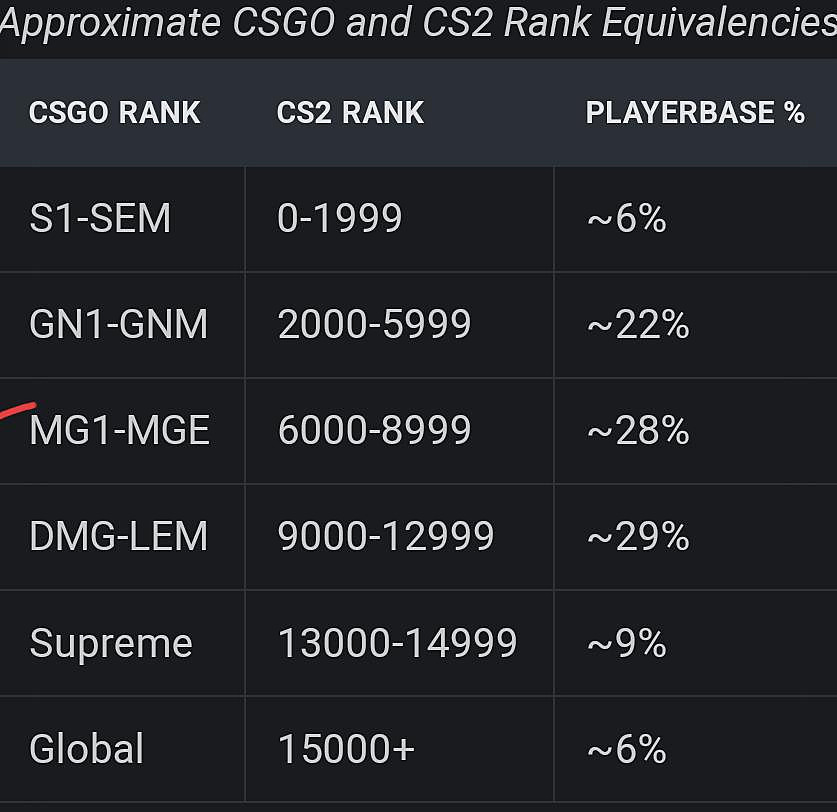
Update, September 11: Leetify’s comprehensive analysis of 440,000 accounts provided crucial early distribution insights, establishing foundational conversion principles.
Achieving consistent rating improvement requires strategic focus beyond mechanical skill development. Many players plateau because they prioritize individual performance over team coordination and strategic understanding.
Strategic Progression Tips:
- Consistent Performance: Focus on maintaining stable performance across multiple matches rather than chasing single-game highlights
- Map Specialization: Develop deep expertise on 2-3 maps initially rather than spreading focus too thinly
- Team Communication: Develop clear callout systems and economic coordination with regular teammates
- VOD Review: Regularly analyze your gameplay to identify recurring mistakes and improvement opportunities
Common Progression Mistakes:
- Rating Obsession: Focusing too heavily on point fluctuations rather than skill development
- Inconsistent Play Schedules: Irregular playing patterns disrupt skill consolidation and team synergy
- Over-extension: Attempting to play too many maps or roles simultaneously
- Tilt Management: Failure to recognize emotional state impacts on decision-making and performance
Understanding rating volatility is crucial. The system naturally incorporates performance variance, meaning temporary drops don’t necessarily reflect skill regression. For comprehensive gameplay improvement strategies, consult our Complete Guide for foundational principles that translate across competitive FPS titles.
Advanced players should focus on developing specialized skills that impact round outcomes. This includes utility usage optimization, economic decision-making, and mid-round adaptation capabilities.
How to get CS2 Competitive map-related rank?
The separation between Premier global rating and map-specific competitive ranks represents Valve’s refined competitive philosophy. This approach allows players to demonstrate specialized map expertise while maintaining an overall skill assessment.
Current available modes provide different competitive experiences, with Premier serving as the primary ranked environment while other formats develop.
CS2 Gamemodes
- Premier (current competitive)
- Competitive (not available, map-related ranks)
- Casual (no rank)
- Skrimmage (no rank)
- Wigman (not available but will be added)
- Danger Zone (not announced)
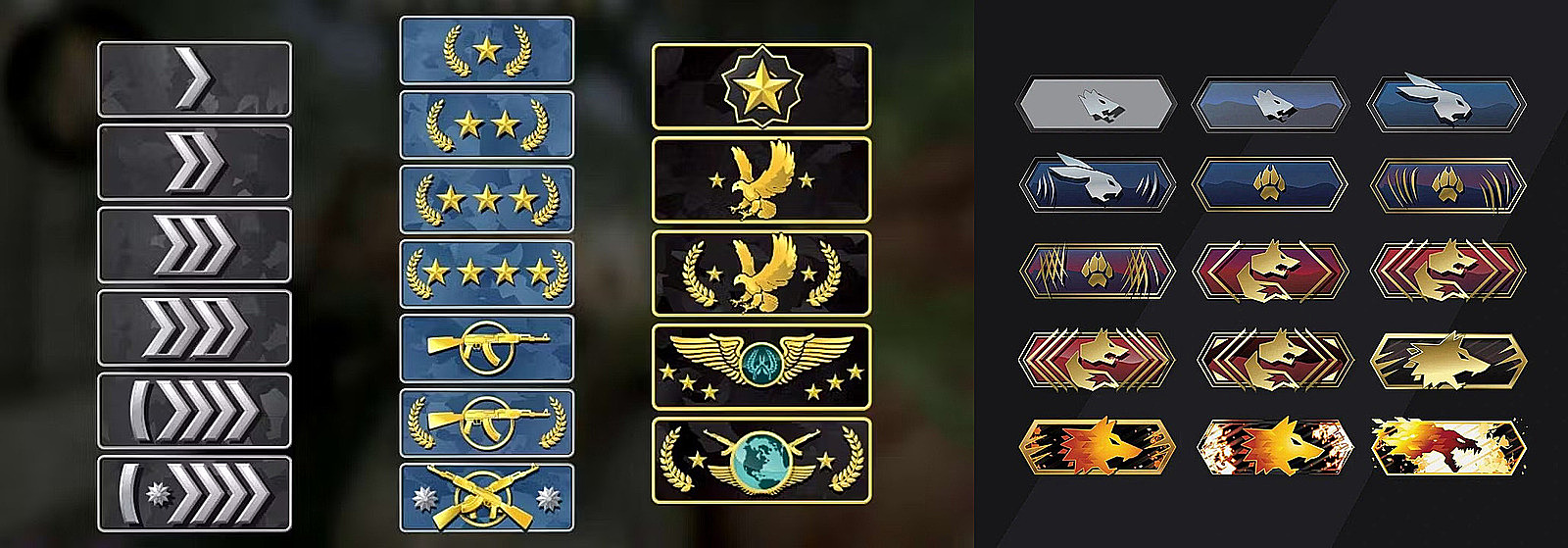
Regarding visualization and names, all CS2 ranks should remain the same. There are 33 of those across all regimes. The 18 classic ones work in Competitive and Wingman, while 15 more are designed for Danger Zone.
All Danger Zone ranks
- Lab Rat I
- Lab Rat II
- Sprinting Hare I
- Sprinting Hare II
- Wild Scout I
- Wild Scout II
- Wild Scout Elite
- Hunter Fox I
- Hunter Fox II
- Hunter Fox III
- Hunter Fox Elite
- Timber Wolf
- Ember Wolf
- Wildfire Wolf
- The Howling Alpha
For weapon optimization within these competitive environments, our Weapons Unlock guide provides essential strategies. Similarly, effective Class Guide principles apply directly to role specialization in CS2’s team dynamics.
The future competitive landscape will likely incorporate additional specialized rankings and potentially team-based rating systems as the ecosystem matures.
Action Checklist
- Analyze your current rating distribution and identify 2-3 key improvement areas
- Establish consistent play schedule with dedicated practice sessions
- Focus on mastering 2-3 maps thoroughly before expanding your map pool
- Develop team communication protocols and economic coordination with regular teammates
- Schedule weekly VOD review sessions to identify pattern mistakes
No reproduction without permission:SeeYouSoon Game Club » Comparing CS:GO ranks to new CS2 Premier CS Rating. How many elo points needed for GN, MG, DMG, and Global Elite in CS2? [Updated, 2024] Complete CS2 Premier rating guide with rank comparisons, progression strategies, and competitive insights