
TL;DR
- Arenas features round-based 3v3 combat with strategic resource management between rounds
- Legend selection prioritizes tactical abilities over ultimates due to purchase restrictions
- Material economy requires balancing early purchases with saving for late-game power spikes
- Positioning and map control often determine success more than raw mechanical skill
- Team composition synergy and coordinated ability usage create significant advantages
Apex Legends Arenas transforms the battle royale experience into focused 3v3 tactical engagements that emphasize strategic decision-making and team coordination. This mode delivers constant high-intensity combat while requiring careful resource management throughout each match.
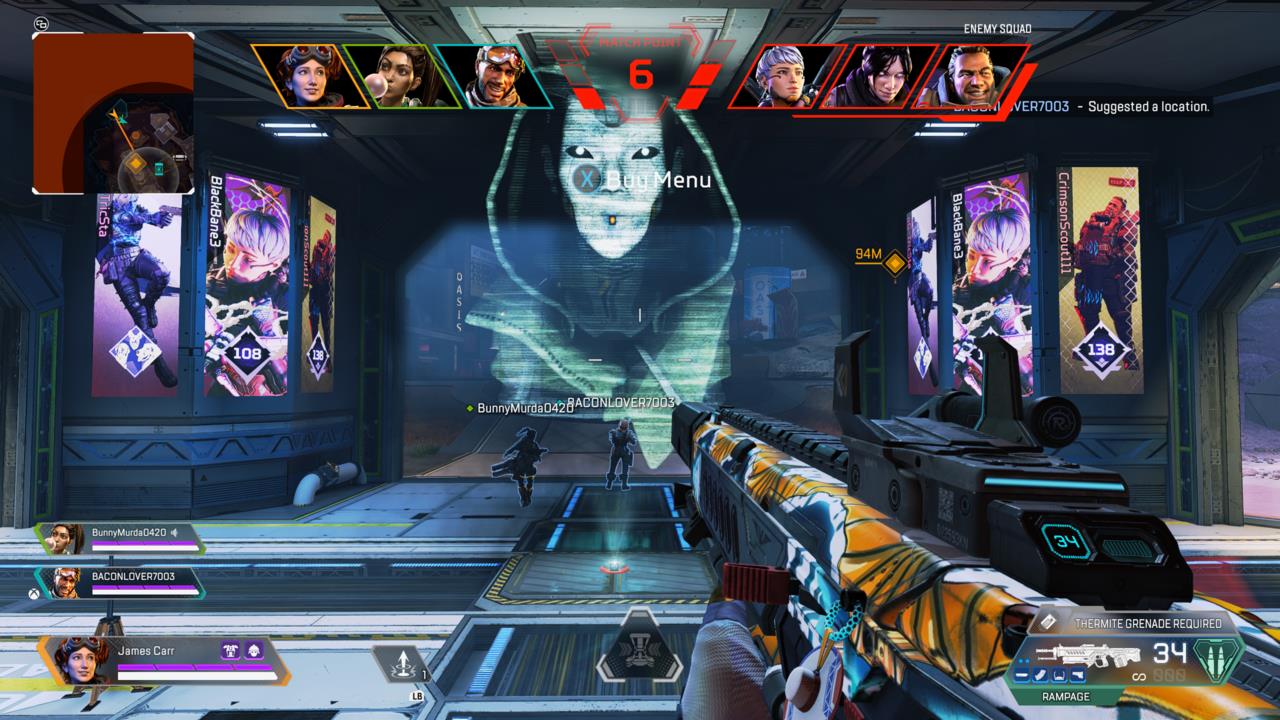
The Arenas starting room, where teams strategize before each round begins
Two distinct playlists define the Arenas experience: ranked competition and casual unranked matches. Both feature rotating map selections with visible timers indicating when the current arena will cycle out. Unlike traditional battle royale where survival is paramount, Arenas focuses purely on squad elimination within confined combat zones.
Victory requires winning a best-of-five series, but with a critical twist: teams must secure victory by at least two rounds. This creates dramatic comeback opportunities and prevents quick sweeps. Matches cap at nine rounds maximum—if teams reach this limit without a two-round advantage, the ninth round becomes sudden death.
Each round provides foundational gear: standard body armor, two shield cells for replenishment, two syringes for health recovery, and one tactical ability charge. Passive abilities remain continuously active, creating consistent legend identity throughout matches. The strategic depth emerges from Material-based purchases between rounds for weapons, attachments, grenades, and additional ability charges.
Materials distribute through multiple channels: base allocation increasing each round, individual performance rewards for eliminations and assists, and team-wide bonuses from capturing material caches scattered across each map.
Unused Materials carry forward between rounds, while purchased items reset completely regardless of round outcome. This economy system encourages either aggressive early spending or strategic saving for powerful late-game loadouts. Critical limitations include tactical cooldowns persisting despite purchased charges and ultimate abilities having mandatory one-round cooldowns between uses.
Arenas demands different legend priorities than battle royale due to altered ability dynamics and combat pacing. Tactical abilities and passives gain significance while ultimates become situational investments due to purchase restrictions and cooldowns.
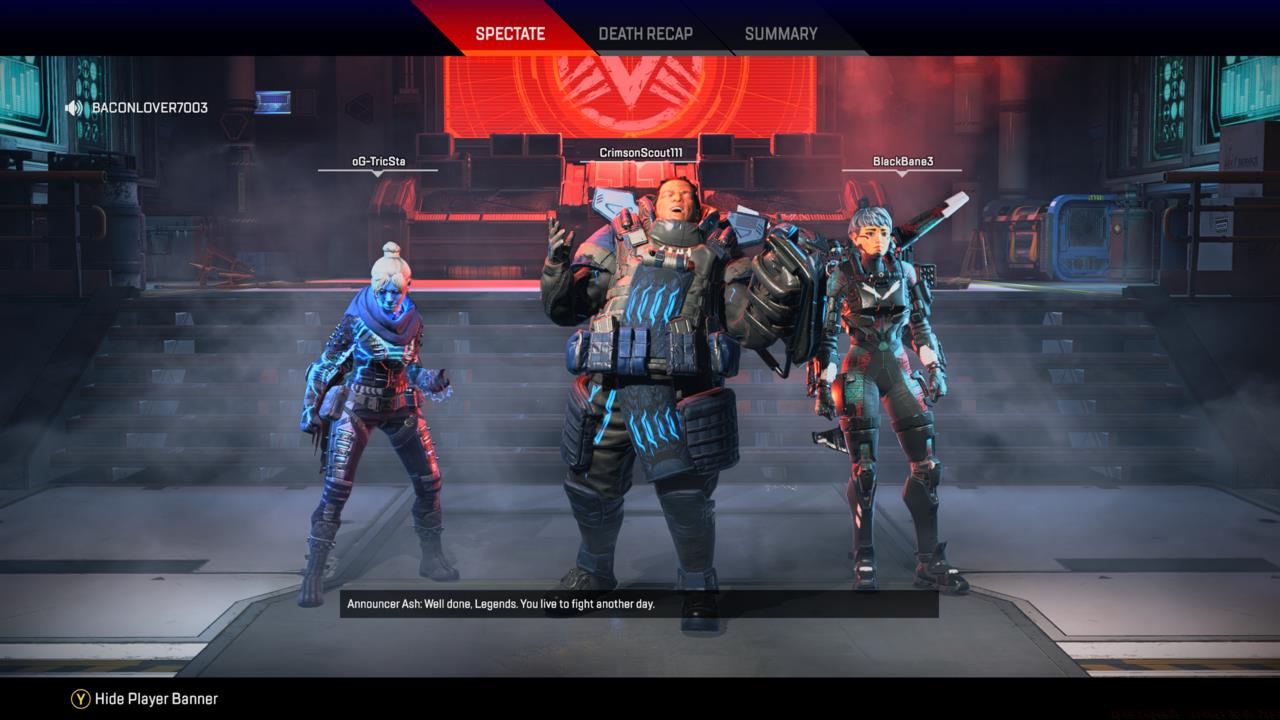
Strategic legend combinations like Gibraltar, Valkyrie, and Wraith create versatile team compositions
The elimination-focused nature of Arenas elevates legends with sustain capabilities and combat-enhancing passives. Since fallen teammates cannot respawn mid-round, abilities that preserve squad viability become paramount for consistent success.
Lifeline emerges as a top-tier selection due to her revolutionary combat revive mechanic. The DOC drone enables simultaneous offensive pressure while reviving, creating numerical advantages during engagements. Combining this with the legendary backpack upgrade—available in later rounds—transforms revived teammates into immediate combat threats with enhanced shields.
Beyond Lifeline, several legends offer distinct advantages in 3v3 scenarios. Gibraltar’s fortified passive and protective dome provide sustained defensive utility, while Bloodhound’s tactical scanning reveals enemy positions for coordinated pushes. Octane’s stim mobility allows rapid repositioning, and Bangalore’s smoke screens create visual cover for revives or retreats.
Common selection mistakes include overvaluing ultimate-dependent legends and neglecting team ability synergy. A balanced composition typically includes one sustain legend, one recon/intel gatherer, and one mobility/assault specialist.
Weapon selection in Arenas follows a progressive economic strategy that balances immediate round needs with long-term match planning. Understanding weapon tier values at different price points separates average players from consistently successful competitors.
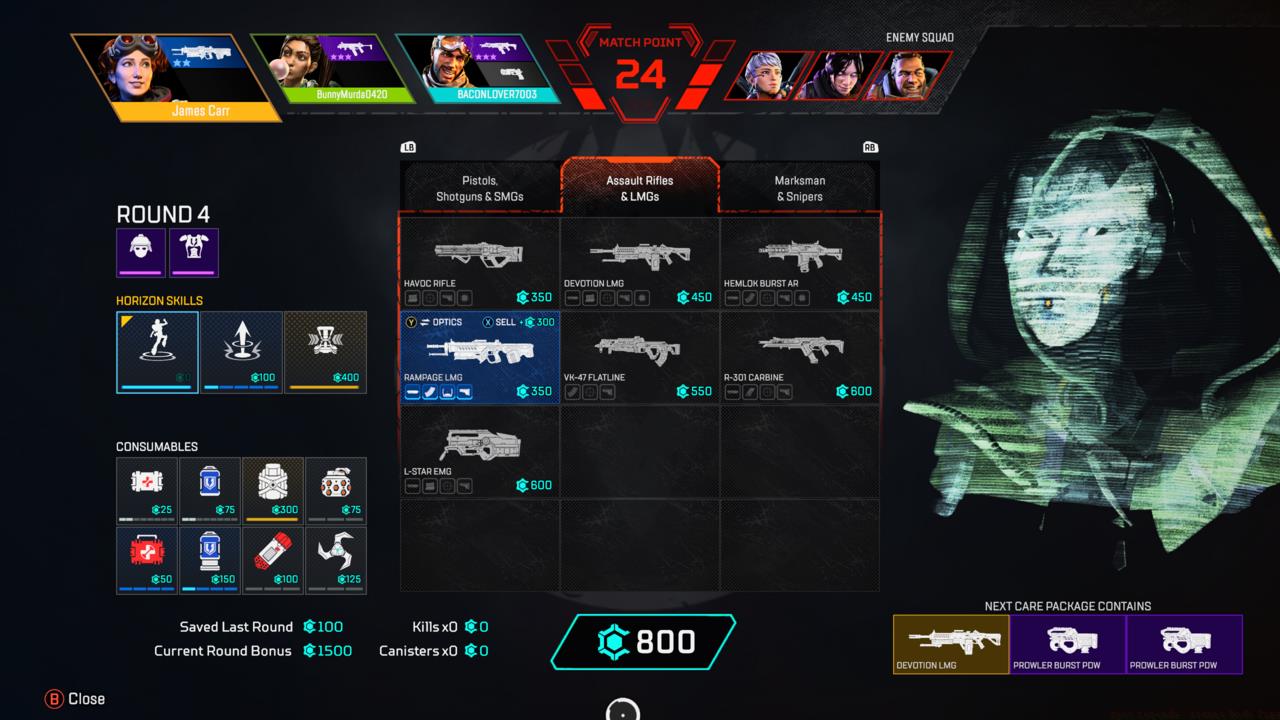
The Arenas purchase interface, where strategic loadout decisions determine round outcomes
Early rounds favor cost-effective weapons that perform well with minimal attachments. The R-301 carbine offers reliable performance at moderate cost, while the Volt SMG provides excellent close-range dominance. The Mozambique shotgun, often overlooked in battle royale, becomes a budget powerhouse when combined with hammerpoint rounds.
Mid-game transitions should prioritize weapons that scale effectively with attachments. The Flatline’s raw damage output justifies higher investment, and the Wingman maintains relevance throughout all match phases when mastered.
Attachment purchasing follows specific priority patterns: extended magazines first for sustained firepower, then optics for engagement flexibility, and finally barrel stabilizers for recoil control.
Advanced economic strategy involves recognizing when to sacrifice round power for future advantage. Saving 200-300 materials in early rounds enables purchasing fully-kitted weapons or crucial abilities in decisive later rounds.
Beyond basic mechanics, Arenas mastery requires understanding advanced tactical concepts and recognizing common failure patterns. Many players plateau due to repeating fundamental mistakes in positioning and resource allocation.
Map control begins with material cache prioritization—securing these early provides economic advantages that compound throughout the match. Teams should designate one player for cache collection while others establish map control.
Positioning errors represent the most frequent cause of round losses. Overextending without escape routes, clustering too tightly for area-of-effect abilities, and neglecting high-ground advantages consistently undermine otherwise competent teams.
Communication protocols dramatically improve coordination efficiency. Designating primary targets, announcing ability usage, and coordinating pushes separates organized teams from random groupings.
Advanced techniques include baiting enemy abilities through feigned aggression, using environmental destruction for sightline creation, and mastering the timing between ability cooldowns and purchase opportunities.
For players transitioning from battle royale, the most significant adjustment involves accepting that conservative play often leads to economic disadvantages. Controlled aggression typically yields better results than passive positioning.
Action Checklist
- Master 2-3 cost-effective weapons for early rounds to conserve materials
- Practice material cache routes on each map to maximize economy
- Develop team composition synergy with your regular squadmates
- Implement round-specific purchase strategies based on match progression
- Analyze replay footage to identify positioning errors and communication breakdowns
No reproduction without permission:SeeYouSoon Game Club » Apex Legends: Arenas Mode Tips Master Apex Legends Arenas with advanced strategies, legend selection, and tactical loadout optimization