
TL;DR
- Blueberries deliver the highest consistent profit due to continuous harvesting throughout summer
- Starfruit offers massive single-harvest returns but requires significant upfront investment
- Melons provide excellent value and can yield giant crops when planted in 3×3 patterns
- Community Center bundles require diverse summer crops beyond just profit maximization
- Processing crops into artisan goods can multiply their value by 2-3 times
Summer in Stardew Valley presents farmers with abundant opportunities to cultivate high-value crops that can dramatically boost their seasonal income. This warm season offers the perfect growing conditions for multiple premium crops that generate substantial returns on investment.
Strategic crop selection during summer months is crucial for maximizing your farm’s profitability while balancing other gameplay objectives. Unlike spring’s limited options, summer provides diverse planting choices that cater to both profit-focused and completionist playstyles.
Many players underestimate the importance of crop diversity, focusing solely on immediate profits while neglecting long-term goals like Community Center completion and artisan goods production.
Blueberries stand as the undisputed summer champion for consistent profitability. Their unique multi-harvest mechanic means each 80G seed investment yields returns throughout the entire season. With plants producing every four days after the initial 13-day growth period, a single blueberry bush can generate 3-4 harvests, with each harvest yielding multiple berries. This compounding effect creates exceptional value that few other crops can match.
Starfruit represents the premium investment option, offering staggering 750G base value per fruit. However, the 400G seed cost from the Oasis shop requires careful financial planning. For players with sufficient capital, starfruit delivers the highest per-plot returns, though its single-harvest nature means careful timing is essential.
Melons provide excellent middle-ground value with their 80G seed cost and 250G profit margin. When planted in 3×3 configurations, melons have a chance to merge into giant crops, which yield double the normal harvest when broken with an axe.
Red cabbage offers impressive profitability but becomes available only in Year 2 at Pierre’s shop. Its 260G base value and 160G net profit per crop make it worth prioritizing once accessible.
While profit optimization is important, players pursuing the Community Center path must cultivate specific summer crops to complete bundles. The Pantry bundle requires melons, while the Dye bundle needs red cabbage. These requirements often necessitate dedicating portions of your farmland to non-optimal profit crops.
Hot peppers and tomatoes serve dual purposes, providing consistent harvests for cooking recipes and gifting while generating steady income. Hot peppers regenerate every three days after initial growth, making them excellent for players who prefer frequent harvesting sessions.
Hops represent a specialized option that, while low in direct sale value, become extremely profitable when processed into pale ale. Their daily production after the 11-day initial growth makes them labor-intensive but highly rewarding for dedicated artisans.
| Crop | Seed Cost | Growth Time (days) | Sell Price |
|---|---|---|---|
| Melon | 80G | 12 |
Normal: 50G Silver: 62G Gold: 75G Iridium: 100G |
| Poppy | 100G | 7 |
Normal: 140G Silver: 175G Gold: 210G Iridium: 280G |
| Radish | 40G | 6 |
Normal: 90G Silver: 112G Gold: 135G Iridium: 180G |
| Red Cabbage | 100G (Year 2) | 9 |
Normal: 260G Silver: 325G Gold: 390G Iridium: 520G |
| Starfruit | 400G (Oasis) | 13 |
Normal: 750G Silver: 937G Gold: 1,125G Iridium: 1,500G |
| Summer Spangle | 50G | 8 |
Normal: 90G Silver: 112g Gold: 135G Iridium: 180G |
| Sunflower | 200G | 8 |
Normal: 80G Silver: 100G Gold: 120G Iridium: 160G |
| Wheat | 10G | 4 |
Normal: 25G Silver: 31G Gold: 37G Iridium: 50G |
| Blueberry | 80G | 13 for initial growth, produces every 4 days after |
Normal: 50G Silver: 62G Gold: 75G Iridium: 100G |
| Coffee Bean | 2,500G (Traveling Cart) | 10 for initial growth, produces every 2 days after |
Normal: 15G Silver: 18G Gold: 22G Iridium: 30G |
| Corn | 150G | 14 for initial growth, produces every 4 days after |
Normal: 50G Silver: 62G Gold: 75G Iridium: 100G |
| Hops | 60G | 11 for initial growth, produces every day after |
Normal: 25G Silver: 31G Gold: 37G Iridium: 50G |
| Hot Pepper | 40G | 5 for initial growth, produces every 3 days after |
Normal: 40G Silver: 50G Gold: 60G Iridium: 80G |
| Tomato | 50G | 11 for initial growth, produces every 4 days after |
Normal: 60G Silver: 75G Gold: 90G Iridium: 120G |
| Summer Squash | Foraged | 6 for initial growth, produces every 3 days after |
Normal: 45G Silver: 56G Gold: 67G Iridium: 90G |
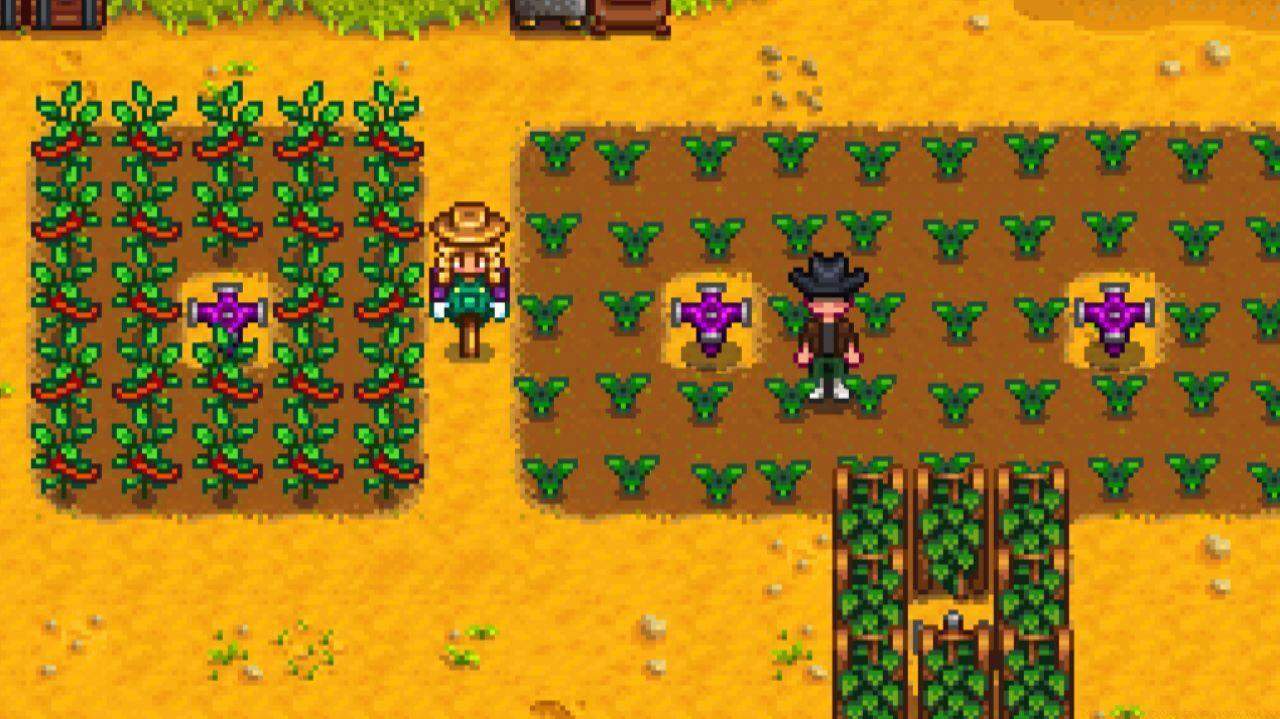
Melons, blueberries, and red cabbage are excellent summer crops.
Successful summer farming requires more than just selecting the right crops—it demands strategic planning and execution. Begin by calculating your available capital and farmland to determine the optimal crop mix. For early summer, prioritize quick-growing crops like radishes to generate immediate cash flow for larger investments.
Crop rotation strategies can maximize your land utilization. Plant fast-growing crops in the first week, then transition to high-value options like blueberries and melons. This approach ensures continuous income throughout the season rather than waiting for single large payouts.
Processing considerations dramatically impact profitability. Blueberries become even more valuable when turned into jelly (2x value) or wine (3x value). Similarly, hops processed into pale ale see their value increase from 25G to 300G—a 12x multiplier that makes them potentially the most profitable crop when accounting for artisan production.
Common mistakes include over-investing in starfruit without sufficient capital reserves, neglecting crop diversity for Community Center progress, and failing to account for processing time when planning harvest schedules.
For players with access to the greenhouse or ginger island, consider growing continuous summer crops year-round for stable income streams. This approach works particularly well with multi-harvest crops like blueberries and hot peppers.
Action Checklist
- Calculate available funds and allocate 60% to blueberries, 30% to melons, and 10% to utility crops
- Plant quick-growing radishes in first week for early cash flow
- Transition to primary crops by Summer 5-7 for optimal growth windows
- Reserve 10-15% of farmland for Community Center required crops
- Process high-value crops into artisan goods for maximum profit
No reproduction without permission:SeeYouSoon Game Club » Best Summer Crops In Stardew Valley Master Stardew Valley's summer season with optimal crop strategies for maximum profit and efficiency