
TL;DR
- The Flesh Is Weak presents your first major moral choice between blaming Jacob or determining Ben’s ghostly fate
- Jacob killed Ben while delirious but context reveals complex survival circumstances and mutual forgiveness
- Your decision directly impacts Antea’s resurrection path and establishes your playthrough’s moral foundation
- Blame Jacob only if pursuing Antea’s resurrection; otherwise choose between banishing or ascending Ben
- This case serves as training for more complex moral dilemmas throughout Banishers: Ghosts of New Eden
Early in your Banishers: Ghosts of New Eden journey, you’ll discover Jacob Lynde hiding in a woodland shelter, appearing disoriented and confused. He mentions his companion Ben ventured out hunting alone, claiming Jacob’s presence would hinder their efforts. This initial Haunting Case introduces the game’s core investigative mechanics while presenting a decision whose full implications aren’t immediately transparent.
Every spectral investigation concludes with three possible resolutions: assigning blame to a living person, exorcising a ghost, or performing a release ritual for peaceful ascension. These options represent your judgment about responsibility for the haunting situation, as ghosts always have specific reasons for tormenting the living.
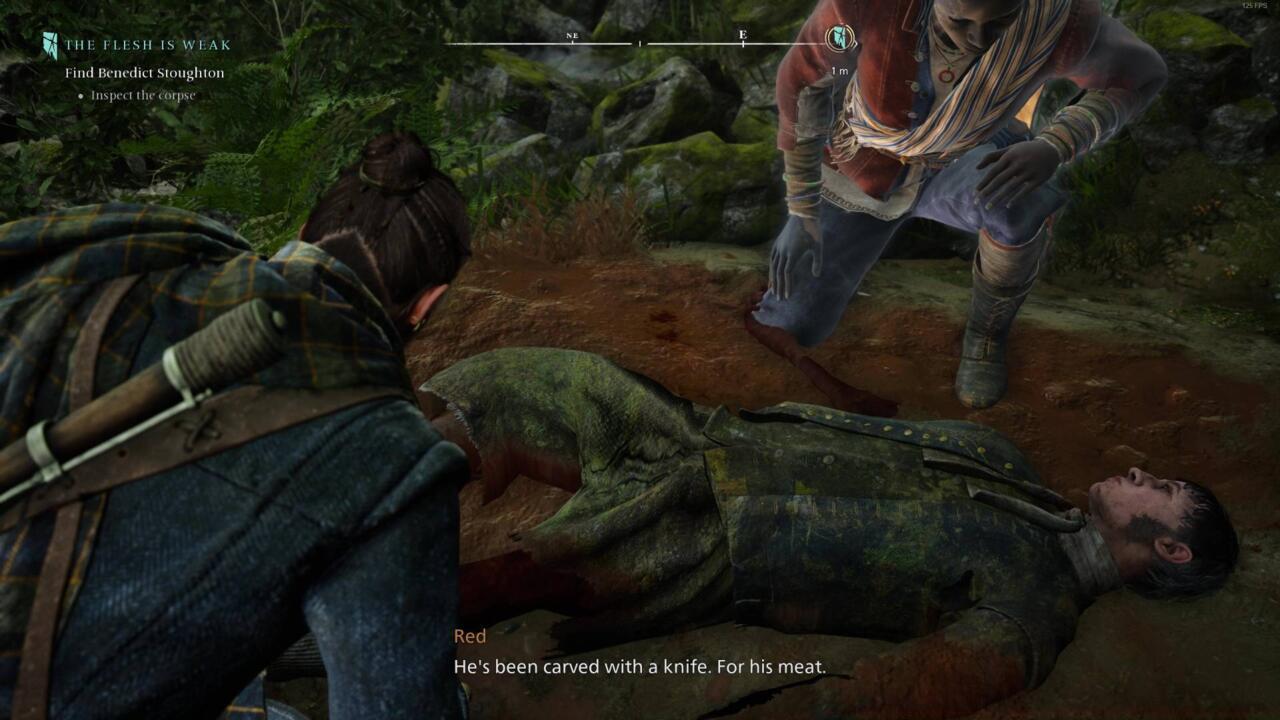
This particular quest presents a morally complex decision with significant narrative consequences.
Through Red and Antea’s investigation at Ben’s last known location, you uncover his skeletal remains and learn Jacob pushed him from a cliff during a delirious episode, frustrated by Ben’s refusal to let him surrender. Further investigation reveals the disturbing truth about Jacob’s survival methods—the decaying meat he consumes comes from carving up Ben’s corpse.
While initially appearing straightforward, this case contains significant moral nuance that experienced players should carefully consider. Jacob’s actions occurred during extreme psychological distress caused by weeks of nightmare-plagued sleep deprivation. As the hunting specialist of their duo, Ben’s absence left Jacob without survival skills, compounded by the animal scarcity from The Nightmare’s curse.
When communicating with Ben’s spirit, he expresses complete forgiveness toward Jacob, describing him as fundamentally decent and devout. Ben reveals he contemplated killing Jacob himself as a desperate survival measure before their roles reversed. Despite attempting spiritual communication, Jacob’s delirium caused him to perceive Ben as still living, even offering him portions of the gruesome sustenance. Ben encapsulates their shared predicament perfectly during the final confrontation: both faced the horrific choice between committing murder or accepting death.
Common mistakes players make include rushing this decision without fully exploring contextual clues or understanding how this choice establishes patterns for future Haunting Cases. Advanced players should note that thorough environmental investigation before the decision reveals additional narrative layers about their relationship dynamics.
The critical choice presents three distinct paths: condemning Jacob Lynde, facilitating Benedict Stoughton’s peaceful departure, or forcibly expelling his spirit. Accusing Jacob equates to judicial execution, but as detailed in our comprehensive Complete Guide to character progression systems, this action becomes mandatory if you’re pursuing Antea’s resurrection path. For players choosing Antea’s ascension route, you maintain flexibility between Ben’s banishment or ascension.
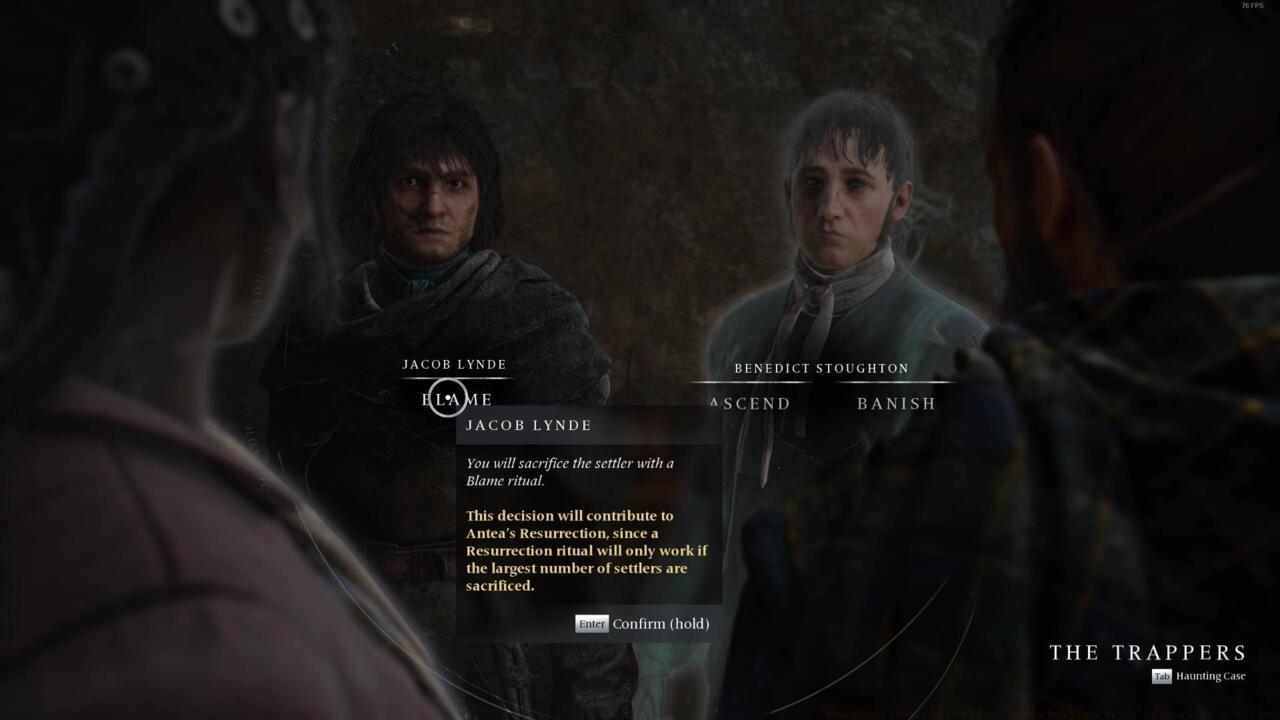
Your decision shapes both immediate outcomes and long-term narrative development throughout the game.
Strategic considerations should include your intended playthrough morality, desired character outcomes, and how this early decision establishes precedent for future spectral judgments. Players focusing on Weapons Unlock progression in similar games should appreciate how narrative choices here unlock different gameplay opportunities later.
Time investment for fully exploring this case typically ranges 45-60 minutes, with additional investigation potentially revealing hidden lore elements. The decision itself takes approximately 5-10 minutes of contemplation if thoroughly considering all contextual evidence.
While this initial Haunting Case seems morally clear-cut—Jacob committed murder despite his impaired state—it establishes crucial patterns for the increasingly ambiguous moral dilemmas ahead. Your selection may require choosing outcomes that conflict with personal ethics based on your pledged oath to Antea. The Flesh Is Weak functions as an essential training scenario for the complex spectral investigations that follow throughout New Eden.
Advanced players should recognize how this decision influences later game dynamics, including character interactions, available quest paths, and resolution options for subsequent hauntings. Similar to mastering Class Guide specialization in tactical games, understanding these early moral mechanics prepares you for more sophisticated narrative branching.
Optimization strategies include documenting your decision rationale for consistency across cases, considering how each choice aligns with your character’s developing moral compass, and anticipating how early decisions create narrative momentum toward specific endings.
Action Checklist
- Thoroughly investigate all environmental clues before confronting Jacob and Ben
- Determine your primary goal: Antea resurrection versus ascension path
- If pursuing resurrection, blame Jacob; for ascension, choose between banishing or ascending Ben
- Document your decision rationale for consistency in future Haunting Cases
- Consider how this decision establishes moral precedent for your entire playthrough
No reproduction without permission:SeeYouSoon Game Club » Banishers: Ghosts Of New Eden – Should You Blame Jacob, Or Banish Or Ascend Ben? Master the crucial Jacob and Ben decision in Banishers with strategic insights and consequence analysis