
TL;DR
- Ascend oath offers gameplay flexibility but provides a less satisfying narrative conclusion
- Resurrection oath requires completing all Haunting Cases and sacrificing settlers for the best ending
- Choosing resurrection adds 10+ hours to gameplay and demands strategic decision-making
- Ascend path allows ghost banishment or release rituals without killing settlers
- Resurrection path locks you into specific outcomes and significantly impacts character relationships
Which strategic path will you choose when determining Antea’s ultimate fate through the Ascend or Resurrection oath?
During the opening hours of Banishers: Ghosts of New Eden, players encounter a pivotal narrative crossroads that shapes the entire gaming experience. As protagonist Red, you must commit to a binding promise regarding your deceased partner Antea – either facilitating her peaceful transition to the afterlife or pursuing her physical restoration through complex rituals. While the game indicates that resurrection demands extensive settler sacrifices via blame ceremonies, the full strategic implications remain somewhat obscured. This comprehensive analysis provides spoiler-free guidance on optimizing your oath selection.
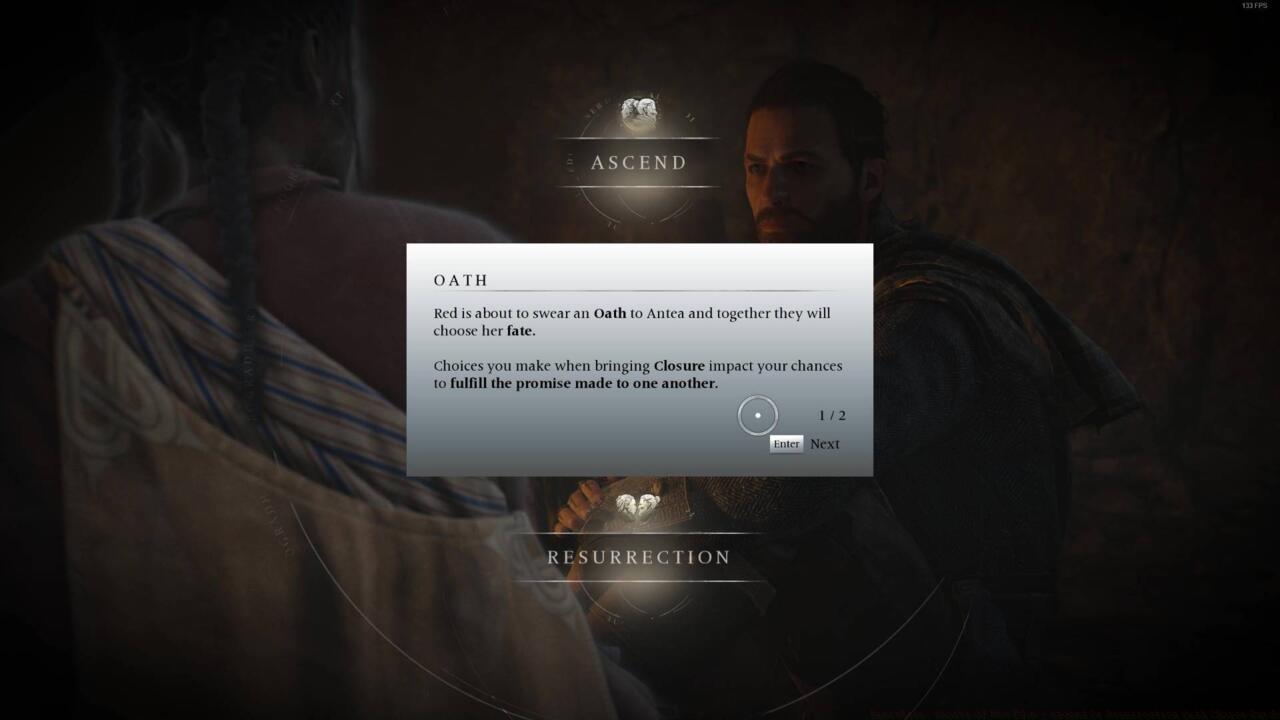
For Red and the player alike, this early decision may weigh heavily.
This commitment carries profound emotional weight for both Red as a character and you as the player, establishing the moral compass for your entire journey through New Eden’s haunted landscapes.
Selecting the Ascend oath pathway means committing to Antea’s peaceful departure when you eventually recover her physical form from the meetinghouse. This approach represents the more accessible option for players seeking a balanced experience between main narrative progression and optional content exploration.
Banishers: Ghosts of New Eden features numerous optional haunting investigations that present moral dilemmas involving settlers and spectral entities. When pursuing Antea’s ascent, you maintain decision flexibility at each case conclusion – you can either forcibly dispatch problematic ghosts to eternal oblivion if they’ve committed wrongdoing, or perform release ceremonies to help them move on peacefully. Both resolution methods advance Antea’s ascent progression, but critically, you cannot assign blame to living settlers throughout these investigations.
Strategic Advantage: The Ascend path permits selective engagement with side content without mandatory completion requirements, allowing players to focus on primary story advancement while still experiencing substantial gameplay content.
Committing to Antea’s resurrection establishes two non-negotiable gameplay requirements that significantly impact your experience. First, you must comprehensively complete every optional Haunting Case available before reaching the game’s conclusion. Second, each case resolution demands that you assign blame – resulting in execution – to a living settler in every single investigation, as the Lesser Palingenesis ritual necessitates maximum possible settler sacrifices to succeed.
Attempting to conclude the main narrative without achieving the highest possible settler sacrifice count triggers an unfavorable ending sequence. Therefore, achieving resurrection demands meticulous completion of all haunting investigations with consistent settler sacrifices as the predetermined outcome.
Time Commitment Analysis: The resurrection pathway typically extends gameplay by 10-15 hours beyond the standard 30-hour completion time, requiring dedicated exploration and systematic case resolution.
Common Pitfall: Many players underestimate the mandatory nature of side content completion and consequently fail to achieve their desired ending, necessitating additional playthroughs to experience alternative outcomes.
The Ascend oath provides substantially greater freedom in gameplay approach and side content engagement, though it delivers a less emotionally satisfying conclusion for the central character relationship. Pursuing resurrection demands extensive strategic planning and moral compromise through systematic settler executions, with Red and Antea frequently experiencing doubt about their chosen path. Achieving this narrative conclusion requires exhaustive case completion, significantly extending playtime. However, for the devoted Banishers couple, this represents the most coherent narrative resolution, albeit through ethically questionable means.
Advanced Strategy: For optimal gameplay experience, consider your available time commitment and moral preferences. The Ascend path suits players valuing flexibility and narrative exploration, while Resurrection appeals to completionists seeking the most definitive character resolution.
For players interested in mastering game mechanics and strategic approaches, our Complete Guide offers valuable insights into optimizing gameplay systems across different titles.
Action Checklist
- Evaluate your available gaming time – Resurrection requires 40+ hours versus 30 for Ascend
- Assess your completionist tendencies before committing to Resurrection path
- Document all Haunting Case locations if choosing Resurrection to ensure none are missed
- Plan settler sacrifice strategy systematically across all cases for Resurrection
- For Ascend path, prioritize main story while selectively completing haunting cases that interest you
No reproduction without permission:SeeYouSoon Game Club » Banishers: Ghosts Of New Eden – Ascend Or Resurrection Oath Choice Guide Complete guide to choosing between Ascend and Resurrection oaths in Banishers with strategic insights