
Complete guide to Assetto Corsa EVO’s latest update with new cars, gameplay modes and performance enhancements
Game Overview and Release Timeline
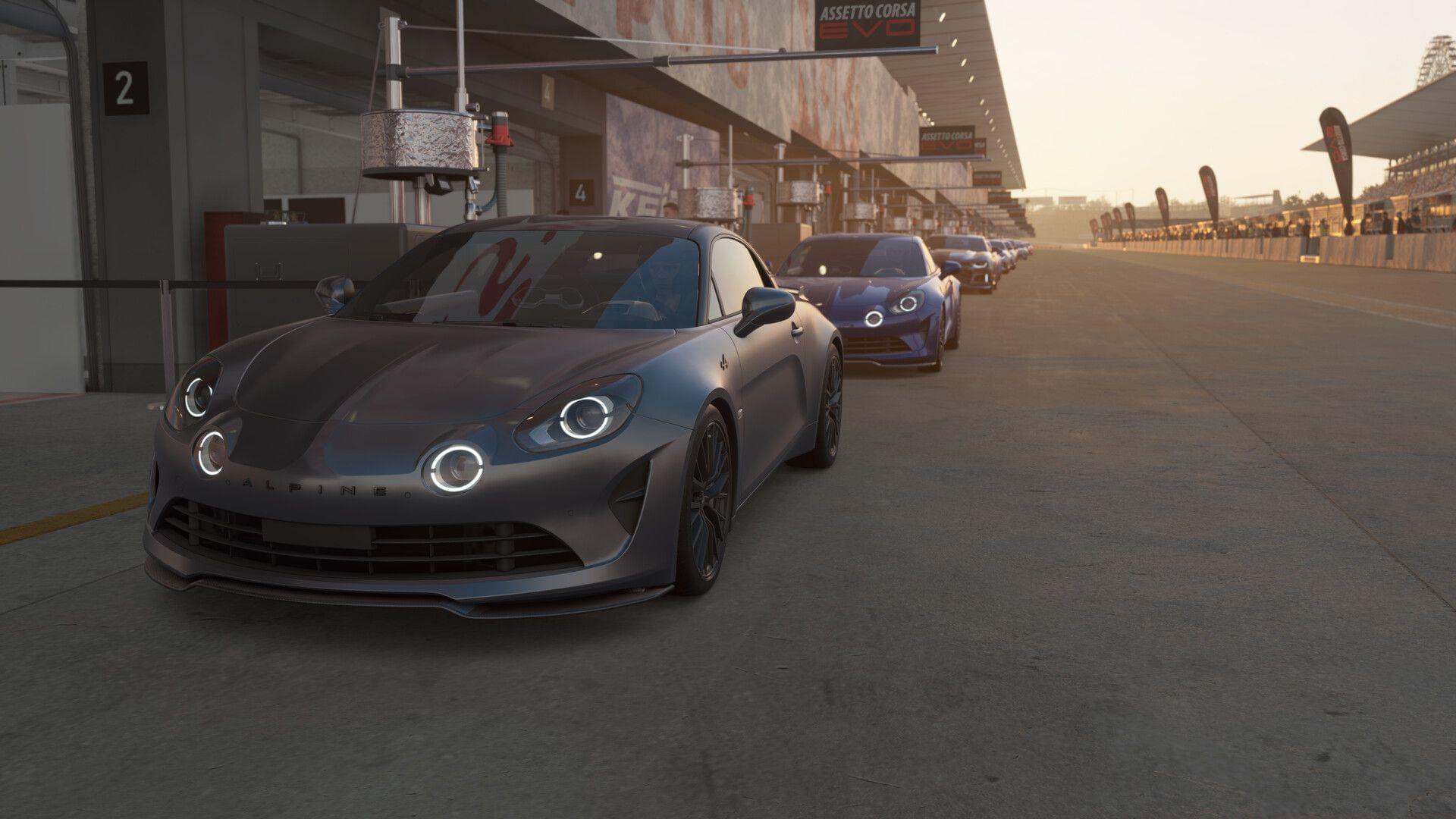
Assetto Corsa EVO continues its development journey with the beta phase actively engaging players since January 16, 2025. Despite the racing simulation genre typically maintaining smaller dedicated communities, this title has consistently dominated its category with the largest active player base. The development team recently deployed a substantial update while maintaining the early access status, with the complete version scheduled for Fall 2025 availability.
For sim racing enthusiasts, understanding the development timeline is crucial. Early access phases allow developers to gather community feedback while implementing core features. The current beta period provides an opportunity for players to experience the evolving physics engine and provide input that shapes the final product. This collaborative approach has earned significant appreciation from the dedicated fanbase who value the transparency and ongoing improvements.
New Content Additions
The latest build introduces significant content expansions that substantially increase the available racing environments and vehicle options. Circuit Of The Americas now includes both GP and National configurations, providing distinct racing experiences on the same facility. Similarly, Donington Park Circuit receives parallel treatment with GP and National layout variants that challenge drivers with different technical requirements.
- Circuit Of The Americas – GP and National layouts
- Donington Park Circuit – GP and National layouts
- Alfa Romeo 75 Turbo Evoluzione
- Alfa Romeo Giulia Sprint GTA
- Lotus Exige V6 Cup
- Honda NSX-R (92R)
- Mazda Miata (MX-5) NA
- Porsche 911 Turbo 3.6 (964)
Vehicle selection strategy becomes increasingly important with these additions. The Alfa Romeo models bring classic Italian performance, while the Honda NSX-R represents Japanese engineering excellence. The Mazda Miata NA offers accessible rear-wheel drive dynamics perfect for newcomers developing car control skills. Each vehicle category serves specific racing disciplines, allowing players to specialize or diversify their garage based on preferred competition types.
Gameplay Mode Enhancements
Fundamental gameplay structure receives a major overhaul with the introduction of dual progression pathways. Players now choose between Career Mode, which maintains traditional structured advancement, and Open Mode, offering unrestricted access to content. This bifurcated approach accommodates both goal-oriented players and those preferring sandbox-style experimentation.
Career Mode operates independently from backend connectivity requirements, ensuring uninterrupted progression regardless of server status. This represents a significant quality-of-life improvement for players with inconsistent internet connections. The mode maintains the familiar challenge-based advancement system where vehicle acquisition and event participation follow predetermined unlock criteria.
Open Mode revolutionizes accessibility by providing immediate availability of all dealership vehicles for garage population. Customization options face no artificial restrictions, allowing creative expression through visual and performance modifications. The ‘All Cars’ button functionality enables bulk selection operations, while garage management includes new ‘remove vehicle’ capabilities for inventory optimization.
Specialized tip: When starting fresh, create separate profiles for each mode to experiment with Open Mode customization before committing to Career Mode decisions. This allows testing vehicle handling characteristics and customization options without impacting progression metrics.
Technical Improvements and Bug Fixes
Core simulation systems receive substantial refinements addressing longstanding community requests. Fuel and battery consumption mechanics return alongside gearbox damage modeling, adding strategic depth to race management. The development team implemented numerous cardata adjustments for Lamborghini and Lancia vehicles, improving their handling characteristics to match real-world performance profiles.
User interface navigation undergoes comprehensive improvements with controller input filtering resolution and focus management corrections. The controls page now features independent input polling, cancel button functionality, and soft configuration application without immediate commitment. These changes significantly reduce frustration during setup adjustments.
Performance degradation issues receive targeted solutions, including VRAM leak resolution that previously caused progressive frame rate reduction during extended sessions. Memory optimization efforts yield approximately 10x texture memory savings for main menu elements and 50% reduction for dash display assets. Loading times benefit from streamlined asset management and optimized global illumination memory footprint.
Common mistake avoidance: Always check electronic setup transfers to track before beginning timed sessions. The update fixes previous issues where settings wouldn’t properly apply, but verification ensures optimal performance during critical racing moments.
- re-enabled fuel and battery consumption
- re-enabled gearbox damage
- Lambo and Lancia cardata fixes and tweaks
- fixed electronics setup settings not transferring to track
- fixed a VRAM leak caused by the UI engine
- optimized global illumination memory footprint
AI and Racing Systems
Artificial intelligence behavior receives comprehensive enhancements across multiple racing scenarios. The Quickrace and Race Weekend interfaces now provide granular control over opponent skill levels through adjustable range sliders. The new ‘Opponents Behaviour’ system replaces previous aggressiveness controls, currently featuring only the ‘safe’ preset that utilizes proven algorithms with conservative racing line adherence.
Pit lane operations undergo significant logic improvements addressing previous inconsistencies. AI drivers demonstrate enhanced spatial awareness when navigating pit lanes, properly centering themselves and avoiding wall contact. The elimination of teleportation glitches at session conclusions and corrected pit entry timing create more realistic race simulations.
Race start procedures benefit from recalibrated AI response times, preventing excessive delays when initiating acceleration. The removal of grid randomization ensures consistent starting positions, while revised braking calculations improve overtaking opportunities and defensive maneuvering. Corner cutting tendencies receive precision adjustments for more authentic racing line adherence.
Advanced strategy: Utilize the custom grid logic with Performance Index (PI) categorization to create balanced competition fields. This system allows matching vehicles by ICE, EV, hybrid classifications or performance metrics for closer racing experiences.
- fixed AI cars being teleported to pit at session end
- improved AI wall awareness in pitlanes
- fixed AI cars taking too long at race start
- improved braking calculation
- new Custom Grid logic with car categories
Visual and Audio Enhancements
[Graphics] Enhancements:
Visual presentation reaches new heights with comprehensive weather system recalibration across all track environments. The revised atmospheric conditions reduce persistent fog effects while enhancing horizon definition and dawn lighting scenarios. Material improvements for vegetation combined with enabled car dirt accumulation increase environmental immersion.
Virtual reality support expands with additional camera sets and runtime video setting modifications. Mirror capture defaults to dynamic mode in VR, while enhanced reflections and new grass types improve spatial awareness. The elimination of horizon glitches and disabled idle-screensaver sequences create smoother virtual reality sessions.
[Graphics] Triple Rendering:
Multi-monitor configurations receive dedicated attention with clustering issue resolution from mono view implementation. DLSS technology extends to triple screen setups, while reworked world matrix calculations correct positional inaccuracies. Volumetric rendering maintains consistency during day-night transitions with eliminated shadow popping artifacts.
[Graphics] Optimizations:
Performance optimization focuses on rendering efficiency with mirror and cubemap rendering improvements. Texture streaming prioritization ensures critical environment elements like Fuji mountain load preferentially. Visual elements like wiper vignette effects now scale gradually with precipitation intensity rather than operating as binary states.
Audio engineering refinements include recalculated Doppler effects for passing vehicles and repositioned audio sources for accurate spatial representation. The Lancia Delta HF Integrale EVO II receives dedicated sound design attention with new audio assets that capture its distinctive character. Turbo and backfire sounds project appropriately from opponent vehicles at increased distance thresholds.
- retuned weather settings for less fog, better horizons
- VR: enhanced reflections and new grass type
- triple: added DLSS capabilities and fixed positional issues
- optimized loading times and VRAM usage
- new sounds for Lancia Delta HF Integrale EVO II
No reproduction without permission:SeeYouSoon Game Club » Assetto Corsa EVO 0.2 release: Everything new added with the latest patch Complete guide to Assetto Corsa EVO's latest update with new cars, gameplay modes and performance enhancements