
Apex Legends Season 13 eliminates the frustrating 2-hour map rotation, delivering dynamic gameplay and immediate player satisfaction.
The End of the 2-Hour Wait: Understanding the Core Change
A long-standing frustration for Apex Legends players has finally been addressed, injecting fresh excitement into the game ahead of Season 13: Saviors.
Respawn Entertainment’s decision to abolish the predictable 2-hour map rotation window fundamentally alters the session-to-session experience, promising significantly more variety and responding directly to player feedback.
Apex Legends’ strength has always been its diverse battlegrounds. Unlike competitors with one or two primary maps, Apex boasts four distinct, fully-realized environments: Kings Canyon, Storm Point, Olympus, and World’s Edge. This variety is key to keeping gameplay engaging. However, the developer-mandated rotation schedule, locking players into a single map for a 120-minute block, had become a major pain point. This system often meant an entire gaming session was spent on one map, regardless of personal preference or the desire for change. Season 13’s patch notes deliver a welcome reversal of this policy.
 Respawn Entertainment
This adjustment is a clear example of Respawn listening to its community and implementing changes that prioritize player enjoyment over rigid scheduling.
The old model was restrictive. If you logged on at the start of a rotation cycle, you were committed to that map for the next two hours—a timeframe that could easily cover a standard play session. This lack of choice often led to player burnout or disengagement mid-session.
As the developers noted in the patch notes: “The map rotation for the season for Saviors will be Storm Point, Olympus, and World’s Edge. We’re also removing the longer 2-hour rotation block. We felt that could be too long considering it could span the whole play session for some people.” The announcement was met with overwhelming positivity on community hubs like Reddit. Comments ranged from celebratory—”Omg I’m so excited for no more 2-hour map blocks”—to appreciative of the improved pacing—”A shorter duration sounds great.” While the exact new timing between map changes remains unspecified, the intent is clear: to prevent monotony and keep gameplay feeling fresh.
Strategic Implications: How Shorter Rotations Affect Your Game
This isn’t just a quality-of-life change; it has tangible strategic consequences. Faster map rotation demands greater mental agility and rewards players who can adapt their approach on the fly.
You can no longer settle into a single, map-specific strategy for the night. Success now hinges on your ability to quickly diagnose a map’s meta, from optimal landing spots to rotation paths, within a match or two.
Practical Tips & Strategies:
- Pre-Loadout Planning: Before queuing, consider the three-map pool (Storm Point, Olympus, World’s Edge). Have a preferred weapon set and Legend choice for each. For example, favor mid-to-long range weapons like the G7 Scout or 30-30 Repeater on Storm Point’s vast landscapes, but prepare for close-quarters SMGs like the CAR or R-99 when Olympus comes up.
- Legend Flexibility: Mains are great, but specialists shine. If you’re a Pathfinder main, your ziplines are universally useful. However, consider practicing a Legend like Valkyrie for her unmatched rotational power on large maps, or a defensive Legend like Caustic or Wattson for holding buildings on World’s Edge.
- Mental Reset: Use the brief moment between matches during a map change as a reset button. Analyze what worked or didn’t on the last map, and consciously switch gears for the next environment.
Common Mistakes to Avoid:
- Autopiloting: The biggest pitfall is playing World’s Edge the same way you play Olympus. Their geography, hot zone distribution, and rotation choke points are drastically different. Failing to adjust leads to poor positioning and early eliminations.
- Ignoring the Meta: Each map has a subtle weapon and Legend meta influenced by its design. Ignoring these trends (e.g., not prioritizing a sniper on Storm Point) puts you at a disadvantage against teams that adapt.
- Overcommitting to a Drop Spot: Your favorite Fragment landing on World’s Edge might not be viable if the next game is on Olympus. Have 2-3 preferred landing spots per map to maintain consistency without being predictable.
Maximizing the New System: Pro Tips for Season 13
To truly capitalize on this new dynamic rotation, advanced players should focus on optimization and synergy. Here’s how to turn this system update into a competitive edge.
Optimization starts with intentionality. Don’t just react to the map change; use it to dictate your session’s goals, whether it’s practicing a specific Legend on a challenging map or grinding for damage badges.
Optimization Tips for Advanced Players:
- Session Structuring: If you have a 90-minute play window, you can now realistically aim to get high-level practice on 2-3 different maps. Dedicate the first match on a new map to scouting and re-familiarization, then push for aggressive results in the following matches.
- Three-Strike Rule: If you perform poorly on a map twice in a row, use the next rotation as a hard reset. Switch your Legend, drop location, and primary weapon combo to force a new approach and break the losing streak.
- Comms Efficiency: With maps changing more frequently, in-game communication needs to be sharper. Quickly call out map-specific callouts (e.g., “Trials” on World’s Edge vs. “Gardens” on Olympus) to keep your team oriented amidst the variety.
- Exploit the Chaos: More frequent rotation means more players will be slightly less familiar with the current map’s flow at any given moment. Use this to your advantage by taking unconventional rotation paths or attacking less popular loot areas that may be overlooked.
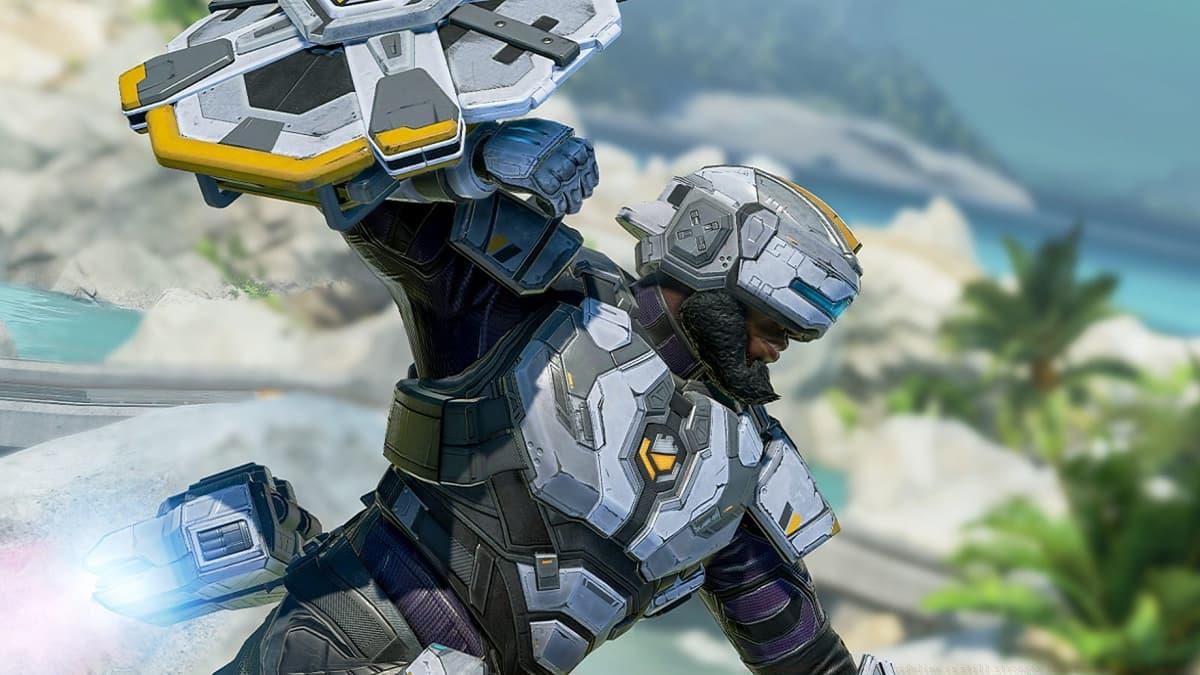
This fluid environment is the perfect testing ground for Newcastle. His mobile defensive kit can be evaluated across multiple terrains in a short period, allowing you to master his tactical placements on Olympus’s open spaces, World’s Edge’s urban clusters, and Storm Point’s varied elevations much faster than under the old system.
Beyond the Rotation: Season 13’s Complete Package
The map rotation overhaul is the centerpiece of a season designed to refresh the core Apex experience without a new map. It works in concert with other changes to create a cohesive update.
This change ensures that the seasonal weapon and Legend balance adjustments—the buffs and nerfs—are experienced in a multifaceted way, preventing any single meta from dominating the entire player experience.
The removal of Kings Canyon from the ranked and public rotation for Season 13 is a calculated decision. It focuses the player base on three maps where the new Legend, Newcastle, and the latest balance changes can be thoroughly vetted. This concentrated pool, combined with faster rotation, means players will engage with all new content more frequently and in different contexts. The ultimate result is a gameplay loop that feels novel and engaging, proving that a ‘content-light’ season in terms of maps can still feel incredibly substantial through intelligent system redesign. The future of Apex’s map pools looks more responsive and player-driven than ever before.
It will also give players diverse arenas in which to test the new defensive Legend, Newcastle, and experiment with all the Season 13 weapon and Legend tuning updates across multiple combat scenarios.
No reproduction without permission:SeeYouSoon Game Club » Apex Legends thankfully removes annoying 2-hour map slots in Season 13 Apex Legends Season 13 eliminates the frustrating 2-hour map rotation, delivering dynamic gameplay and immediate player satisfaction.