
TL;DR
- Buy turnips every Sunday from Daisy Mae regardless of price to maintain market participation
- Track Nook’s Cranny prices twice daily to identify the four main price pattern types
- Implement proper storage by fencing outdoor turnips to prevent theft from visitors
- Avoid time travel backwards as it resets your price pattern and ruins predictions
- Use online communities and multiple islands to maximize selling opportunities during price spikes
Mastering Animal Crossing’s turnip trading system requires understanding its core economic mechanics and weekly rhythm. While selling fruit, insects, and fish provides steady income, the stalk market offers explosive profit potential for strategic players willing to learn its patterns.
This unique in-game stock market, playfully named for the vegetable you trade, demands consistent attention but rewards dedicated participants with massive bell earnings. Success hinges on recognizing price trends and executing well-timed sales before your investment spoils.
Turnips follow a strict seven-day lifecycle. Each Sunday morning after establishing Nook’s Cranny, Daisy Mae visits your island from 5 AM until noon, selling turnip bundles at fluctuating prices between 90-110 bells each. Purchase quantity is unlimited, constrained only by your available funds and storage capacity.
Critical storage insight: While home storage prohibits turnips, you can safely place them on floors indoors or outdoors. However, outdoor placement carries theft risk from visiting players—always encircle exposed turnips with fencing for security. This simple precaution prevents significant financial losses.
Time manipulation poses serious risks to turnip investments. Our testing confirms forward time travel beyond the purchase week triggers immediate spoilage. More dangerously, reversing time resets your entire price pattern, destroying any predictive advantage you’ve built through daily tracking.
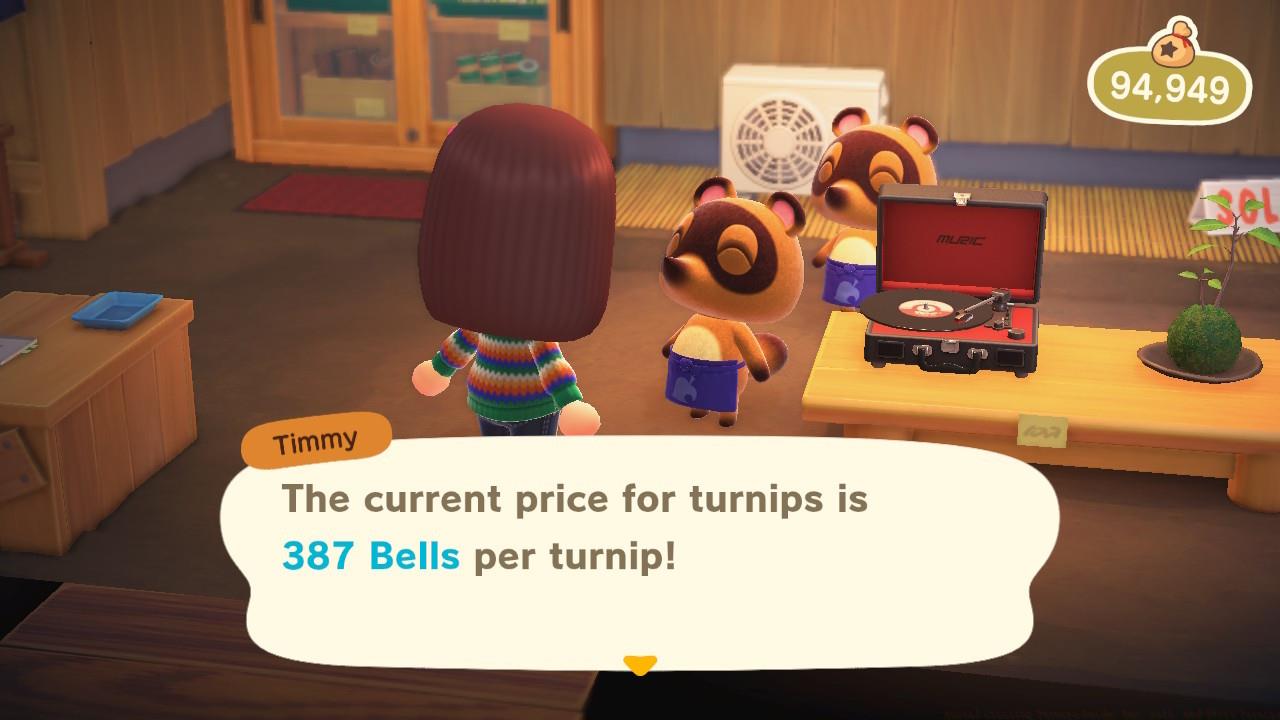
Nook’s Cranny begins turnip purchases each Monday, continuing through Saturday with no Sunday sales. Price evaluation standards: consider anything exceeding 200 bells respectable, 300-400 range as strong returns, and 500+ as exceptional opportunities. Conversely, poor weeks may force sales near purchase price or even at minor losses.
The key to maximizing returns lies in understanding the four primary price patterns that emerge throughout each week. Timmy and Tommy adjust rates twice daily—at store opening and noon—creating twelve potential selling windows weekly.
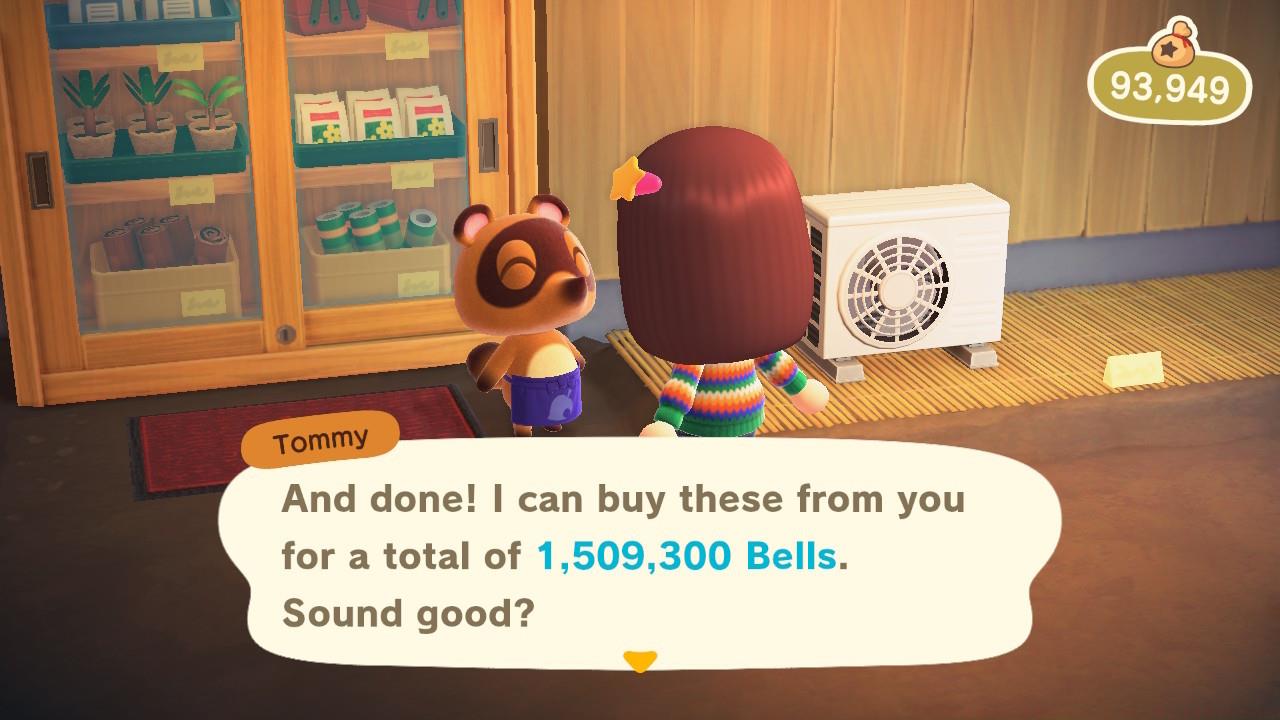
Spike patterns (sometimes called hill or mountain trends) represent ideal profit scenarios. The large spike variant particularly delivers extraordinary returns, frequently reaching 400-600 bell ranges. This pattern typically features a dramatic price surge mid-week, preceded and followed by declining values.
Beyond spike patterns, watch for decreasing, fluctuating, and random sequences. Decreasing patterns show consistent decline from Monday onward, requiring early sales. Fluctuating patterns oscillate within moderate ranges, while random sequences lack predictable structure entirely.
Pro tip: Maintain detailed price logs across multiple weeks to identify your island’s pattern tendencies. Some islands naturally favor certain patterns, giving experienced traders predictive edges. Combine this with online community tracking through platforms like Turnip Exchange to identify islands experiencing price spikes.
Advanced strategy: Coordinate with friends to create a turnip trading network. By monitoring prices across multiple islands simultaneously, you dramatically increase chances of catching profitable selling windows.
Even seasoned turnip traders encounter disappointing weeks. The critical difference between novice and expert players lies in their loss mitigation approaches and recovery speed.
Common beginner errors include panic selling during minor dips, neglecting daily price checks, and improper storage leading to spoilage or theft. Avoid these pitfalls through disciplined tracking and secure turnip placement.
When facing consistently poor prices, implement these recovery strategies: First, determine your pattern type early—if identified as decreasing, sell immediately at any profit. Second, utilize online communities to visit islands with superior prices, often requiring small entry fees but preserving your investment.
Time travel requires extreme caution. While advancing within your purchase week generally remains safe, any backward time movement instantly resets your pattern, eliminating any accumulated data value. This makes pattern prediction impossible for the remainder of the week.
Last-resort option: If Saturday evening approaches with no profit opportunity, consider selling at minimal loss rather than total spoilage. Even 50-80 bell returns recover some capital, unlike complete Sunday spoilage that yields zero return.
For comprehensive gaming strategies beyond turnip trading, explore our Complete Guide to master other game mechanics. Additionally, weapon enthusiasts should check our Weapons Unlock guide for progression optimization.
Remember that turnip trading represents just one income stream. Diversify your earnings through fishing tournaments, bug catching during peak months, and completing Class Guide recommendations for balanced gameplay. Consistent weekly participation eventually produces the massive windfalls that transform your island’s development.
Action Checklist
- Purchase turnips from Daisy Mae every Sunday morning regardless of initial price
- Check Nook’s Cranny prices at both morning opening and noon daily
- Log prices to identify your island’s pattern type by Wednesday
- Secure outdoor turnips with fencing to prevent visitor theft
- Coordinate with online communities when your island or others experience price spikes
- Execute sales during identified profit windows or cut losses before Saturday night
No reproduction without permission:SeeYouSoon Game Club » Animal Crossing Turnips Guide: Buy, Sell, And Store Turnips Master the stalk market with expert strategies for buying, selling, and maximizing turnip profits in Animal Crossing