
Master Genshin Impact combat by avoiding these underperforming elemental reactions and optimizing team compositions
Introduction: Understanding Reaction Hierarchy
Elemental reactions form the strategic backbone of Genshin Impact’s combat system, with top-tier combinations like Vaporize, Melt, and Hyperbloom dominating the meta. While recent version 5.2 buffs improved reactions such as Electro-Charged and Overload, several elemental interactions continue to underperform significantly in both damage output and utility. Understanding which reactions to avoid can dramatically improve your team-building efficiency and combat effectiveness.
The hierarchy of elemental reactions isn’t just about raw damage numbers—it encompasses versatility, team synergy, and resource investment returns. This analysis examines the five least effective reactions, their specific limitations, and practical alternatives that deliver superior performance across various combat scenarios and character combinations.
Burning Reaction Analysis
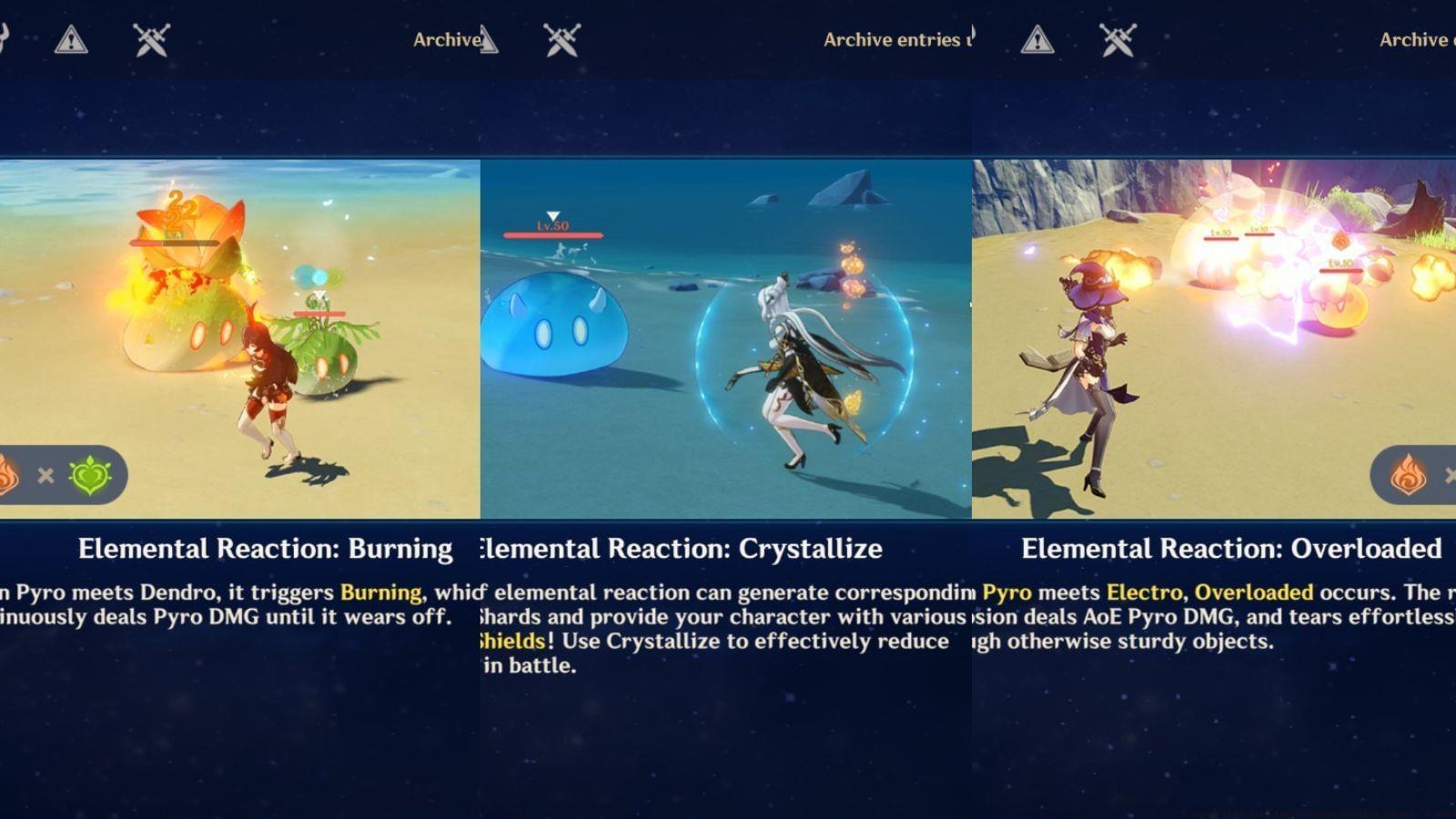
Burning represents one of Genshin Impact’s most disappointing Dendro reactions, generating minimal damage that scales poorly compared to other transformative reactions. The damage output depends entirely on the triggering character’s Elemental Mastery and level, yet delivers insufficient returns even with heavy investment. This reaction primarily serves as an activation mechanism rather than a meaningful damage source.
Characters like Emilie utilize Burning not for the reaction itself, but to enable their enhanced Dendro damage capabilities. Similarly, Kinich leverages Burning triggers to accumulate Nightsoul points for sustained Elemental Skill uptime. The reaction functions more as a conditional requirement than a valuable combat tool, making it inefficient for teams not specifically built around these character mechanics.
Strategic Insight: Avoid building teams centered around Burning damage. Instead, use it selectively to activate specific character passives while focusing your primary damage on more potent reactions like Spread or Aggravate that provide significantly better scaling and team flexibility.
Overload Reaction Breakdown
The Overload reaction combines Pyro and Electro elements to produce Area of Effect Pyro damage, recently receiving damage multiplier improvements in version 5.2. However, these numerical buffs fail to address the reaction’s fundamental combat drawback: the forceful knockback effect on smaller enemies. This positioning disruption consistently interrupts combat flow and reduces overall damage efficiency.
While Chevreuse provides valuable support for Overload compositions, she necessitates full Pyro and Electro team members to maximize her buff potential. This restrictive team-building requirement often forces players to include Anemo characters like Kazuha or Sucrose specifically to group enemies after knockback, consuming valuable team slots that could otherwise enhance damage or survivability.
Combat Tip: When using Overload teams, position yourself near walls or environmental obstacles to minimize enemy dispersal. Consider pairing with crowd control supports, but recognize that this represents a resource investment to compensate for the reaction’s inherent limitation rather than enhancing its strengths.
Crystallize Reaction Evaluation
Crystallize occurs when Geo interacts with Pyro, Hydro, Cryo, or Electro elements, generating elemental shields corresponding to the reacted element. These shields provide minimal damage absorption compared to dedicated shield-generating characters, making them unreliable for serious combat scenarios. The reaction generates no enemy damage, serving purely as a defensive mechanism with limited effectiveness.
Navia represents the sole character who meaningfully utilizes Crystallize, though she doesn’t enhance the reaction itself. Instead, she consumes the generated shards to empower her Elemental Skill damage. Compared to robust shields from characters like Zhongli, Citlali, or Layla, Crystallize shields offer negligible protection and require constant regeneration during combat.
Defensive Strategy: For reliable shielding, invest in dedicated shield support characters rather than relying on Crystallize. The reaction works adequately for Navia teams as damage fuel, but should never serve as your primary defensive strategy in challenging content where consistent protection proves essential.
Also Read: 7 best Navia teams in Genshin Impact
Superconduct Reaction Assessment
Superconduct triggers when Electro and Cryo elements combine, dealing minor Area of Effect Cryo damage while reducing enemy Physical resistance. This extreme specialization represents the reaction’s greatest weakness, as it exclusively benefits physical damage dealers in a game where elemental damage dominates the meta. The resistance reduction provides no value to elemental-focused teams.
Only a handful of characters like Eula and Razor effectively utilize Superconduct’s physical resistance shred, creating severely restrictive team-building options. These compositions often struggle against enemies requiring elemental reactions, such as the Tenebrous Papilla boss. Mika serves as the sole dedicated physical support, yet requires Constellation 6 to compete with versatile buffers like Bennett.
Team Building Advice: Reserve Superconduct for dedicated physical damage teams while recognizing their limitations in elemental-focused content. For general gameplay, prioritize elemental reaction teams that offer broader utility and damage potential across diverse combat scenarios and enemy types.
Shatter Reaction: The Bottom Tier
Shatter earns its position as Genshin Impact’s most ineffective elemental reaction due to extreme activation requirements and poor damage scaling. Despite receiving considerable damage increases, the reaction’s restrictive trigger conditions and incompatible scaling mechanics prevent meaningful utilization. The multi-step activation process demands Freeze application followed by Geo or Claymore attacks for minimal returns.
The reaction deals non-critical Physical damage scaling with the triggering character’s Elemental Mastery, creating fundamental compatibility issues. Geo characters naturally avoid Elemental Mastery investment, while most Geo team compositions exclude the Hydro and Cryo elements necessary for Freeze. Freminet represents the sole character with Shatter-enhancing passives, yet he scales with Attack rather than Elemental Mastery, creating stat distribution conflicts.
Activation Complexity: Successfully triggering Shatter requires precise elemental application sequencing: Cryo then Hydro for Freeze, followed immediately by Geo or Claymore impact. This complex process delivers inferior damage compared to simpler reactions, making it inefficient for practical combat applications outside specific challenge scenarios.
Also Read: Genshin Impact Freminet build guide
Optimization Strategies and Alternatives
Understanding weak reactions provides valuable insight for optimizing team compositions and resource allocation. Instead of investing in underperforming reactions, redirect those resources toward proven elemental combinations that deliver consistent results across various content types. Focus on reactions that complement your preferred characters rather than forcing suboptimal interactions.
For teams currently using these weaker reactions, consider these transition strategies: Replace Burning-focused compositions with Spread/Aggravate teams for superior Dendro damage. Swap Overload teams for Overvape (Overload + Electro-Charged) compositions that provide better crowd control. Exchange Crystallize reliance for dedicated shield supports with stronger damage mitigation. Transition physical teams to elemental variants when facing reaction-dependent enemies.
Advanced Technique: Master reaction sequencing to maximize damage windows. Learn elemental gauge theory to understand why some reactions outperform others in specific scenarios. Practice animation canceling to optimize damage output regardless of your chosen reactions. These technical skills often provide greater combat improvements than reaction selection alone.
Also Read: Every Elemental reaction damage buff in Genshin Impact 5.2
No reproduction without permission:SeeYouSoon Game Club » 5 worst elemental reactions in Genshin Impact, ranked Master Genshin Impact combat by avoiding these underperforming elemental reactions and optimizing team compositions