
TL;DR
- Spicy Peppers provide essential cold resistance for surviving freezing regions like Hebra and Gerudo
- Use Purah Pad Sensor+ upgrade to efficiently locate pepper clusters across Hyrule
- Strategic inventory management prevents pepper shortages during critical exploration moments
- Advanced cooking combinations maximize pepper effectiveness and duration
- Proper camera documentation enables automated farming through sensor tracking
Spicy Peppers represent one of the most crucial survival resources in The Legend of Zelda: Tears of the Kingdom. These vibrant red plants provide thermal protection that can mean the difference between successful exploration and sudden death in frigid environments. Understanding their mechanics early ensures you’re prepared for the game’s most challenging regions.
The primary function of Spicy Peppers involves generating warmth and providing resistance to extreme cold temperatures. Players first encounter this mechanic during the Great Sky Island tutorial area, where snow-covered paths leading to Gutanbac Shrine demonstrate the danger of temperature drops. When Link begins shivering, his health rapidly diminishes within seconds, making thermal management essential for survival.
However, several limitations complicate pepper acquisition. Natural spawns occur infrequently across the landscape, creating scarcity issues. Later game progression takes you to permanently frozen territories including the entire Hebra region and specific Gerudo areas. This often leads to emergency situations where cold resistance food becomes urgently needed, but pepper locations have been forgotten.
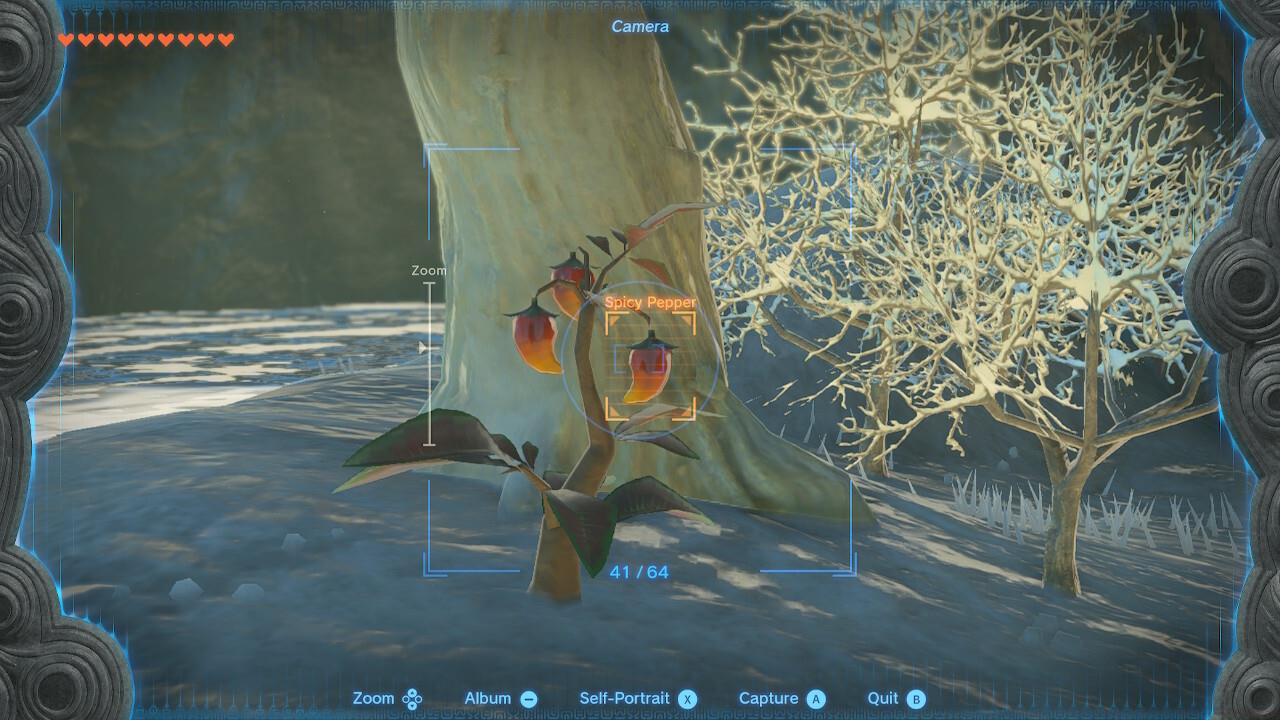
Documenting Spicy Peppers through photography enables advanced tracking capabilities.
Fortunately, Tears of the Kingdom provides sophisticated tools for systematic Spicy Pepper cultivation. The most efficient method involves leveraging the Purah Pad’s advanced functionality, specifically the Camera and Sensor+ upgrades obtained from researcher Robbie. These essential tools become available through specific questlines: the Camera during chasm exploration and Sensor+ later in Hateno Village. For comprehensive equipment guidance, consult our Complete Guide to similar progression systems.
The farming process follows this optimized sequence:
- Secure Initial Sample – Locate any growing Spicy Pepper or strategically drop one from your inventory to create a photographic reference point
- Documentation Phase – Activate the camera by holding L, ensure the Spicy Pepper identification tag appears clearly, then capture the image for Compendium registration
- Sensor Configuration – Access your map interface and press Y to open the Sensor Compendium, navigate to materials category, and designate Spicy Pepper as your active tracking target
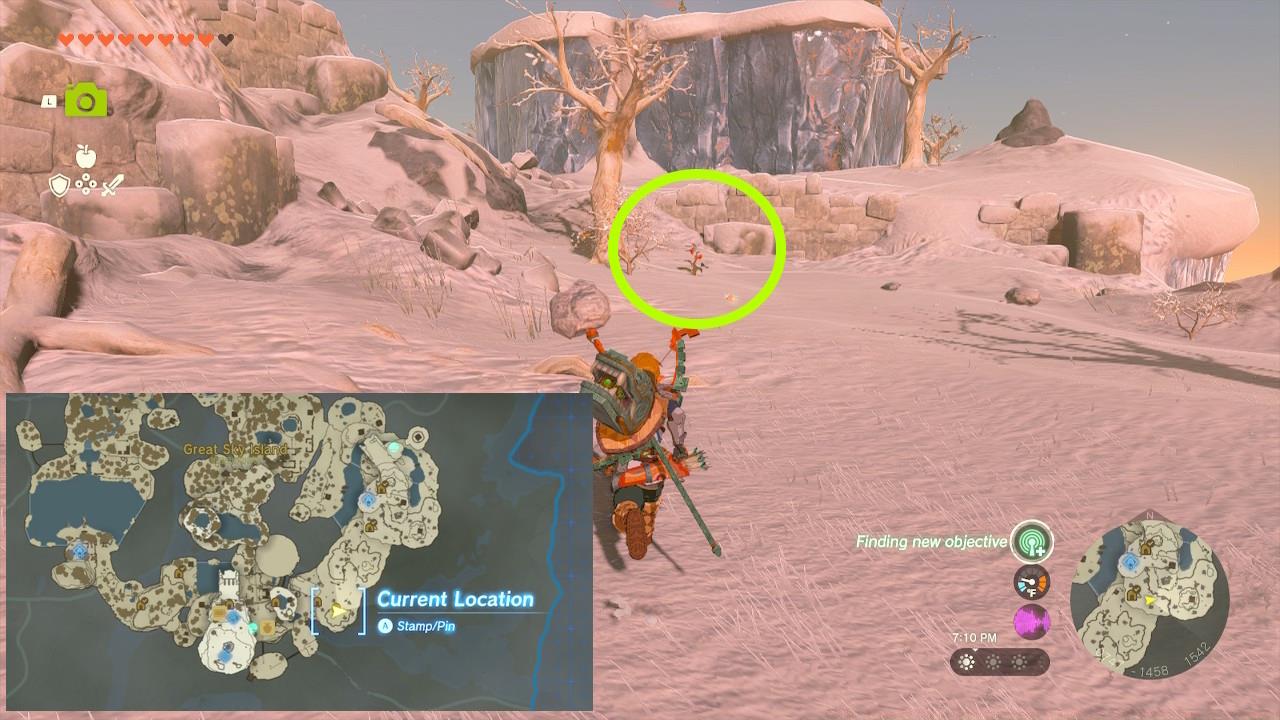
The Sensor+ upgrade provides real-time proximity alerts when approaching pepper clusters.
Advanced players should note that pepper clusters frequently regenerate in specific biomes, particularly near mountainous areas with transitional climate zones. The sensor emits distinct audio cues that intensify as you approach viable harvesting locations, enabling efficient route planning through dangerous territories. This technique proves especially valuable when working through Weapons Unlock challenges that require traversing cold regions.
Seasoned adventurers should implement several advanced strategies to maximize pepper acquisition efficiency. First, establish dedicated farming routes through areas with high pepper density, particularly the slopes surrounding Hebra Peak and the Gerudo Highlands. These routes should be documented and revisited during blood moon cycles, as resource respawns typically occur following these events.
A common mistake involves underestimating pepper consumption rates during extended expeditions. Always carry at least 8-10 peppers when venturing into frozen territories, as unexpected detours or combat situations may prolong your exposure to lethal temperatures. For optimal character preparation, reference our Class Guide for similar loadout optimization principles.
Cooking optimization represents another critical skill. Single Spicy Peppers provide basic cold resistance, but combining them with other ingredients creates enhanced dishes. For maximum effectiveness, cook five peppers together to create potent cold-resistant meals that provide extended duration protection. Avoid mixing peppers with ingredients that provide conflicting temperature effects, as this can neutralize the desired thermal properties.
Environmental awareness significantly impacts farming success. Peppers grow more abundantly during specific weather conditions and times of day. Rainfall often reveals additional spawn points, while sunny conditions may make existing plants more visible. Temperature fluctuations between day and night cycles can also affect pepper visibility and accessibility.
Action Checklist
- Acquire Purah Pad Camera and Sensor+ upgrades from Robbie
- Photograph Spicy Pepper for Compendium registration
- Configure Sensor to track peppers as primary target
- Establish farming routes through Hebra and Gerudo highlands
- Cook optimal cold resistance meals using pepper combinations
No reproduction without permission:SeeYouSoon Game Club » Zelda: Tears Of The Kingdom Spicy Pepper Locations And How To Farm Spicy Peppers Master efficient Spicy Pepper farming in Zelda: Tears of the Kingdom with advanced sensor techniques