
Comprehensive guide to understanding and preventing stream sniping with practical strategies for content creators
Understanding Stream Sniping Fundamentals
Stream sniping represents one of the most persistent challenges facing modern content creators, transforming what should be entertaining sessions into frustrating encounters with opportunistic viewers.
Stream sniping has evolved into a sophisticated problem affecting creators across all popularity levels, though high-profile streamers face the most frequent targeting. Understanding the mechanics behind this phenomenon is crucial for developing effective countermeasures.Contemporary gaming culture revolves heavily around live streaming platforms where audiences engage with creators in real-time. This interactive environment, while generally positive, creates vulnerabilities that malicious viewers can exploit to disrupt gameplay or gain unfair advantages.The transition from spectator to participant becomes problematic when viewers cross ethical boundaries, using the real-time information from streams to manipulate in-game outcomes. This exploitation fundamentally undermines the authenticity of gameplay and creator-viewer relationships.
At its core, stream sniping occurs when viewers intentionally join gaming sessions where streamers are broadcasting, leveraging the live feed information to either assist or sabotage the gameplay experience.While some participants may engage in what they perceive as harmless assistance—such as providing resources or tactical support—the majority of incidents involve deliberate disruption. Common sabotage tactics include targeted elimination, objective blocking, or coordinated harassment designed to diminish stream quality and creator morale.
Prominent figures in the streaming community, including xQc, Shroud, and NICKMERCS, encounter these disruptive players regularly, with some reporting multiple incidents per streaming session. Interestingly, even established creators have occasionally faced accusations of engaging in sniping behavior themselves, highlighting the blurred lines in competitive gaming environments.
Platform Policies and Enforcement
Platform governance regarding stream sniping varies significantly, though Twitch maintains explicit prohibitions in their Gaming Content Guidelines: “Any activity, such as cheating, hacking, botting, or tampering, that gives the account owner an unfair advantage in an online multiplayer game, is prohibited. This also includes exploiting another broadcaster’s live broadcast in order to harass them in-game, such as stream sniping.” Game developers face substantial challenges in detecting and verifying sniping incidents, as the behavior often appears identical to legitimate gameplay from their perspective.
Many gaming communities consider stream sniping a form of soft cheating, regardless of whether the intent is helpful or harmful, because it creates an information asymmetry that violates competitive integrity. This perspective has led to widespread community condemnation of the practice, even in cases where streamers might initially welcome the assistance.
Enforcement mechanisms remain inconsistent across platforms, with Twitch relying primarily on user reports and manual review processes. Streamers should document incidents thoroughly, including timestamps and specific evidence of coordinated targeting, to support enforcement actions. Some game developers have implemented reporting categories specifically for stream sniping, though proving intentional exploitation remains challenging.
IRL Stream Sniping Dangers
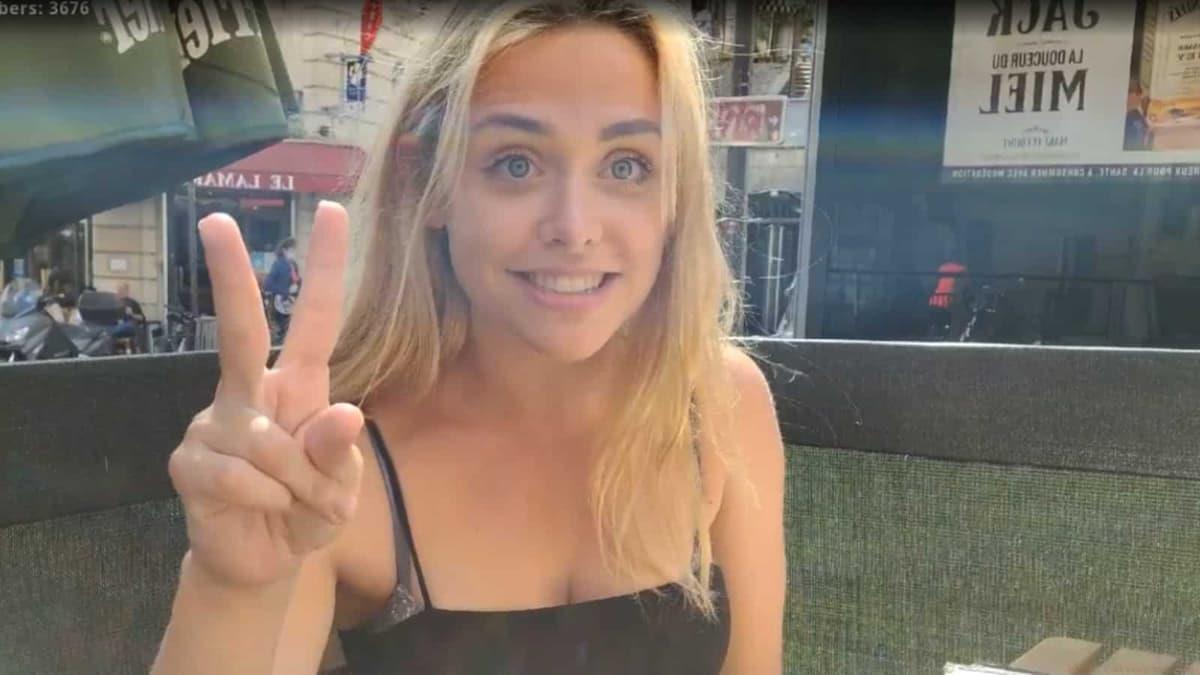 Melina
IRL streamers like Melina often find themselves getting stream sniped. Real-world stream sniping introduces significantly heightened risks compared to virtual incidents, as it involves physical presence and potential safety threats. IRL stream sniping typically entails viewers actively locating creators based on stream backgrounds, audio cues, or location metadata, creating immediate privacy violations and potential security concerns.
While occasional IRL encounters produce positive interactions—such as Melina’s experience with friendly fan gatherings—the majority pose genuine safety risks. Many creators have reported feeling threatened or harassed when snipers appear unexpectedly, particularly when broadcasts reveal their exact locations or daily routines. The transition from digital annoyance to physical presence represents a fundamental escalation that requires different protective measures.
Professional IRL streamers increasingly employ security teams, location masking techniques, and scheduled route variations to mitigate these risks. Some platforms have begun developing specialized safety features for location-based streaming, though implementation remains inconsistent. Creators should always prioritize personal safety over content quality when broadcasting from public spaces.
RaKai banned on Twitch for “illegal activities” but it’s not for 2 years
Shroud left speechless after realizing why he was accused of cheating in ARC Raiders
rileycs becomes one of Twitch’s biggest Battlefield 6 streamers after hackusations
Advanced Prevention Strategies
While no solution guarantees complete immunity from stream snipers, implementing multiple protective layers can dramatically reduce encounter frequency and impact.
Additional advanced techniques include geographic server selection to distance from concentrated viewer bases, voice modulation to prevent audio-based identification, and dedicated moderation teams to quickly identify and report suspected snipers. Many successful streamers combine 3-4 of these methods simultaneously, creating defensive layers that frustrate would-be snipers.
Implementing these protective measures systematically will dramatically improve your streaming experience, allowing focus on content creation rather than constant defensive maneuvering.
No reproduction without permission:SeeYouSoon Game Club » What is stream sniping? Comprehensive guide to understanding and preventing stream sniping with practical strategies for content creators