
TL;DR
- Wattson excels at area denial and defensive positioning through her electric fences and shield-regenerating pylon
- Her abilities create early warning systems and neutralize enemy ordnance in late-game scenarios
- Strategic limitations require pairing with mobile legends to compensate for offensive weaknesses
- Advanced fence placement techniques can control rotations and create psychological pressure
- Team composition synergy is critical for maximizing Wattson’s defensive potential
Mastering Wattson’s defensive capabilities requires understanding her unique ability to control space while providing sustained support to teammates. Unlike aggressive legends focused on direct combat, Wattson specializes in creating safe zones that gradually wear down opponents through tactical positioning and area denial.

Wattson
Wattson’s passive ability Spark of Genius provides exceptional utility beyond simple shield regeneration. The ability to fully charge her ultimate with a single Ultimate Accelerant while carrying two per inventory slot creates unprecedented strategic flexibility. This allows teams to maintain defensive superiority through multiple engagements without sacrificing valuable inventory space for healing items.
Her tactical ability Perimeter Security enables sophisticated area control through interconnected electrical nodes. These fences not only inflict damage and slow enemies but serve as critical intelligence-gathering tools that reveal enemy movements and flanking attempts.
The Interception Pylon ultimate ability represents one of the most powerful defensive tools in Apex Legends. Beyond destroying incoming projectiles and regenerating shields, its permanent duration creates persistent safe zones that force enemies to engage on your terms.
Advanced players leverage Wattson’s kit to create layered defense systems. The pylon protects against explosive attacks while fences control approach angles, creating compound defensive positions that are extremely difficult to assault without coordinated team play.
Effective Wattson play revolves around identifying and securing optimal defensive positions before engagements begin. The most successful Wattson mains proactively establish defensive networks rather than reacting to enemy pressure.
Wattson’s primary strength manifests in her capacity to transform vulnerable positions into impenetrable fortresses. All abilities synergize to create comprehensive defensive coverage that protects against both direct assaults and area-of-effect attacks from legends like Caustic or Bangalore.
Nullifying enemy abilities becomes increasingly crucial during final ring scenarios where space is limited and area denial determines victory. The interception pylon’s capacity to eliminate incoming grenades and airstrikes can single-handedly win matches when properly positioned.
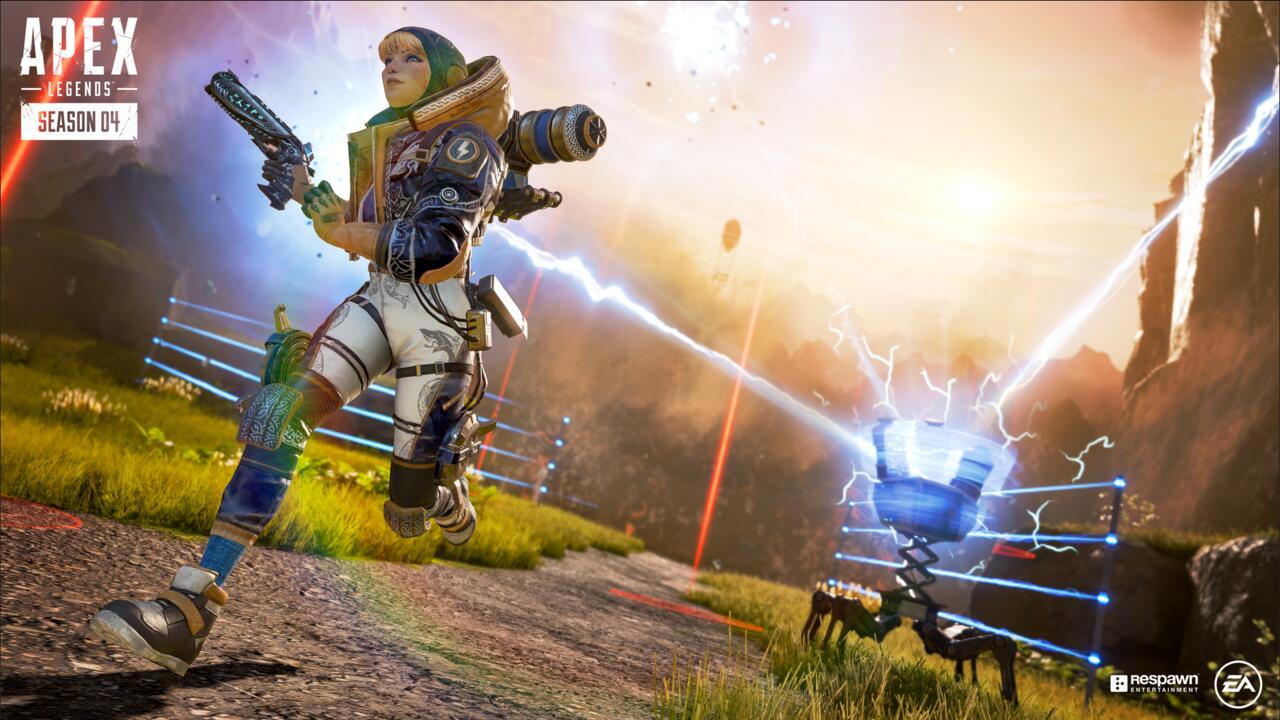
Wattson’s Electric Fence and Pylon
Strategic fence placement serves dual purposes: creating physical barriers that deter pushes while functioning as early detection systems. Placing fences at potential flank routes provides critical seconds of warning that enable repositioning or counter-ambush setups.
Common positioning mistakes include placing fences too close together, creating easily bypassed defenses, and failing to account for vertical approaches. Advanced players create intersecting fence networks that cover multiple elevation levels and force enemies into predictable engagement corridors.
The most effective defensive setups incorporate natural chokepoints with overlapping fields of fire. Wattson’s fences should funnel enemies into kill zones where your team holds positional advantage and clear sightlines.
Wattson’s most significant strategic limitation lies in her inability to effectively transition between defensive and offensive postures. Teams committed to aggressive pushing strategies will find Wattson’s abilities provide minimal combat advantage during direct assaults.
While gunplay remains the primary determinant in team fights, Wattson’s kit offers virtually no offensive utility when initiating engagements. This creates substantial drawbacks for teams that prefer high-mobility, aggressive playstyles.
The static nature of her abilities creates commitment issues during dynamic fights. Once fences and pylons are placed, relocating them becomes impractical, forcing teams to either abandon defensive setups or remain stationary.
Enemy teams familiar with Wattson’s limitations will employ specific counter-strategics including long-range pylon destruction, coordinated fence clearing, and forcing rotations that negate established defenses.
Advanced Wattson players mitigate these weaknesses through predictive positioning and strategic patience. Rather than forcing unfavorable engagements, they manipulate enemy movements through area denial until opponents are forced into disadvantageous positions.
Critical adaptation techniques include partial fence setups that allow rapid completion when engaging, maintaining mobility until final positioning is determined, and using pylons as temporary cover during rotations rather than permanent fixtures.
Wattson achieves maximum effectiveness when paired with legends that complement her defensive specialization or compensate for mobility limitations. Strategic team building around Wattson requires understanding both complementary and compensatory synergy principles.
For teams committed to defensive supremacy, Wattson pairs exceptionally well with Caustic and Rampart. This defensive trifecta creates nearly impenetrable positions where Caustic’s gas traps provide additional area denial while Wattson’s pylon protects Rampart’s emplaced weapons from explosive destruction.
Teams preferring balanced approaches benefit from pairing Wattson with mobility specialists like Octane and Pathfinder. These legends can rapidly transport the entire squad to optimal defensive positions that Wattson can immediately fortify.
Hybrid compositions incorporating Revenant create unique strategic opportunities. Wattson’s fences and pylon can protect the Death Totem during shadow pushes, enabling aggressive plays without sacrificing defensive integrity.
Less obvious but highly effective partnerships include Crypto, whose EMP can temporarily disable enemy defenses while Wattson’s pylon regenerates shields post-detonation.
When considering our Class Guide, similar principles apply regarding role specialization and team balance. Defensive specialists in any tactical shooter require complementary teammates to cover their inherent limitations.
Team communication protocols become critical when playing Wattson. Teammates must understand fence placement strategies, pylon coverage areas, and rotation timing to maximize defensive effectiveness.
Wattson’s electric fences represent her most versatile and creatively applicable tool. Beyond simple perimeter defense, advanced players employ fences for psychological warfare, rotation control, and trap creation.
Strategic fence placement extends beyond obvious doorways and chokepoints. Creative applications include placing partial fences to suggest completed networks, creating false safe zones, and using fences to herd enemies into ambush positions.
The most effective fence deployments create overlapping fields that cover multiple approach angles while maintaining escape routes for your team. This requires understanding common enemy movement patterns and predicting third-party engagement vectors.
Late-game fence strategies focus on creating minimal but critical barriers that disrupt enemy positioning during final ring closures. Even single well-placed fences can determine match outcomes by forcing repositioning or creating temporary openings.
Common advanced techniques include:
- Staggered fence placement to create defense in depth
- Elevation-based fencing to control vertical movement
- Bait fences that encourage destruction while hiding the real defensive network
- Rapid redeployment during ring movements to maintain defensive continuity
Mastering fence psychology involves understanding how visible defenses influence enemy decision-making. Sometimes the threat of fences proves more effective than the fences themselves.
For comprehensive tactical approaches similar to those discussed in our Complete Guide, Wattson players should develop systematic approaches to area control that adapt to evolving combat situations.
As with weapon selection in our Weapons Unlock guide, the most effective strategies combine technical mastery with psychological understanding of opponent behavior patterns.
Action Checklist
- Practice rapid fence deployment in firing range to achieve muscle memory for optimal placement
- Identify 3-5 optimal defensive positions on each map for pre-emptive setup
- Master pylon placement timing to maximize shield regeneration during engagements
- Develop communication protocols for coordinating defensive setups with your team
- Practice partial fence setups that can be rapidly completed when engaging new positions
No reproduction without permission:SeeYouSoon Game Club » Wattson Guide – Apex Legends Master Wattson's defensive toolkit with advanced positioning strategies and team synergy optimization techniques