
Warzone tournament chaos exposes critical stream sniping vulnerabilities and flawed streamer mode implementation
The $25,000 Tournament Debacle
Professional Warzone competitors ZLaner and Kalei experienced devastating tournament eliminations during BoomTV’s Code Red event, with their $25,000 championship aspirations shattered by coordinated stream sniping attacks. The high-stakes competition, marking the first major Warzone tournament of 2022, descended into chaos as multiple professional squads faced targeted harassment from viewers exploiting live broadcast information.
OpTic Gaming’s ZLaner and FaZe Clan’s KaleiRenay publicly criticized Raven Software’s inadequate stream protection systems after their tournament run collapsed within just two matches. The elite duo found themselves systematically hunted by opponents using real-time stream data to pinpoint their in-game positions and strategies.Stream sniping represents a persistent competitive integrity issue that has plagued Warzone since its inception. Malicious players monitor professional broadcasts to gather tactical intelligence, then use this information to gain unfair advantages during crucial tournament moments.High-profile content creators ranging from xQc to Dr Disrespect have documented extensive stream sniping encounters throughout Warzone’s competitive history. Dr Disrespect notably categorized stream snipers as operating on a
distinct tier below traditional cheating software users. The competitive manipulation problem persisted despite Warzone’s transition to the Pacific Caldera map in Season 1. The January 5th Code Red tournament quickly devolved into a showcase of stream sniping vulnerabilities, with ZLaner and Kalei becoming primary targets in what tournament organizers described as a coordinated harassment campaign.
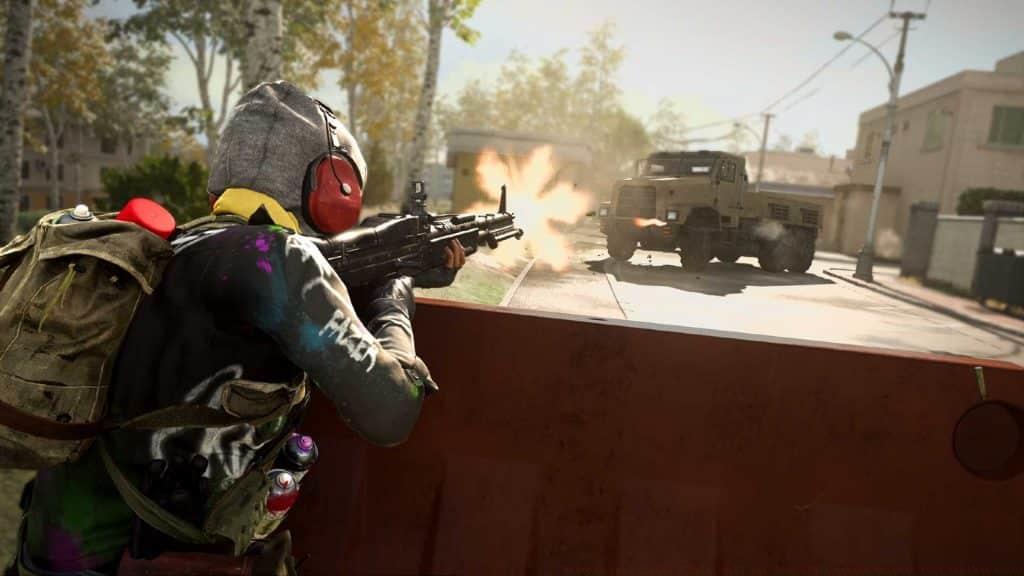 Activision
Warzone’s competitive scene faces mounting challenges as tournament integrity becomes compromised by stream sniping incidents. Entering the $25,000 Code Red duos competition with championship expectations, the professional pair encountered immediate targeting from their first match. Their tournament concluded abruptly after just two games, with opponents consistently leveraging stream intelligence to anticipate their rotations and engage in favorable combat scenarios. The targeted harassment prompted immediate social media responses from both professional players, who highlighted the tournament’s compromised competitive environment.
Understanding Stream Sniping Mechanics
Stream sniping operates through a simple yet devastatingly effective methodology: viewers watch live broadcasts while simultaneously queueing into the same matches as their target players. This practice creates an information asymmetry where snipers possess complete knowledge of player positions, loadouts, and strategic movements while the streamer remains unaware of their surveillance.
“We appreciate your functional stream protection mode,” Kalei commented with evident sarcasm, “especially when we implement full screen hiding protocols. Excellent work Raven Software.”Warzone technically includes a streamer mode feature designed for content creators and professional competitors. However, this system functions counter-intuitively to standard industry practices for stream protection.Instead of anonymizing the streamer’s identity within match lobbies, the current implementation obscures all other players’ names while leaving the broadcaster fully identifiable. This design flaw has generated significant competitive community criticism throughout Warzone’s tournament history.
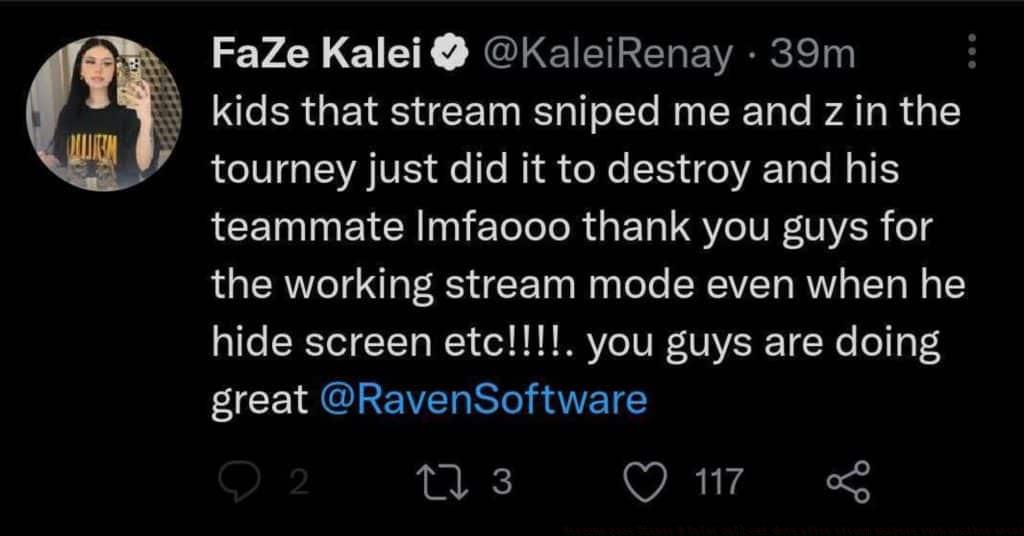 Twitter: KaleiRenay
Kalei and ZLaner’s tournament performance suffered immediate impact from stream sniper interference, recording an 0-2 match record. ZLaner expressed matching frustration through social media platforms, posing a fundamental technical question: “What level of development complexity prevents implementation of functional streamer protection in a competitive game?” Their team represented just one of multiple squads experiencing similar targeting during the competition, resulting in numerous professional eliminations and extending the tournament duration to nearly twelve hours.
For developers with coding expertise, what technical challenges prevent implementation of effective streamer protection systems in competitive gaming environments?
— OpTic ZLaner (@ZLanerOFFICIAL) January 5, 2022
Professional Community Response
The competitive Warzone community has reached a critical juncture regarding stream sniping tolerance, with professional players increasingly vocal about tournament integrity compromises. The Code Red incident represents merely the latest in a series of high-profile stream sniping occurrences that have damaged competitive credibility.
Raven Software has consistently avoided implementing comprehensive solutions for stream sniping prevention. Despite widespread professional community feedback and documented competitive disruptions, no substantive countermeasures have been deployed.
Professional players increasingly employ defensive broadcasting strategies to mitigate sniping risks, including implementing stream delays, hiding gameplay interfaces, and manipulating queue timing. However, these manual protections prove insufficient against determined snipers and create additional production challenges for content creators.
The extended tournament duration—approaching twelve hours—demonstrates the widespread nature of the stream sniping problem during the Code Red event. Multiple professional teams experienced targeting, suggesting organized efforts to compromise competitive integrity rather than isolated incidents.
Technical Solutions and Prevention Strategies
Effective stream sniping prevention requires multi-layered technical and organizational approaches. Tournament organizers and developers must collaborate to implement comprehensive protection systems that address both immediate vulnerabilities and long-term competitive integrity.
Immediate Protective Measures:
Professional streamers should implement mandatory 3-5 minute broadcast delays during competitive events, significantly reducing the tactical value of stream monitoring. Additionally, strategic interface hiding—concealing mini-maps, teammate positions, and inventory displays—creates substantial information barriers for potential snipers.
Tournament Organization Protocols:
Competition organizers must develop advanced lobby management systems that incorporate randomized queue timing and verified participant screening. Implementing dedicated tournament servers with enhanced spectator controls would dramatically reduce stream sniping opportunities while maintaining broadcast quality.
Developer Implementation Priorities:
Raven Software’s development roadmap should prioritize functional streamer protection that anonymizes broadcaster identities rather than obfuscating other players. Simple technical solutions include lobby ID masking, randomized player name generation, and integrated broadcast delay synchronization.
Given Activision’s current development focus oncheating software countermeasures, the implementation timeline for effective stream sniping protection remains uncertain. However, the competitive community continues advocating for comprehensive solutions that preserve tournament integrity.
The streaming community has developed several effective workaround strategies, including geographic queue manipulation, multi-stream distribution, and dedicated moderation teams monitoring for sniper activity. These community-driven solutions provide interim protection while awaiting developer-implemented systems.
No reproduction without permission:SeeYouSoon Game Club » Warzone pros ZLaner & Kalei call out devs after stream snipers ruin another event Warzone tournament chaos exposes critical stream sniping vulnerabilities and flawed streamer mode implementation