
TL;DR
- Master time gate mechanics by understanding cube data vaporization and strategic placement
- Coordinate companion cubes for simultaneous elevator operation and door access requirements
- Implement reverse-thinking methodology to solve multi-objective puzzle sequences efficiently
- Optimize rewind timing to minimize backtracking and maximize movement efficiency
- Apply advanced switch management for complex intermediary door and elevator coordination
Mastering reverse chronological thinking represents the foundational skill for conquering The Entropy Centre’s escalating challenges. As planetary salvation rests squarely on your shoulders, the pressure intensifies dramatically within the second puzzle sequence. These advanced conundrums demand sophisticated temporal manipulation beyond basic rewind mechanics.
The fate of humanity hangs in precarious balance within The Entropy Centre, with only your puzzle-solving prowess preventing catastrophic annihilation. Transitioning to the 02 test chambers introduces substantially elevated complexity that requires methodical, systematic approaches. Maintain composure under pressure—our comprehensive guidance provides the strategic framework for success. After completing the initial 01 puzzles, accessing the 02 test rooms necessitates a precise three-phase entry sequence: first, neutralize the hazardous gas leak by reversing the crank mechanism temporally; second, retrieve the electronic control panel positioned beyond the initial barrier; third, insert this component into the designated interface adjacent to the entrance. Execute a targeted rewind on the installed panel to restore functionality, subsequently unlocking portal access to the advanced challenge arenas.
With secure entry achieved, prepare to engage with progressively sophisticated temporal manipulation scenarios that will test your analytical capabilities.
Encountering the temporal barrier mechanism introduces revolutionary puzzle dynamics. Time gates actively annihilate chronological data from any cubes traversing their threshold, effectively resetting manipulated objects to original coordinates. This introduces strategic constraints requiring innovative problem-solving beyond conventional approaches.
The temporal barrier represents a game-changing mechanic that fundamentally alters puzzle resolution methodology. These gates systematically erase all time-manipulation data from puzzle cubes crossing their boundaries, causing immediate positional reversion to initial spawn locations. Consequently, attempting to transport the primary door-access cube through this barrier triggers instantaneous reset, rendering conventional solutions ineffective.
Avoid analytical paralysis through systematic execution. A secondary cube awaits discovery on the opposite side of the temporal barrier. Deploy this cube initially to activate the gate-deactivation switch, then retrieve the isolated primary cube. Transport this element to one door-activation switch, then return to retrieve the gate-suppression cube for deployment on the secondary door switch. This elegant solution chain operates entirely without rewind mechanics, demonstrating efficient resource utilization.
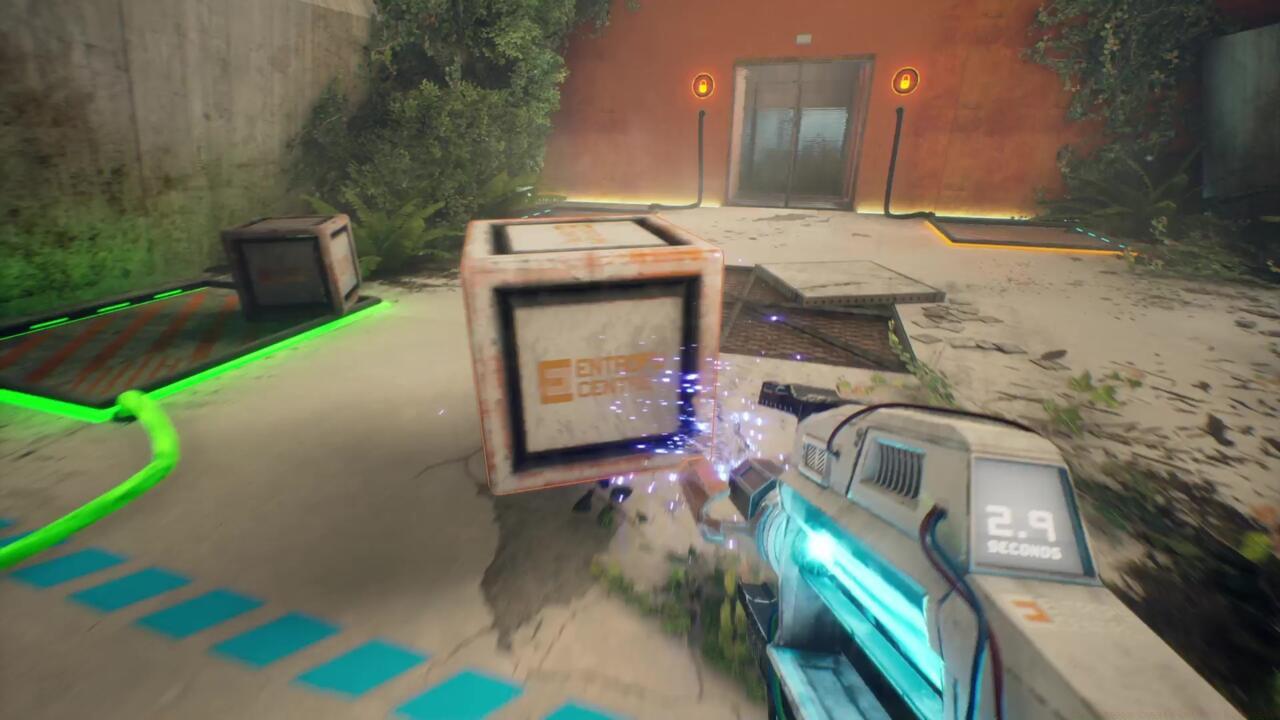
Strategic cube placement eliminates rewind requirements in initial time gate puzzles.
This intermediate challenge introduces deceptive complexity through multi-objective coordination. While surface analysis suggests simple time gate neutralization combined with elevator activation, the additional requirement of terminal door access introduces sophisticated cube-management challenges. Successful resolution demands precise companion cube orchestration.
This puzzle introduces layered complexity through misdirection. Superficial examination implies straightforward time gate disablement coupled with elevator ascension, but the concealed endpoint door mechanism necessitates advanced cube delegation. Essentially, one cube must accompany your progression while the secondary cube manages both elevator operation and door-access functions simultaneously.
Companion cube management becomes critically important for coordinated mechanical operations.
Reinforce reverse-chronological analysis methodologies. Position the initial cube on the elevator activation switch, then relocate it to the time gate suppression switch. Transport the secondary cube through the neutralized temporal barrier onto the elevator platform. Execute a precision rewind on the first cube, returning it chronologically to the elevator activation position. This strategic temporal manipulation elevates the platform while maintaining cube integrity. Finalize by deploying the transported cube on the door-access switch to complete the sequence.
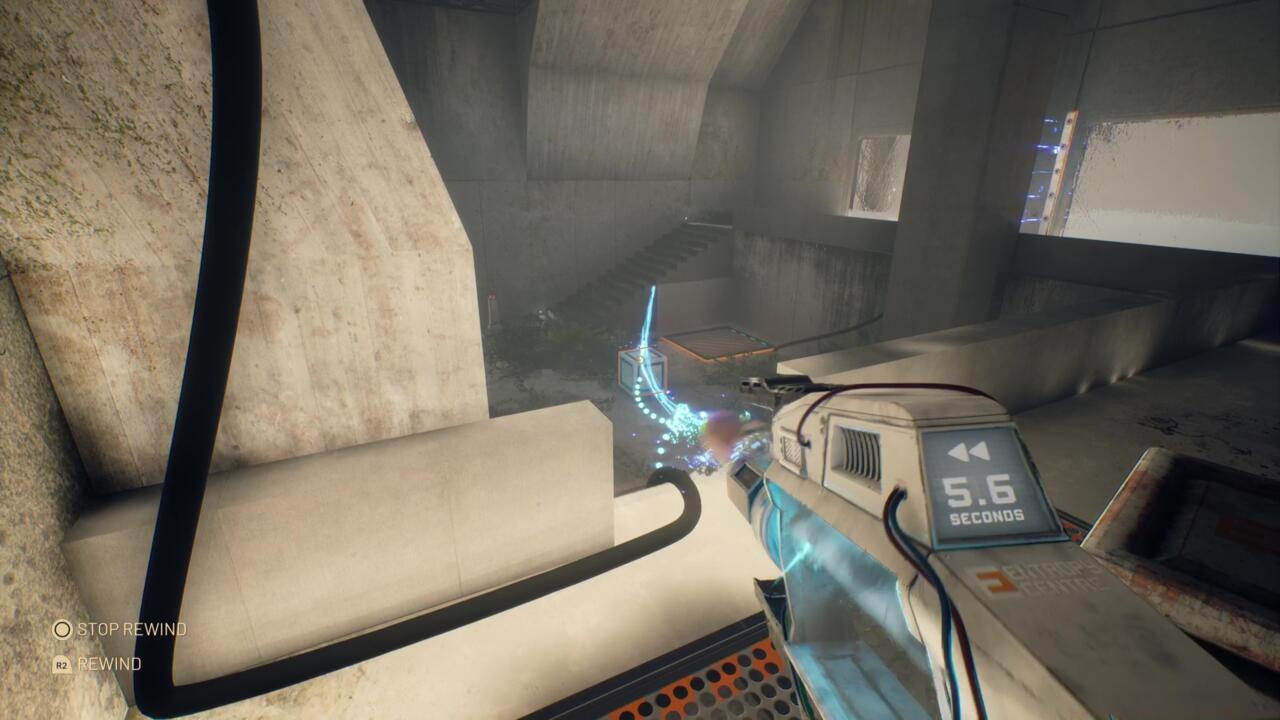
Companion cubes enable complex multi-mechanism coordination through strategic temporal positioning.
Building upon previous mechanics, this advanced scenario demands refined cube allocation between multiple switch functions. Dual ground-level switches control separate mechanisms: one governs intermediary door access while the other manages elevator movement coordination. Strategic resource distribution becomes paramount for success.
This progression puzzle extends companion cube principles to multi-switch environments. Mirroring preceding challenges, strategic cube division between mechanism control and final door operation remains essential. Two distinct floor switches present coordinated challenges: the first operates an intermediate barrier door, while the second controls the vertical transport mechanism.
Substantial responsibility rests on compact temporal manipulation devices.
Advanced switch management requires precise cube allocation between multiple mechanical systems.
Strategic temporal manipulation defies conventional physics through calculated chronological interventions.
Coordinated cube maneuvers enable complex mechanical sequencing through precise temporal positioning.
Elevate your puzzle-solving efficiency with these advanced tactical approaches developed through extensive gameplay analysis and community strategy sharing.
Movement Optimization: Plan complete cube trajectories before execution to minimize redundant travel. Time gates reset positional data but not player movement, making efficient pathing critical. Allocate 3-5 minutes per puzzle for methodical execution rather than rushed attempts.
Error Prevention: The most common mistake involves premature cube retrieval from time gate suppression switches. Always verify all secondary objectives are achievable before repositioning critical cubes.
Advanced Strategies: For speedrun attempts, master the simultaneous cube manipulation technique where you position one cube while planning the second’s trajectory. This advanced method can reduce completion times by 30-40% compared to sequential approaches. Understanding the precise timing windows for rewind actions separates novice players from experts—typically, optimal rewind activation occurs within 2-3 seconds of cube placement for maximum temporal efficiency.
These temporal conundrums progressively train your mind for the sophisticated reverse-thinking required in later game stages. Mastering these fundamentals provides crucial preparation for the exponentially complex puzzles awaiting in subsequent test chambers. For comprehensive gameplay guidance, explore our Complete Guide to advanced mechanics and strategy implementation.
Action Checklist
- Execute three-phase entry sequence: gas valve rewind, panel retrieval, and door mechanism activation
- Neutralize time gate using secondary cube, then retrieve primary cube for door switches
- Coordinate companion cube for simultaneous elevator operation and door access
- Implement precision rewind timing for elevator cube repositioning
- Master multi-switch management with strategic cube allocation between mechanisms
No reproduction without permission:SeeYouSoon Game Club » The Entropy Centre Guide – 02 Puzzles Master The Entropy Centre's 02 puzzle series with advanced time manipulation strategies and companion cube tactics