
Comparing Tainted Grail: The Fall of Avalon vs. Oblivion Remastered: Key differences in gameplay, world design, and multiplayer features
Core Gameplay and RPG Systems: A Side-by-Side Analysis
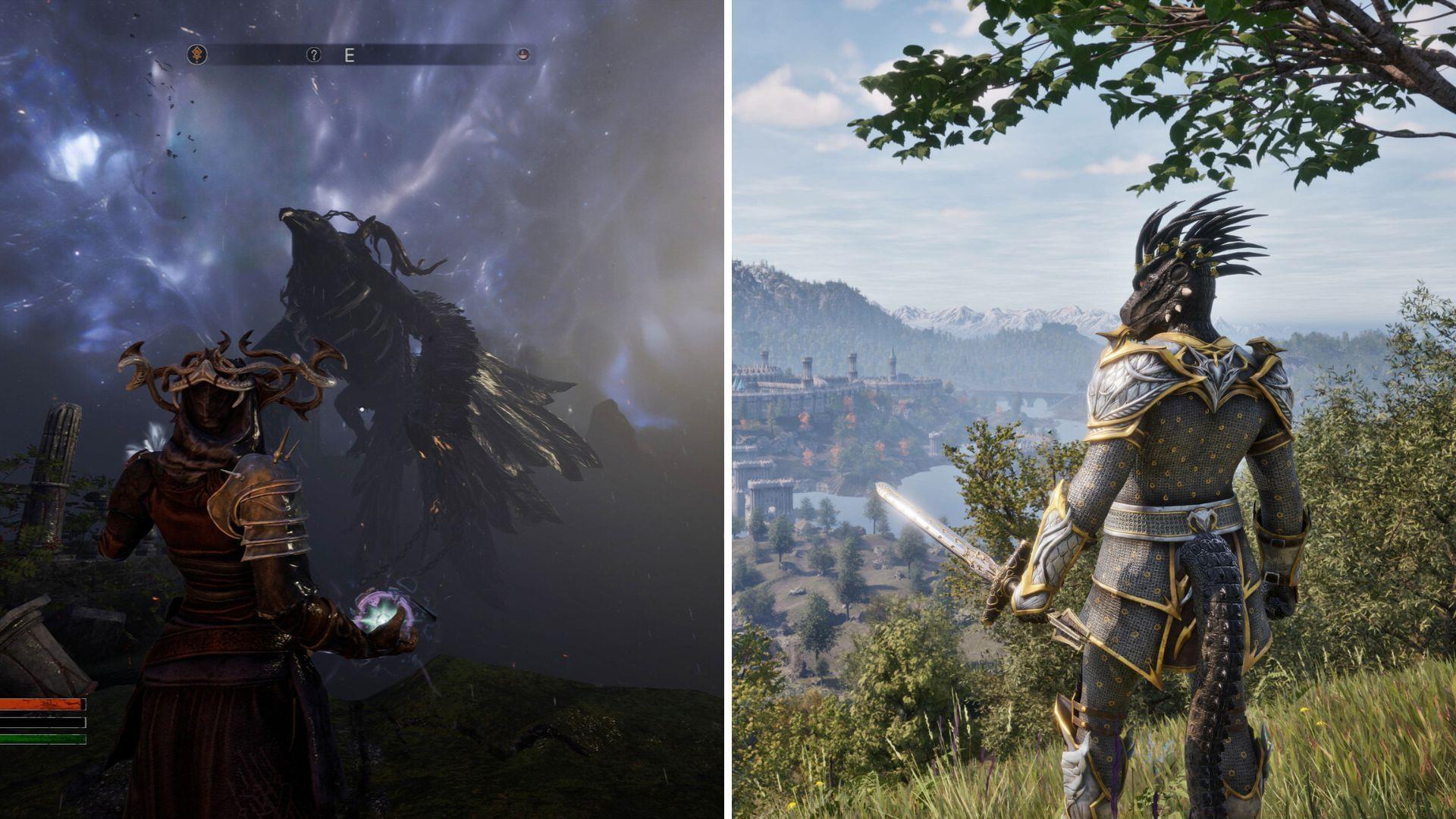
Tainted Grail: The Fall of Avalon has emerged as a standout recent RPG release, earning praise for delivering a genuine open-world freedom reminiscent of classic Elder Scrolls titles like Oblivion and Morrowind. However, it establishes its own distinct identity through several innovative design choices that differentiate it from Bethesda’s legendary franchise.
Both titles are fundamentally role-playing games built around the “blank slate” protagonist concept. Players begin with a largely undefined character and gradually specialize through gameplay choices rather than rigid class selection. This progression philosophy allows organic development into archetypes like the brute-force warrior, precision stealth archer, or powerful spellcasting mage. A key strategic consideration is that specialization in one area often comes at the expense of versatility in others, requiring thoughtful long-term planning.
A significant shared feature is the seamless toggle between first-person and third-person perspectives. This flexibility accommodates different playstyles: first-person offers superior immersion and precision for ranged combat and spellcasting, while third-person provides better situational awareness and spatial understanding during melee engagements. Advanced players often switch dynamically during combat—using third-person for navigation and environmental awareness, then switching to first-person for precise attacks.
Visual Fidelity and Artistic Direction: A Tale of Two Styles
The visual presentation of these two RPGs follows fundamentally different artistic philosophies. Oblivion Remastered employs a vibrant, varied color palette that brings the diverse regions of Cyrodiil to life with saturated greens, blues, and golds. In contrast, Tainted Grail: The Fall of Avalon embraces a darker, more muted aesthetic that reinforces its grim Arthurian mythology themes, using desaturated tones and atmospheric lighting to create consistent tension.
Technically, Oblivion Remastered benefits tremendously from its Unreal Engine 5 overhaul. The original 2006 release received a comprehensive visual upgrade that leverages modern rendering techniques including advanced global illumination, high-resolution textures, and detailed environmental geometry. This remaster represents a focused effort to transform a classic into a contemporary visual showcase.
Tainted Grail, developed by a comparatively smaller team at Awaken Realms, necessarily prioritized gameplay systems, narrative depth, and mechanical polish over cutting-edge graphics. While it may not compete with Oblivion’s technical prowess, it achieves a distinctive and cohesive visual identity through strong art direction, consistent theming, and careful environmental storytelling. The game proves that visual impact depends more on artistic coherence than raw graphical power.
Common Mistake to Avoid: Don’t judge either game solely by screenshot comparisons. Oblivion’s bright colors may appear less “realistic” but serve its fantasy aesthetic, while Tainted Grail’s darkness requires proper display calibration to appreciate its subtle environmental details.
Multiplayer and Social Gameplay: Cooperative vs. Solo Adventures
This represents perhaps the most significant divergence between the two titles. Tainted Grail: The Fall of Avalon includes native cooperative multiplayer support for up to four players, allowing friends to experience its dark fantasy narrative and challenging exploration together. This built-in functionality enables seamless party formation, shared progression, and coordinated combat strategies without external modifications.
Oblivion Remastered, in keeping with Bethesda’s traditional design philosophy, remains exclusively single-player in its official release. The developers focused their remaster efforts on visual enhancement and stability rather than adding new gameplay modes. While this maintains the original solitary adventure experience, it represents a missed opportunity to modernize a nearly two-decade-old classic with contemporary social features.
Bethesda’s longstanding mod-friendly approach does provide a community solution. Various co-op mods exist that enable multiplayer functionality, though these require technical setup, may lack official support, and can introduce stability issues. For players seeking a guaranteed, polished cooperative experience, Tainted Grail’s native implementation represents a significant advantage that reflects modern gaming expectations.
Practical Tip: If attempting co-op mods in Oblivion Remastered, always create backup saves before installation, use mods from reputable sources with recent updates, and ensure all players have identical mod configurations to prevent synchronization errors.
World Scale and Exploration Philosophy: Quality vs. Quantity
Oblivion Remastered presents a genuinely massive game world spanning approximately 16 square miles—actually exceeding the size of its more famous successor, Skyrim (15 square miles). This expansive canvas includes diverse biomes from dense forests to arid plains, plus the additional surreal territories of the Shivering Isles expansion. The design philosophy emphasizes breadth, encouraging players to lose themselves in seemingly endless exploration and emergent adventures.
Tainted Grail: The Fall of Avalon adopts a contrasting approach with a more compact but intensely curated world. Rather than prioritizing square mileage, the developers focused on density of meaningful content, environmental storytelling, and eliminating “empty” space. This results in an exploration experience where nearly every location serves narrative, gameplay, or atmospheric purpose, rewarding thorough investigation rather than random wandering.
These differing philosophies cater to distinct player preferences. Oblivion suits those who value scale, unpredictability, and the joy of discovering unmarked locations through sheer curiosity. Tainted Grail appeals to players who prefer directed exploration with consistent payoff, where travel time between points of interest is minimized in favor of meaningful engagement. Neither approach is inherently superior—they represent different interpretations of the open-world RPG concept.
Practical Tips and Player Considerations
Choosing Based on Playstyle: Select Oblivion Remastered if you prioritize solo immersion in a vast world with strong modding potential. Choose Tainted Grail for cooperative play with friends in a more focused narrative experience. Consider your tolerance for older game design conventions—Oblivion retains some 2006-era mechanics that may feel dated despite visual upgrades.
Optimization Tips for Advanced Players: In Oblivion Remastered, experiment with .ini file modifications to fine-tape draw distances and shadow quality based on your hardware. For Tainted Grail, adjust foliage density and shadow resolution first if experiencing performance issues, as these have the greatest visual-to-performance impact. Both games benefit from SSD installation for reduced loading times during frequent area transitions.
Common Pitfalls to Avoid: Don’t attempt to play Oblivion co-op mods with more than 2-3 players without extensive testing—stability often degrades with additional participants. In Tainted Grail, avoid splitting the party excessively during exploration, as some puzzle mechanics and enemy encounters assume coordinated positioning. Always communicate loot distribution rules in co-op to prevent group friction.
Further Reading on RPG Comparisons:
No reproduction without permission:SeeYouSoon Game Club » Tainted Grail: The Fall of Avalon vs Oblivion Remastered: Similarities and differences explored Comparing Tainted Grail: The Fall of Avalon vs. Oblivion Remastered: Key differences in gameplay, world design, and multiplayer features