
Lead Designer Frederic Vincent reveals level design secrets and ninja mastery challenges in Shinobi Art of Vengeance
Game Structure and Design Philosophy
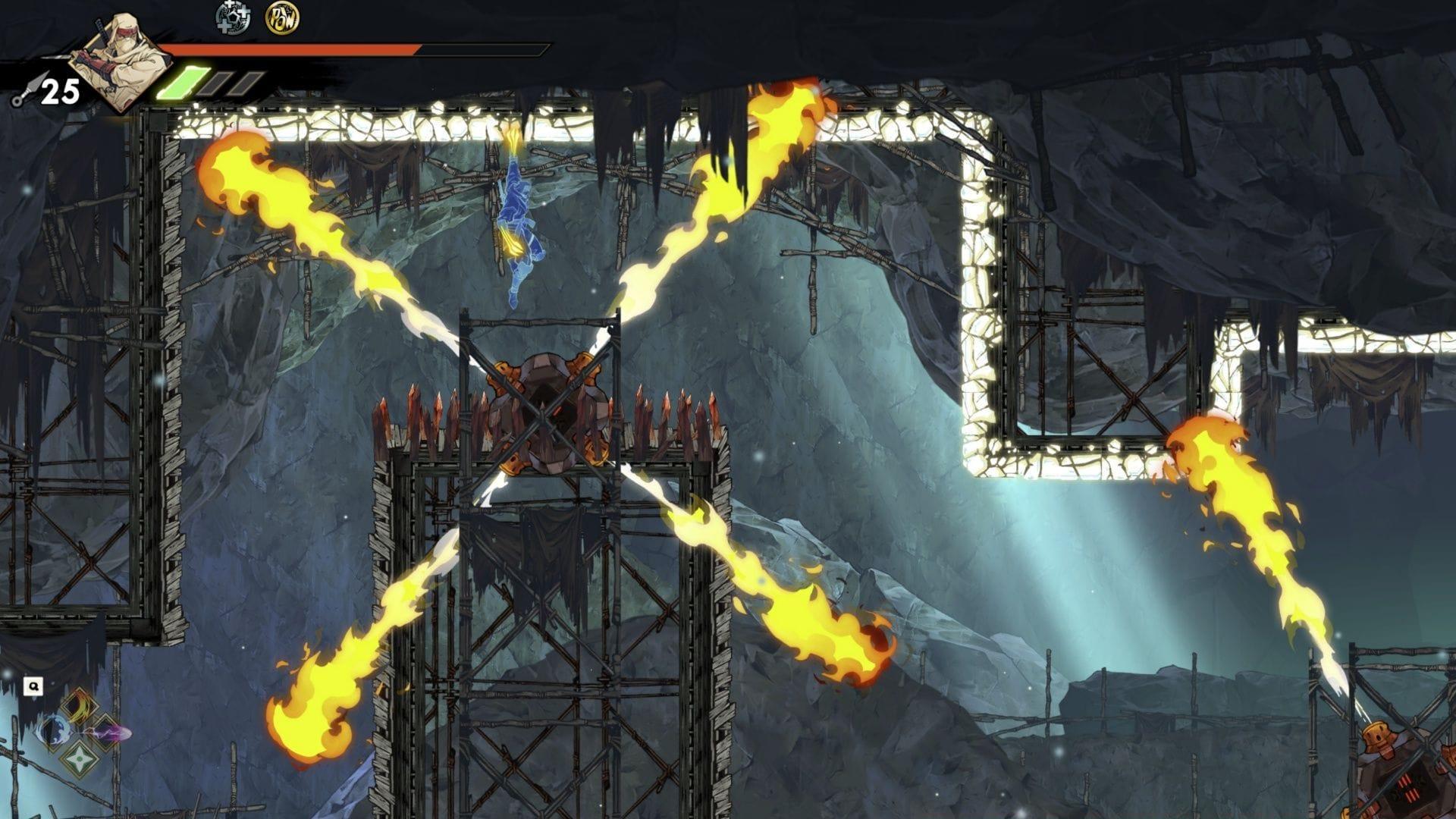
Shinobi Art of Vengeance stands out as one of 2025’s most compelling action platformers, blending traditional ninja gameplay with innovative level design. Following its successful release, we had the privilege of speaking with Frédéric Vincent, the Lead Game Designer at Lizardcube, about the creative process behind this critically acclaimed title.
Q. While Shinobi Art of Vengeance features exceptional map designs, the occasional backtracking for completion gives it Metroidvania qualities. Was this intentional to encourage puzzle-solving with enhanced ninja tools?
Frederic Vincent: Our primary objective was crafting an accessible structure that remained straightforward to navigate while offering substantial content depth. The central storyline follows a linear progression, but we strategically positioned the most demanding challenges within concealed stage areas that necessitate revisiting explored locations. This approach ensures all players can experience the complete narrative arc, while dedicated enthusiasts discover additional complexity through mastering advanced mechanics and uncovering hidden secrets.
Pro Tip: When backtracking, pay attention to environmental changes—some paths only become accessible after acquiring specific abilities. Mark suspicious walls and elevated platforms on your mental map for later investigation.
Stage Design Deep Dive
Q. The stage variety is remarkable—from Mad Train’s straightforward layout to Neo City’s intricate mazes. Which environment was your personal favorite to develop?
Frederic Vincent: The “Assault” level remains my personal highlight, where players navigate through intense battlefield conditions to infiltrate Ruse’s fortress. I particularly admire its artistic direction, atmospheric soundtrack, and the structural progression from constrained linear combat to expansive exploration zones. This dual-phase design pattern actually appears in the introductory stage as well: beginning with action-focused sequences that transition into exploration-heavy sections, effectively varying the gameplay rhythm and encouraging player curiosity.
Common Mistake: Many players rush through the linear sections without scanning for hidden passages. The transition points between combat and exploration areas often conceal valuable upgrades and collectibles.
Stage Analysis: Mad Train teaches spatial awareness, Neo City develops navigation skills, while Assault combines both combat precision and exploration instincts. Each level progressively builds different aspects of ninja mastery.
Advanced Movement Challenges
Q. While the main paths are reasonably challenging, optional sections feature extremely demanding movement puzzles. The Kaiju stage’s Max Health Boost Unlock requires pixel-perfect execution. What was the design approach for these intense challenges?
Frederic Vincent: Platforming precision and combat proficiency represent complementary facets of the ninja experience in Shinobi Art of Vengeance. We aimed to push both skill dimensions to their limits while maintaining fairness and avoiding frustration. Upon reflection, we may have slightly miscalculated the difficulty curve for certain advanced sequences, particularly those requiring consecutive perfect inputs.
Q. Unlocking the Black Katana involves overcoming terrifying movement puzzles and combat trials that feel like mastery examinations. Was this the development team’s intention?
Frederic Vincent: The designer responsible for these compact challenge stages conceived them as the definitive “Shinobi” proficiency assessment. He exclusively utilized game mechanics and elements available throughout the adventure to construct obstacle patterns demanding flawless command of Joe’s capabilities. Many platforming titles incorporate similar expert content, and we sought to present our distinctive interpretation of this concept.
Advanced Technique: For The Kaiju’s Upper Cavity challenge, practice dash-canceling into wall jumps—the timing window is tight but consistent. Memorize the sequence rather than reacting in real-time.
Q. The final Ankou Rift represents the game’s most difficult gauntlet. What design principles guided this ultimate challenge in The Kaiju?
Frederic Vincent: Most Ankou Rifts concentrate on specific gameplay systems connected to the “Ningi” artifacts discovered in their associated stages. For instance, locating the “Ninja Hook” in Neo City unlocks Rift challenges emphasizing grappling mechanics. As one of the concluding levels, “The Kaiju” mandates employing every acquired Ningi throughout the journey. Players must synthesize all previously learned techniques. Similarly, The Kaiju’s Ankou Rift functions as the grand culmination: overcoming diverse obstacles utilizing nearly every mechanic encountered in the game.
Optimization Strategy: Before attempting The Kaiju’s Ankou Rift, complete all other Rifts first. This ensures you’ve mastered each individual mechanic before combining them in the final examination.
Development Insights and Techniques
Q. With such diverse and engaging stages, what particular innovation made you recognize you had created something special?
Frederic Vincent: We developed a gameplay element called “Dash Booster”; upon contact, Joe receives a powerful propulsion effect, executing an enhanced “Super Dash” maneuver. This mechanic emerged relatively late during production, resulting in somewhat limited implementation. I encountered difficulties with the “Lantern Festival” stage’s rooftop segment; the rhythm felt inconsistent, and playtesters reported repetitive platforming sections.
Initially outside the planned scope, I integrated the “Dash Booster” element into this stage—proving an ideal solution that resolved the previously identified pacing problems.
Design Insight: The Dash Booster demonstrates how late-development additions can transform problematic sections into highlights. When facing difficult level design challenges, sometimes introducing a new mechanic provides better solutions than reworking existing elements.
Developer Wisdom: Vincent’s approach shows that exceptional game design often involves flexible problem-solving rather than rigidly adhering to initial plans. The willingness to incorporate new ideas late in development can elevate good levels to greatness.
No reproduction without permission:SeeYouSoon Game Club » Shinobi Art of Vengeance’s Frederic Vincent discusses Ankou Rifts, fixing pacing issues, favorite level, and more [Exclusive] Lead Designer Frederic Vincent reveals level design secrets and ninja mastery challenges in Shinobi Art of Vengeance