
A deep dive into streamer deception, the psychology of rare Pokemon hunting, and how to spot fake shiny encounters
The Allure and Pressure of Ultra-Rare Pokemon Encounters
In the high-stakes world of Pokemon streaming, few events guarantee viral attention like an ultra-rare shiny encounter. The recent case of a streamer fabricating such a moment exposes the intense pressures and skewed incentives within this digital ecosystem.
The pursuit of differently colored Pokemon, known as “Shinies,” transcends gameplay—it’s a direct pipeline to audience growth and community status. For content creators, a legitimate, odds-defying capture can transform a channel overnight, making the temptation to simulate that success a dangerous but calculable risk.
Understanding the baseline rarity is crucial. A standard shiny encounter, without any in-game modifiers like the Shiny Charm or Masuda Method, sits at a daunting 1 in 4,096 in modern generations. Hunters routinely invest hundreds of hours pursuing a single target. This context makes a “double shiny” event—where two appear simultaneously in the same encounter—statistically astronomical. Following streamer MitchOG’s legitimate, 1-in-16.7-million capture of both a Shiny starter and a Shiny uncatchable Starly, the community was electrified. His channel’s subsequent growth served as a public blueprint for the potential rewards, inadvertently setting the stage for imitation. Merely three days later, another creator attempted to replicate this success not through luck, but through deception.
Deconstructing the Fake: How the Community Unraveled KyleAye’s Claim
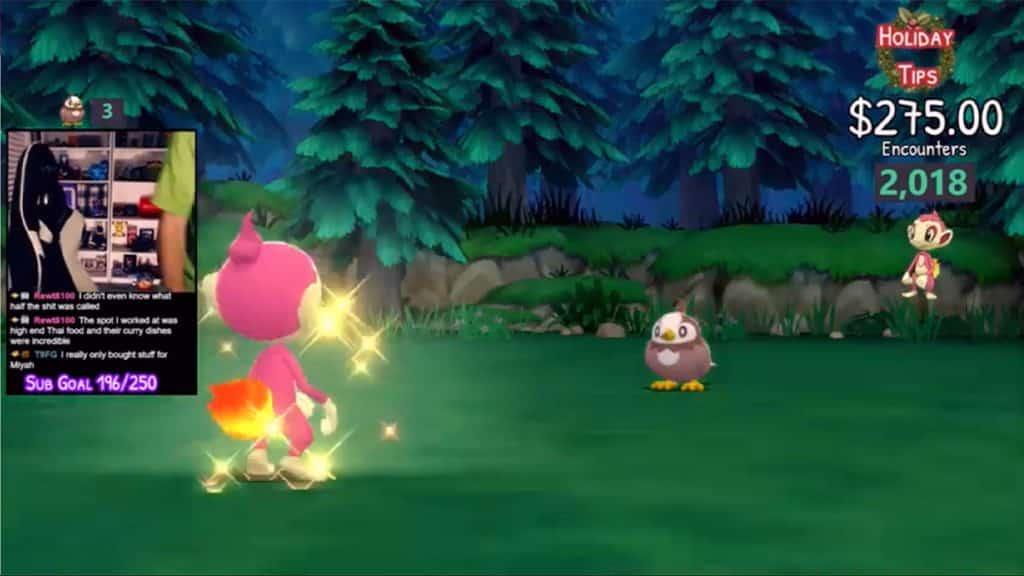 KyleAye (YouTube)
The now-deleted video that sparked immediate skepticism from veteran hunters. On December 25th, Twitch streamer and YouTuber KyleAye posted a video claiming an identical double shiny encounter. However, the Pokemon community, armed with technical knowledge and a keen eye for authenticity, immediately raised red flags.
Skepticism crystallized around two main areas: technical evidence and human behavior. Observers noted KyleAye’s Nintendo Switch was in airplane mode, a common tactic when using modified hardware or software to manipulate game data. Other subtle UI inconsistencies pointed toward the use of mods or cheats. Beyond hardware, his reaction was dissected. Veteran hunters noted his surprise seemed performative and staged, lacking the genuine, often chaotic, disbelief that accompanies a true once-in-a-lifetime find. The timing was also suspect; the improbable coincidence of two such events happening days apart defied statistical sense. This crowd-sourced investigation forced a confession. Two days post-upload, KyleAye admitted to the forgery in a private Discord channel, a message later leaked by subscribers.
Aftermath and Industry Repercussions
The fallout followed a now-familiar digital scandal pattern: deletion, a restricted apology, and ongoing debate. KyleAye’s apology was conspicuously locked behind a paywall on his Discord, accessible only to paying subscribers. This move was widely criticized as prioritizing damage control with his revenue stream over a public accountability to the broader community that exposed him. He subsequently deleted the video, related tweets, and Twitch VODs, attempting to erase the evidence. As of this analysis, no genuine public apology has been offered to the wider audience.  The paywalled Discord admission that confirmed the community’s suspicions.
His statement, however, touched on a deeper philosophical issue within hunting communities: “There is no way to 100% prove if it is fake… meaning that everybody just wanted it to be fake.” This highlights a pervasive problem of proof and trust. Legitimate hunters often face unjustified skepticism, while sophisticated fakes can temporarily fool audiences. This incident raises the credibility bar for all creators, necessitating more transparent practices. It also serves as a cautionary tale about the toxic cycle where incredible luck breeds jealousy, which in turn can inspire fraudulent claims for similar acclaim, eroding trust ecosystem-wide.
A Hunter’s Guide: Verifying Legitimacy and Protecting Your Reputation
For streamers and hunters aiming to build a trustworthy brand, transparency is the only armor against skepticism. Here are practical strategies to verify encounters and conduct ethical hunts.
Verification Checklist for Suspect Encounters:
1. Hardware/Software Audit: Is the console offline? Are there unusual menu artifacts or loading times indicative of mods? Legitimate hunts are typically streamed with normal online connectivity.
2. Reaction Analysis: Does the shock seem proportional and immediate? Genuine reactions often include prolonged silence, fumbled controls, or authentic verbal outbursts.
3. Historical Consistency: Does the streamer have a documented history of hunting? A sudden, ultra-rare find from a creator with no prior hunting content is a major red flag.
4. Statistical Context: Consider the odds and recent events. While lightning can strike twice, back-to-back miracles warrant extra scrutiny.
Common Pitfalls & Pro Tips:
– Mistake: Hunting offline to avoid system updates, but failing to explain this to viewers. Solution: Verbally state why you’re offline at the stream’s start.
– Mistake: Editing or cutting footage during a long hunt. Solution: Use multi-stream VODs or highlight clear checkpoints to maintain an unbroken chain of evidence.
– Tip for Advanced Hunters: Use a secondary camera pointing at the Switch screen and your hands to eliminate any doubt of software manipulation. The extra effort builds immense credibility.
– Community Tip: Engage openly with skeptical comments. Providing additional context or specific hunt details can turn doubters into supporters.
The core lesson from this incident is that in an environment where proof is challenging, the systematic cultivation of trust through consistency and transparency is a streamer’s most valuable asset. For more insights into Pokemon collecting, explore the economics behind high-stakes card purchases, and stay tuned for further analysis.
No reproduction without permission:SeeYouSoon Game Club » Pokemon Twitch streamer admits faking 1/16 million chance shiny encounter A deep dive into streamer deception, the psychology of rare Pokemon hunting, and how to spot fake shiny encounters