
TL;DR
- Scroll Cup restricts teams to Dark, Fighting, and Water types with 1500 CP limit
- Toxapex dominates with exceptional bulk and eight type resistances
- Dual-type Pokémon provide crucial coverage against common threats
- Optimal IV spreads prioritize bulk over maximum attack stats
- Strategic shield management and switch timing determine victory
Master the unique constraints of the Scroll Cup: Great League Edition to build a competitive advantage from the start.
The Scroll Cup: Great League Edition represents a specialized Pokémon Go Battle League format that imposes strict type limitations, permitting only dark-, fighting-, and water-type Pokémon to compete. This strategic constraint creates a unique meta that rewards careful team composition planning.
These specific type restrictions appear intentionally designed to mirror the evolutionary options of Legendary Pokémon Kubfu, which evolves into either fighting-/dark-type Single Strike Style Urshifu or fighting-/water-type Rapid Strike Style Urshifu. Understanding this thematic connection helps anticipate likely opponent strategies.
Beyond type limitations, the Scroll Cup enforces a 1,500 Combat Power (CP) ceiling for every team member, consistent with standard Great League parameters. Additionally, Primarina remains banned from competition despite meeting type requirements, preventing its fairy-type coverage from disrupting the intended meta balance.
While these regulations significantly narrow viable Pokémon choices, the allowance for dual-typed combatants introduces strategic depth. For instance, electric-/dark-type Morpeko qualifies through its secondary dark typing, demonstrating how creative team building can circumvent apparent limitations. Dual-type Pokémon typically excel in restricted formats due to their expanded resistance profiles and diverse movepool options.
Constructing a balanced team requires understanding both individual strengths and synergistic relationships between your chosen Pokémon.
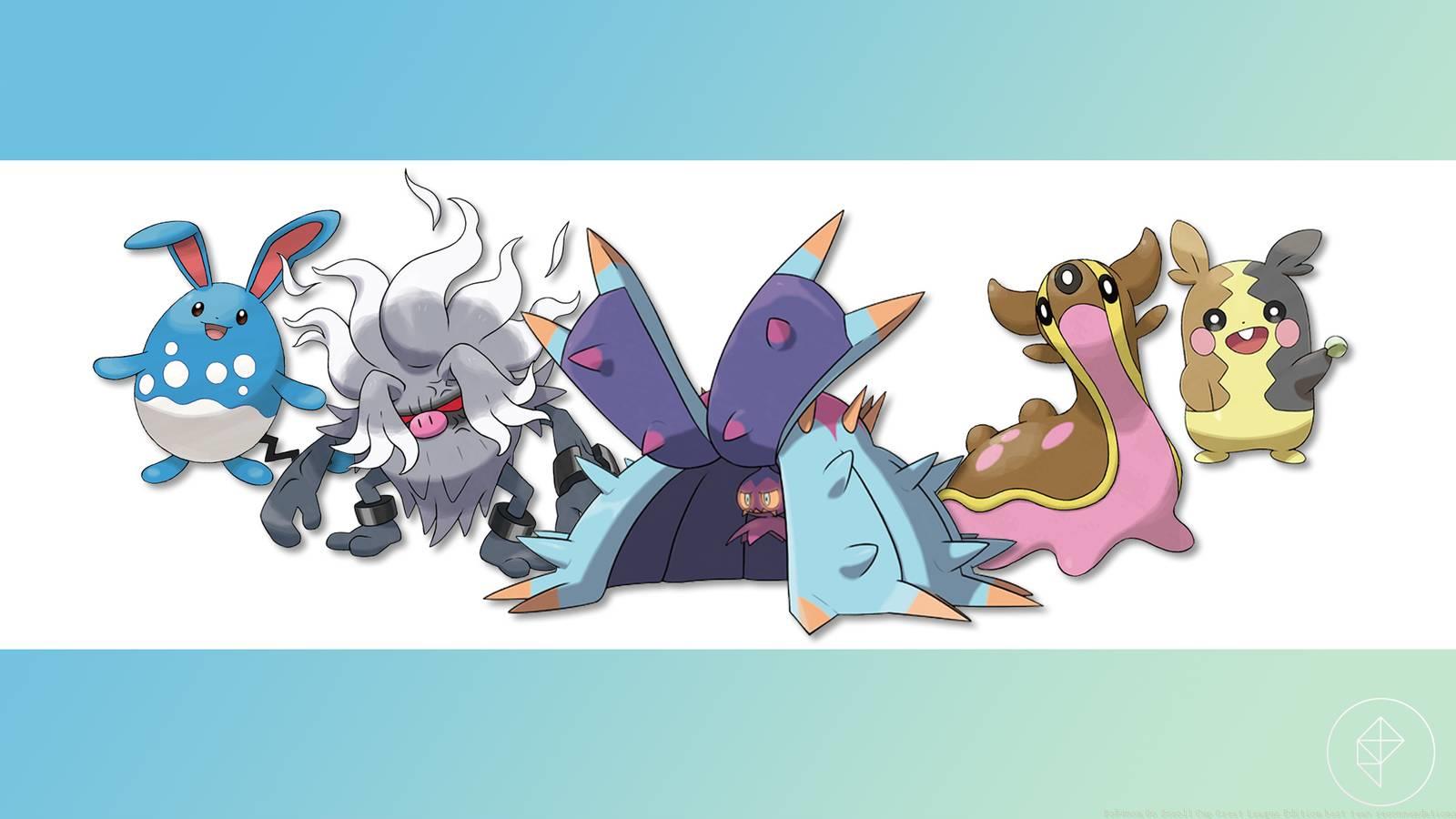
Here’s a battle-tested team composition that leverages dual-type advantages and comprehensive coverage:
This carefully curated trio combines exceptional defensive capabilities with diverse offensive coverage. All members possess dual typings that provide strategic advantages against common Scroll Cup matchups. Your team will access seven different attack types: fighting, ghost, ground, ice, normal, poison, and water, ensuring you rarely encounter situations where you cannot effectively counter opponent Pokémon.
According to PvPoke simulations, Toxapex emerges as the format’s dominant force. Its remarkable defense stat combined with eight distinct type resistances—including both fighting and water attacks—positions it as an exceptional battlefield anchor capable of outlasting numerous opponents.
Gastrodon represents another premium bulky option with an excellent moveset. Its Body Slam charged attack provides valuable neutral coverage against most opponents, while its singular grass-type weakness simplifies defensive planning. Crucially, Gastrodon counters several top-tier threats including Sableye, Morpeko, and even opposing Toxapex.
Beyond the core recommendations, consider these alternative options for team flexibility:
- Annihilape: Fighting/ghost typing with Counter and Ice Punch coverage
- Azumarill: Water/fairy combination with ice beam for grass types
- Mandibuzz: Dark/flying type that resists fighting attacks
Precise move selection and IV optimization separate competitive players from casual participants in the Scroll Cup meta.
|
Pokémon |
Type |
Best Fast Move |
Best Charged Moves |
Perfect IVs |
|---|---|---|---|---|
|
Toxapex |
Poison/Water |
Poison Jab |
Brine and Sludge Wave |
0 / 15 / 15 |
|
Gastrodon |
Water/Ground |
Mud Slap |
Body Slam and Earth Power |
1 / 15 / 14 |
|
Annihilape |
Fighting/Ghost |
Counter |
Rage Fist and Ice Punch |
2 / 15 / 15 |
|
Sableye |
Dark/Ghost |
Shadow Claw |
Foul Play and Dazzling Gleam |
0 / 15 / 15 |
|
Azumarill |
Water/Fairy |
Bubble |
Ice Beam and Play Rough |
0 / 15 / 15 |
|
Morpeko |
Electric/Dark |
Thunder Shock |
Aura Wheel and Psychic Fangs |
1 / 15 / 15 |
|
Mandibuzz |
Dark/Flying |
Air Slash |
Foul Play and Aerial Ace |
0 / 13 / 15 |
|
Lanturn |
Water/Electric |
Spark |
Surf and Thunderbolt |
0 / 13 / 14 |
|
Chesnaught |
Grass/Fighting |
Vine Whip |
Frenzy Plant and Superpower |
1 / 15 / 15 |
|
Whiscash |
Water/Ground |
Mud Shot |
Mud Bomb and Scald |
0 / 14 / 13 |
Understanding IV optimization proves crucial for Great League performance. The recommended IV spreads prioritize high defense and stamina while minimizing attack stats, enabling your Pokémon to reach higher levels while remaining under the 1500 CP threshold. This “bulk over attack” approach typically yields superior battle performance despite lower CP numbers.
Fast move selection dictates energy generation speed and damage output. Poison Jab on Toxapex provides solid damage and energy gain, while Counter on Annihilape represents one of the game’s strongest fast moves. Consider your team’s energy requirements when selecting fast moves.
Charged move combinations should provide type coverage against common threats. Dual moves of different types prevent being walled by resistant opponents. For example, Gastrodon’s Body Slam/Earth Power combination covers both neutral and ground-weak opponents effectively.
Advanced battle tactics and awareness of common mistakes significantly improve your Scroll Cup win rate.
Switch Management Strategy: Preserve your switch advantage by anticipating opponent leads. If you face an unfavorable opening matchup, consider immediately switching to your safe swap rather than sacrificing shields. Gastrodon often functions well as a safe switch due to its limited weaknesses and neutral coverage.
Shield Economy Principles: Avoid shielding early unless necessary to preserve a key Pokémon. Since the Scroll Cup meta features numerous bulky Pokémon, battles often extend to all three Pokémon, making late-game shield advantages decisive. Learn to identify when taking charged move damage is preferable to burning shields.
Type Matchup Exploitation: Memorize key resistances within the restricted type pool. Dark types resist ghost and dark attacks but weak to fighting, bug, and fairy. Fighting types resist rock, bug, and dark but vulnerable to flying, psychic, and fairy. Water types resist steel, fire, water, and ice but weak to electric and grass.
Common Beginner Mistakes:
- Overinvesting in attack-weighted IV Pokémon that underperform in Great League
- Failing to account for dual-type resistances when planning attacks
- Wasting shields on Pokémon that cannot win matchups even with protection
- Not practicing team mechanics before competitive matches
Advanced Tactics: Master fast move denial timing to maximize energy gain. Learn to count opponent fast moves to anticipate charged attacks. Practice sack swapping—intentionally sacrificing a nearly fainted Pokémon to preserve switch advantage. These advanced battle techniques separate elite players from intermediate competitors.
For comprehensive battle strategy development, consult our complete PvP guide covering fundamental to advanced techniques. Additionally, understanding optimal move selection principles will enhance your performance across all Pokémon Go Battle League formats.
Action Checklist
- Build core team of Toxapex, Gastrodon, and Annihilape with recommended movesets
- Verify all Pokémon have optimal IV spreads for Great League performance
- Practice team mechanics in training battles to master switch timing
- Memorize key type matchups within the Dark/Fighting/Water restricted meta
- Develop shield usage strategy based on opponent team composition
No reproduction without permission:SeeYouSoon Game Club » Pokémon Go Scroll Cup Great League Edition best team recommendations Master the Pokémon Go Scroll Cup with optimal teams, strategic movesets, and battle-tested tactics for Great League dominance