
TL;DR
- Musket ammo requires two-step crafting: gunpowder first, then cartridges
- Hemp for linen is the bottleneck – focus on Windsward’s western region
- Arrows are simpler but require consistent turkey hunting for feathers
- Upgrading ammo types depends on mining and logging skill progression
- Always craft in bulk and maintain resource awareness during quests
Mastering ammunition creation represents one of the most crucial early-game challenges in New World, transforming from a frustrating resource hunt into a streamlined production system once you understand the mechanics. The learning curve may seem steep initially, but strategic resource gathering makes the process manageable.
Amazon’s expansive MMO New World presents constant threats around every corner, whether facing hostile faction opponents or dangerous NPC creatures. Maintaining a reliable ranged weapon in your loadout provides essential tactical flexibility. However, weapons like muskets and bows consume ammunition rapidly, quickly depleting the limited supplies found through environmental looting. Securing consistent ammunition becomes particularly challenging during the initial gameplay phases.
Fortunately, crafting ammunition in New World follows straightforward principles, though it demands strategic resource collection and processing. You’ll gather multiple resource types that require conversion into intermediate materials before producing final ammunition like iron cartridges for muskets or flint arrows for bows. This guide details the comprehensive process to establish yourself as a proficient marksman throughout Aeternum.
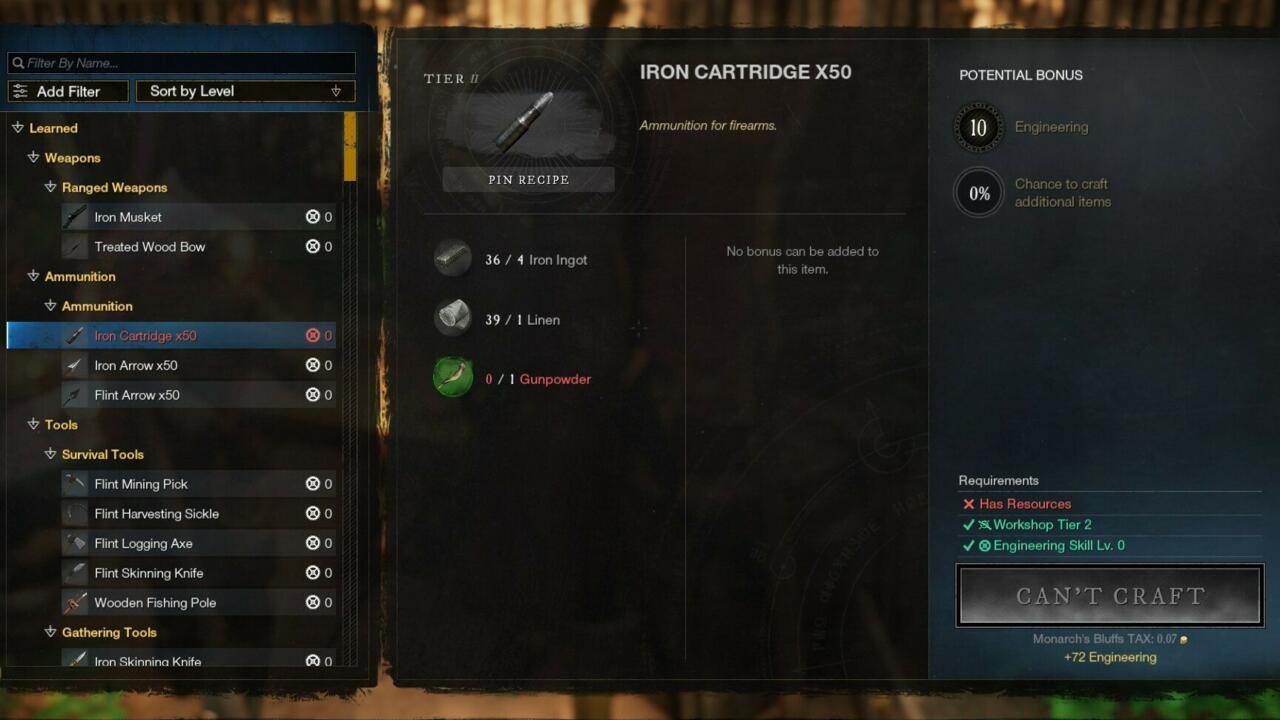
Players embracing the musket’s Old World technology must master a multi-stage resource acquisition process to maintain adequate ammunition reserves. Crafting iron cartridges involves two distinct production phases rather than a single-step operation. The initial stage focuses on gunpowder synthesis, requiring specific components:
Saltpeter deposits concentrate within cave systems across the map, while green wood for charcoal production appears abundantly near any wooded or brush areas. Flint resources scatter throughout the environment but cluster most densely along waterways and coastal regions. After securing gunpowder components, proceed to ammunition assembly. Creating iron cartridges demands these materials:
Iron ingots originate from smelting raw iron ore, typically mined from quarries located in starting zones. The linen production phase introduces complexity, requiring players to locate hemp plants, harvest their fibers, then convert them into linen using settlement looms. Hemp proves challenging to locate early-game, primarily inhabiting meadow biomes. Significant hemp concentrations appear in Windsward territory’s western sector, with additional field locations throughout Everfall, Monarch’s Bluff, and First Light regions. Combining linen, iron ingots, and gunpowder at any workshop yields 50 iron cartridges per craft. Since muskets consume ammunition rapidly as primary weapons, always produce large batches and maintain constant awareness of hemp, iron, and saltpeter sources during exploration and questing activities.
Archery specialists in New World require consistent arrow supplies to maintain combat effectiveness. Fortunately, arrow production involves fewer steps compared to musket ammunition. Crafting flint arrows requires these components:
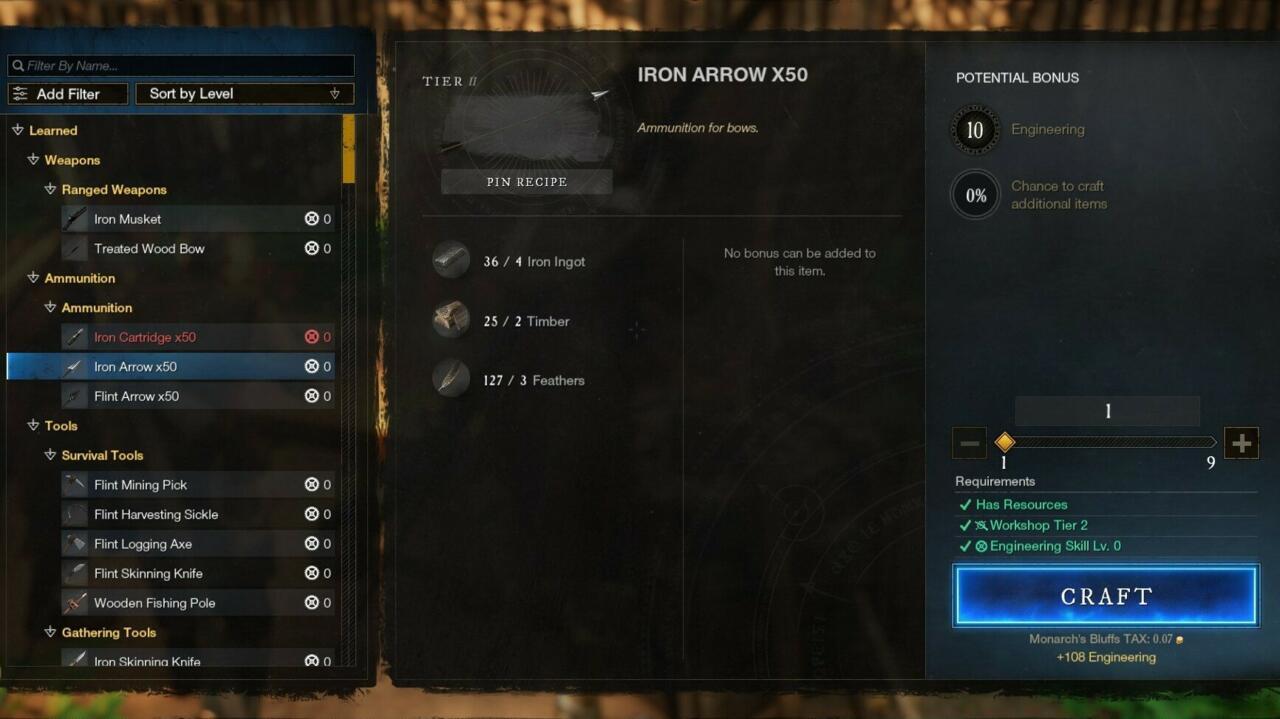
Green wood gathers from bushes and immature trees, flint collects near water sources, and feathers harvest from wild turkeys roaming Aeternum. Upgrading to higher-damage iron arrows simply substitutes flint with iron ingots while converting green wood to timber alongside necessary feathers. All arrow types craft at settlement workshops.
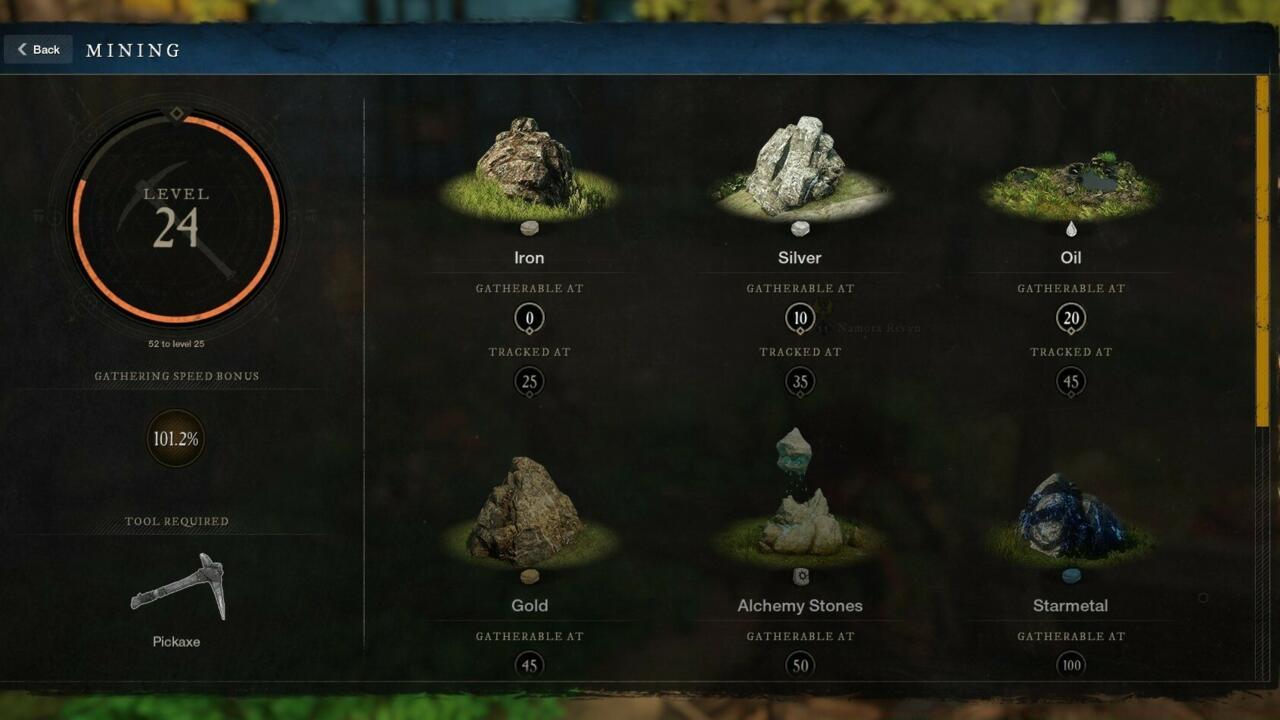
Ammunition upgrades for both cartridge and arrow types follow consistent progression patterns. Musket ammunition always requires gunpowder and linen bases, while metal ingot quality escalates from steel to orichalcum cartridges at maximum tiers. Arrows consistently need feather components, with wood quality and metal types improving progressively. To access advanced ammunition tiers, systematically develop both logging and mining proficiencies for archers (mining alone suffices for musket users), as these skills unlock resource gathering capabilities necessary for superior ammunition crafting and sustained weapon performance throughout game progression.
Pro Tip: Establish resource gathering routes that combine multiple material types. For example, coastal paths provide flint and potential hemp spawns while allowing turkey hunting for feathers. This multi-target approach maximizes efficiency and reduces backtracking. Additionally, always carry basic tools for immediate resource collection when discovering unexpected material nodes during quests.
Common mistakes include underestimating linen requirements and neglecting skill progression. Many players focus solely on metal gathering while underestimating the hemp needs for sustained musket use. Similarly, failing to consistently level mining and logging skills creates ammunition crafting bottlenecks at higher levels. Plan your skill development alongside weapon progression to avoid these pitfalls.
Action Checklist
- Establish primary hemp farming route in Windsward’s western region
- Craft gunpowder in bulk using saltpeter from caves and green wood from forests
- Develop consistent turkey hunting pattern for feather collection
- Produce ammunition in large batches (minimum 200-300 units)
- Systematically level mining and logging skills alongside character progression
No reproduction without permission:SeeYouSoon Game Club » New World Ammunition Guide: How To Make Iron Cartridges Bullets And Flint Arrows Master New World ammunition crafting with expert resource gathering strategies and efficiency tips