
TL;DR
- Use scanning frequently to reveal hidden Pokemon and alternate routes
- Experiment with fluffruits and Illumina Orbs to trigger unique behaviors
- Delay request completion until post-game for better efficiency
- Focus on Research Level increases to unlock new content and Pokemon
- Explore multiple islands simultaneously to maximize discovery opportunities
Our comprehensive guide reveals professional photography strategies to elevate your Pokemon capturing skills beyond basic techniques.
New Pokemon Snap transforms photography into an adventure of exploration across the Lental region’s diverse ecosystems. Success requires mastering environmental interaction tools to coax Pokemon from concealment, facilitate interspecies interactions, and document exceptionally rare behavioral moments that few photographers ever witness.
Players new to the franchise should anticipate repeated course runs to perfect their photographic technique. Multiple attempts through identical routes enable superior Pokemon captures and Research Level advancement, subsequently unlocking additional courses and photographic subjects. The game deliberately maintains mystery around island access and Pokemon reaction triggers, demanding persistent experimentation for progression. When facing advancement challenges, these expert methodologies provide the breakthrough strategies you need.
Early in your expedition, you’ll acquire the scanning capability—a revolutionary addition exclusive to this installment. Activating this feature with the X button generates an electrical pulse across your immediate vicinity, identifying all nearby Pokemon and noteworthy environmental elements on your display. Beyond simple creature detection, numerous Pokemon respond to these signals with exclusive behavioral patterns typically concealed during normal observation.
Additionally, scanning exposes concealed pathways on specific islands. The system typically alerts players approaching alternate routes or points of interest through on-screen notifications or research team hints, indicating optimal scanning moments. For photographers pursuing perfection, regularly scanning environments and observing Pokemon reactions—even without prompts—becomes essential practice.
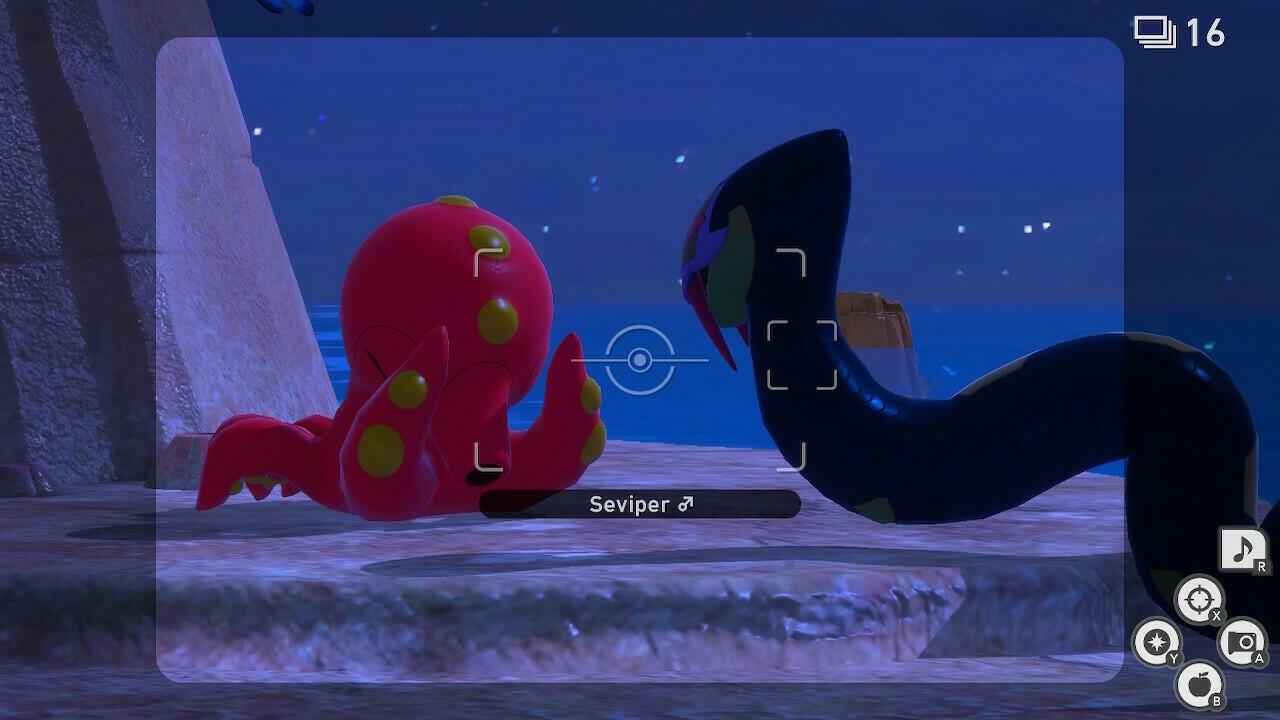
Advanced photographers combine multiple tools to document exceptionally rare Pokemon interactions
Mastering your photographic toolkit requires understanding each instrument’s unique applications and synergistic effects.
Following scanning capability acquisition, Professor Mirror enhances your equipment with fluffruits and Illumina Orbs—both indispensable for professional Pokemon photography. Similar to the original Nintendo 64 version, tossing fluffruits near Pokemon captures their attention, serving as effective bait to draw concealed creatures into view or position them optimally for superior photographs. Advanced practitioners utilize fluffruits to dislodge Pokemon from elevated perches, initiating previously unobserved behavioral responses.
Illumina Orbs, conversely, induce bioluminescent effects in Pokemon. This not only enhances creature visibility during nocturnal photography sessions but also triggers distinctive behavioral modifications when impacted by these specialized orbs. Your arsenal later expands to include a melodic device that similarly influences Pokemon conduct, necessitating comprehensive experimentation with all available instruments to determine optimal applications.
Common mistake: Many beginners overlook tool combination strategies. For example, using a fluffruit to position a Pokemon followed by an Illumina Orb often yields four-star photographs unavailable through single-tool approaches.
Professional photographers recommend systematic tool experimentation to uncover the rarest Pokemon interactions
While exploring Lental’s diverse islands, you’ll receive photographic assignments from research team colleagues. These function as guidance for capturing four-star images of Pokemon exhibiting exceptional behaviors, but avoid immediate completion pressure. Requests don’t influence narrative progression, making deferral advisable for players prioritizing story completion. The overwhelming volume of cryptic assignments—many requiring elevated Research Levels—justifies postponement. Fortunately, requests lack time constraints, permitting post-story completion for comprehensive Photodex fulfillment.
Optimization tip: Track request completion rates using the game’s built-in monitoring system. Focus initially on straightforward requests that align with your natural exploration patterns, reserving complex assignments for dedicated post-game sessions.
Each Lental region island maintains an independent Research Level, with advancement serving as the primary mechanism for encountering novel Pokemon species and behaviors. After completing a course expedition and returning to headquarters, Professor Mirror assesses your photographic submissions. Awarded scores convert into Expedition Points, which accumulate to elevate the island’s Research Level. This progression unlocks additional photographic opportunities on that specific landmass, including new Pokemon variants, unprecedented interactions, and hidden pathways.
Advanced strategy: Prioritize courses where you’re closest to reaching the next Research Level threshold. Each level increase typically requires 2-3 optimized runs, with four-star photographs dramatically accelerating point accumulation compared to lower-rated images.
Strategic island rotation prevents photographic stagnation and maximizes discovery efficiency. When you encounter progression barriers on one island, transitioning to another frequently provides fresh perspectives and alternative advancement pathways. The interconnected nature of Lental’s ecosystems means techniques learned on one island often apply to others, creating synergistic learning effects across your photographic journey.
Time management: Allocate approximately 45-60 minutes per island session before rotating. This prevents repetitive fatigue while maintaining consistent progression across all research areas. For comprehensive gaming strategies beyond photography, consult our Complete Guide for comprehensive strategy frameworks.
Action Checklist
- Scan environments every 30-45 seconds to reveal hidden Pokemon and routes
- Experiment with fluffruit and Illumina Orb combinations on each Pokemon encounter
- Document tool reaction patterns in a photography journal for future reference
- Focus on Research Level advancement before tackling complex requests
- Rotate between islands when progression stalls to maintain discovery momentum
No reproduction without permission:SeeYouSoon Game Club » New Pokemon Snap: Essential Beginner Tips Master New Pokemon Snap with expert photography techniques, tool strategies, and progression optimization tips