
TL;DR
- Three distinct control schemes offer arcade-to-simulation hitting experiences
- Master swing timing and placement through directional, zone, or timing-based systems
- Strategic swing selection based on count, situation, and pitcher fatigue
- Advanced techniques for optimizing contact, power, and situational hitting
- Platform-specific controls require muscle memory development across Xbox, PlayStation, and Switch
MLB The Show 22 presents an extensive array of batting control options that can significantly impact your offensive performance. Determining the optimal approach requires understanding how each system aligns with your playstyle and skill level. This comprehensive breakdown will help you navigate the complexities of hitting mechanics.
Each annual release of MLB The Show introduces increasingly sophisticated control schemes that surpass most sports simulations in depth and customization. You’ll discover numerous configurations spanning batting, fielding, pitching, and baserunning mechanics. Our detailed examination focuses specifically on hitting controls, providing insights into the advantages and limitations of each method to help you identify the perfect match for your gameplay preferences. This represents the definitive resource for mastering batting controls in MLB The Show 22.
The game features three primary control methodologies for hitting, spanning from arcade-style accessibility to simulation-level complexity. Your selection should reflect how actively you wish to engage with pitch recognition and bat placement mechanics. While no approach is fundamentally incorrect, you might discover that increased or reduced control over bat positioning better suits your strategic approach.
Before exploring individual systems, recognize that all three control frameworks share core swing mechanics. Regardless of your chosen mode, you’ll access normal swings, contact swings, and power swings. The platform-specific input mappings are detailed below:
A normal swing represents your standard batting approach, typically employed when beginning an inning or when no specific game circumstances—such as scoring position runners or exhausted pitchers—necessitate specialized swings. The contact swing proves invaluable when facing unfavorable counts requiring at least foul ball contact to extend at-bats, or when prioritizing runner advancement potentially at the expense of your batter’s performance. Power swings naturally suit power hitters, though when pitchers display fatigue, their pitch quality diminishes and they might leave offerings hovering over the plate’s sweet spot. These situations present ideal opportunities for power swings to capitalize on mistakes.
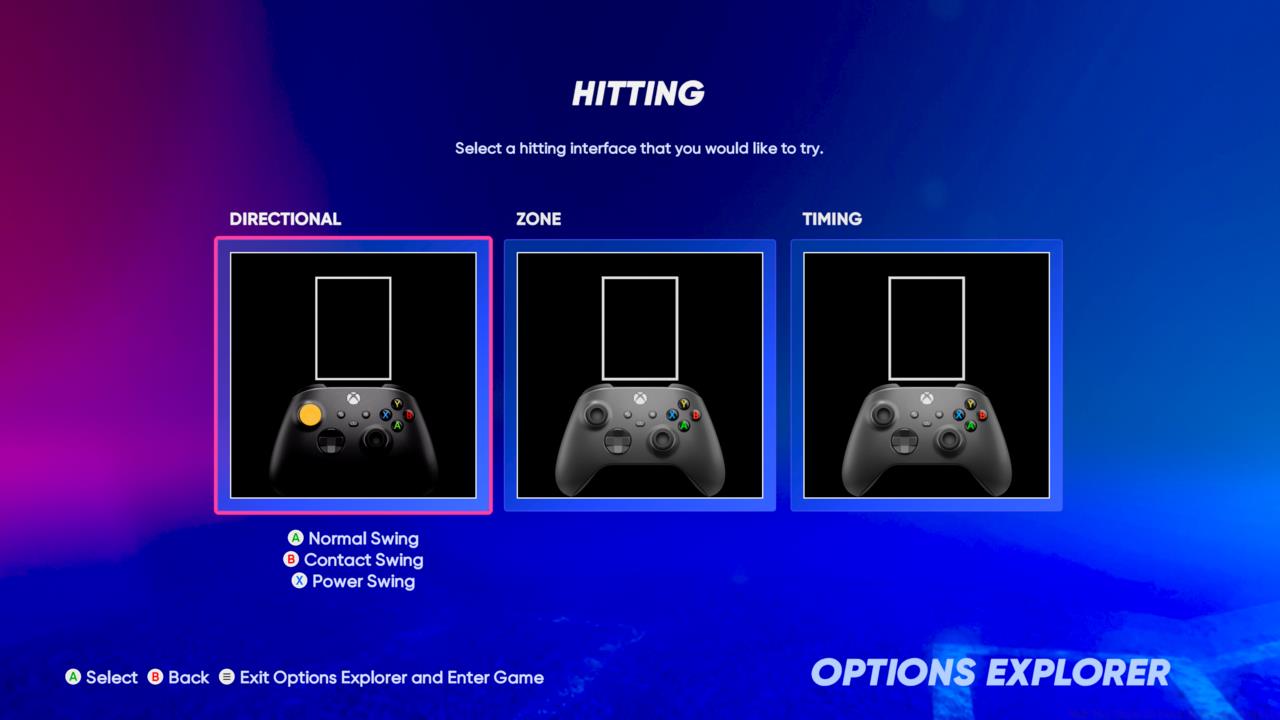
MLB The Show 22 hitting controls
Directional hitting mechanics provide eight distinct directional emphasis points for swing targeting. By manipulating the left analog stick toward upper, lower, left, right, or diagonal zones of the batter’s box, you’ll bias contact toward that specific region and drive the ball accordingly. This system benefits players with strong pitch recognition skills and strategic understanding of desired hit placement. Situations requiring sacrifice flies for runner advancement, for instance, involve pointing upward to enhance airborne contact probability. Alternatively, targeting specific outfield gaps can facilitate runner progression or avoid double-play scenarios.
Zone hitting introduces precision placement through a batting reticle that you position across the strike zone. This advanced method demands exceptional hand-eye coordination but rewards skilled users with unparalleled bat control. The reticle’s placement directly influences contact quality—perfect alignment with the pitch location generates optimal power and contact. This approach mirrors the precision targeting required in BF6 Weapons Unlock scenarios, where exact positioning determines effectiveness.
Pure analog timing represents the most accessible control scheme, focusing exclusively on swing timing rather than directional or zone placement. This method simplifies the mental load for newcomers while still allowing competitive performance through well-timed swings. The system automatically handles bat placement based on your timing, making it ideal for players transitioning from other baseball games or those preferring reaction-based gameplay.
Common Mistake Alert: Many players struggle with transitioning between control schemes mid-season. Commit to one primary method for at least 20-30 games to develop muscle memory before considering adjustments. Switching frequently disrupts timing and spatial recognition, leading to prolonged slumps.
Mastering situational awareness separates competent hitters from elite performers. Understanding count dynamics dramatically influences your swing selection strategy. When facing 0-2 counts, prioritize contact swings to extend at-bats, while 3-1 situations favor power swings on predictable fastball counts. This strategic approach parallels the tactical decision-making found in BF6 Class Selection Guide strategies, where context determines optimal loadouts.
Advanced players should monitor pitcher energy meters closely. Depleted pitchers exhibit reduced velocity, diminished break on breaking balls, and increased likelihood of hanging pitches. These moments present prime opportunities for power swings, particularly with runners in scoring position. The stamina system creates dynamic gameplay that rewards observant batters.
Optimization Technique: Develop a pre-pitch routine that includes assessing the situation (outs, runners, score), checking pitcher energy, and anticipating likely pitch sequences based on previous at-bats.
Pitch recognition development requires dedicated practice. Focus on identifying spin patterns early in the pitch trajectory. Fastballs display minimal rotation while breaking pitches exhibit distinct spin signatures. Training mode offers invaluable repetition for honing this critical skill.
For comprehensive gameplay mastery similar to the depth found in our Battlefield 6 Complete Guide, consider mastering one control scheme completely before experimenting with alternatives. Each method offers unique advantages that can be leveraged in different gameplay scenarios.
Pro Tip: Record your at-bats and review pitch sequences to identify patterns in your decision-making and recognition timing.
Action Checklist
- Practice each control scheme in batting practice for 30 minutes to identify personal preference
- Master platform-specific button mappings through repetition drills
- Develop count-based swing selection strategy across 50 exhibition games
- Analyze pitcher fatigue patterns and capitalize with power swings
- Implement advanced situational hitting techniques in franchise mode
No reproduction without permission:SeeYouSoon Game Club » MLB The Show 22 Best Hitting Controls Master MLB The Show 22 hitting controls with expert strategies, swing analysis, and advanced techniques