
TL;DR
- Four distinct combat styles (Brawler, Swordsman, Gunman, Wild Dancer) offer complete tactical flexibility
- Each style has independent skill progression with specialized orbs and training requirements
- Master situational awareness: Brawler for crowds, Swordsman for duels, Gunman for distance
- Training orbs provide strategic flexibility but cannot replace spent class orbs
- Regular style switching is essential for balanced progression and combat adaptation
Like A Dragon: Ishin revolutionizes combat with four distinct fighting styles that can be instantly swapped during any encounter, providing unprecedented tactical flexibility. This system builds upon the foundation established in Yakuza 0, refined for the historical setting while maintaining the series’ signature depth.
While departing from the modern Yakuza setting, Ishin preserves the franchise’s core combat DNA through its dynamic style-switching mechanic. The system demands strategic management across four separate skill trees, weapon upgrades, and consumable items. Understanding these interlocking systems is crucial for mastering the game’s challenging encounters and progressing efficiently.
The combat arsenal includes Brawler, Swordsman, Gunman, and Wild Dancer styles. Brawler emphasizes unarmed martial arts and environmental weapon usage, while Swordsman and Gunman specialize in their respective single-weapon disciplines. The hybrid Wild Dancer style uniquely combines swordplay with firearm techniques for versatile crowd control. Your preferred approach depends largely on personal combat preferences, though strategic diversification across all styles is essential because experience points and skill progression operate independently for each combat class.
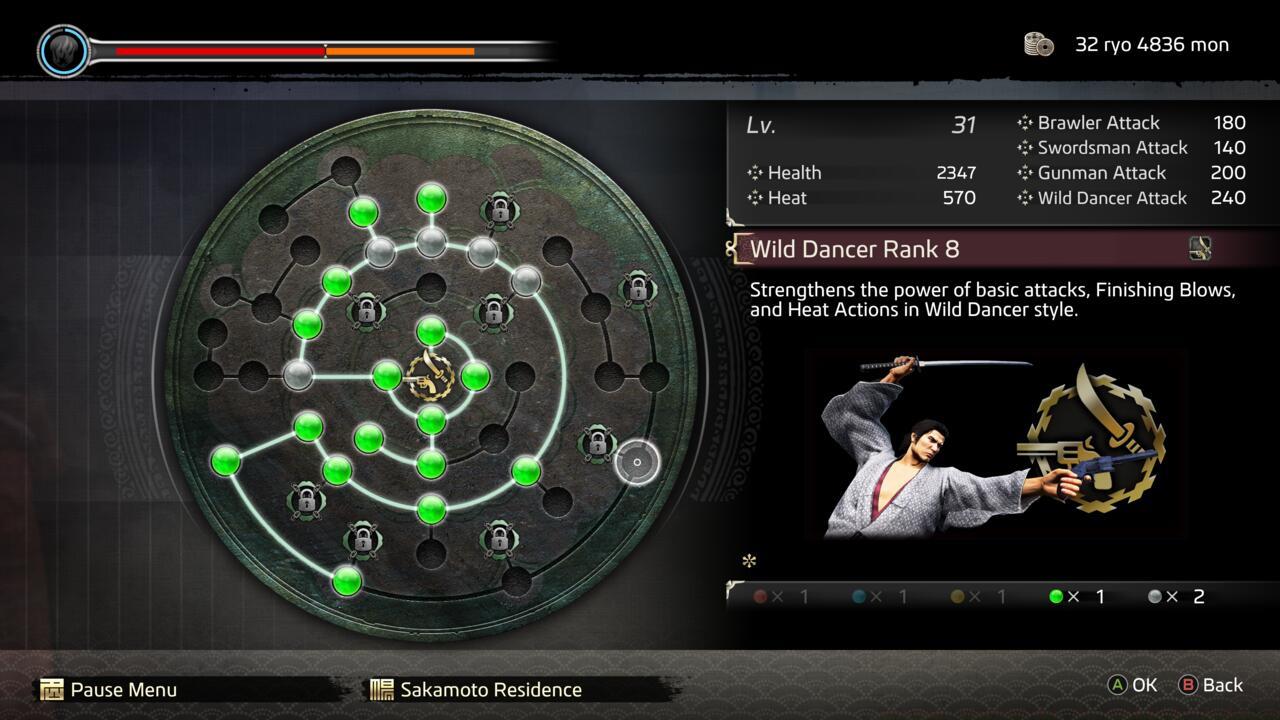
Each fighting style maintains independent progression through dedicated skill trees and leveling systems.
Every combat style features its own dedicated skill tree and progression level, creating a complex but rewarding advancement system. Understanding orb management becomes critical for optimizing your character’s growth across multiple disciplines.
Each fighting style utilizes specialized skill points in the form of class-specific orbs. Training orbs serve as the universal currency, awarded through overall character advancement and applicable to any skill tree. This system enables focused specialization in preferred styles or balanced development across multiple classes. Training orbs can be strategically exchanged for class-specific orbs within skill slots, making them valuable early-game resources. However, this exchange is irreversible—once class orbs are allocated, they cannot be converted back to training orbs. Advanced techniques remain locked behind specific training requirements that must be completed at designated dojos.
Skill trees contain two primary categories: combat techniques and statistical enhancements. New attacks introduce fresh combo strings and special maneuvers, often with multiple upgrade tiers that enhance their effectiveness. Statistical improvements provide vital bonuses to health pools, heat gauge capacity, and crucially amplify the fundamental damage output of each fighting style. These damage multipliers represent the most critical upgrades, as they substantially increase combat effectiveness beyond what equipment upgrades alone can provide.
Advanced techniques require specialized training at specific locations throughout the city. Brawler disciples train at Komaki Dojo in southeastern Fushimi. Firearm specialists refine their craft at Unyuan in southern Rakugai. Both Wild Dancer and Swordsman practitioners develop their skills at Ginryu Dojo in northern Rakunai. Visiting these locations early ensures access to powerful abilities that can dramatically alter combat dynamics.
While personal preference guides style selection, each combat approach excels in specific scenarios that experienced players learn to recognize and exploit. Mastering situational awareness separates novice fighters from combat veterans in Like A Dragon: Ishin’s dynamic battles.
The Brawler style dominates in crowded environments with numerous adversaries and abundant environmental weapons. Wild Dancer similarly thrives against multiple opponents, featuring spinning area-of-effect combos that damage surrounding enemies. Both styles provide excellent crowd control capabilities when facing groups of standard enemies or during chaotic street brawls.
Swordsman specialization proves most effective in one-on-one duels or small-scale engagements. This style maximizes damage when you can concentrate sword combinations on individual targets without distraction from flanking attacks. The precision-focused nature of swordplay demands undivided attention on single opponents for optimal performance.
Gunman tactics create strategic distance between you and dangerous adversaries. This approach proves invaluable against firearm-wielding enemies or formidable bosses where close-quarters combat carries excessive risk. The ranged advantage allows consistent damage application while maintaining safe positioning—a crucial consideration in higher difficulty settings where enemy attacks become increasingly lethal.
When combat momentum shifts against you or damage intake exceeds output, immediately switching fighting styles can dramatically reverse engagement dynamics. No single approach suits every combat scenario, making frequent tactical adjustments essential for survival. This dynamic approach to combat mirrors the strategic flexibility found in our comprehensive Class Guide for modern military shooters, emphasizing adaptation to changing battlefield conditions.
Beyond basic style mechanics, several advanced techniques can elevate your combat proficiency. Understanding common progression pitfalls and optimization strategies ensures efficient character development throughout your journey.
Pro Tip: Allocate training orbs to unlock critical damage multipliers early, as these provide the most significant combat power increases. The 15% damage boost from initial stat nodes often outweighs fancy new combos in early-game effectiveness.
Many players mistakenly over-specialize in one preferred style, neglecting others until they encounter hard counters later in the game. Maintain balanced progression by regularly rotating styles during standard encounters, even if less comfortable initially. This approach mirrors the weapon diversity strategies discussed in our Weapons Unlock guide, where weapon familiarity prevents situational disadvantages.
Avoid This Mistake: Never waste class-specific orbs on minor stat upgrades when training orbs are available—preserve specialized resources for exclusive abilities.
For optimal progression, dedicate specific play sessions to underleveled styles against weaker enemies. This targeted practice builds proficiency without excessive risk while accumulating valuable class-specific orbs for advanced skills.
Advanced players should master quick-style switching mid-combo to exploit enemy vulnerabilities. This high-skill technique requires extensive practice but delivers unparalleled combat fluidity against challenging opponents.
Understanding these advanced combat principles will prepare you for the most demanding encounters in Like A Dragon: Ishin. As you develop mastery across all styles, consider exploring our Complete Guide for additional gaming mastery techniques across different genres.
Action Checklist
- Practice all four styles in safe areas to build baseline proficiency
- Visit all three training dojos immediately to unlock advanced skill paths
- Allocate training orbs to damage multiplier skills first
- Establish style rotation habit: use different styles for specific enemy types
- Master quick-style switching against boss enemies to exploit attack patterns
- Balance orb expenditure across all skill trees monthly
No reproduction without permission:SeeYouSoon Game Club » Like A Dragon: Ishin Combat Guide: Skills And Fighting Styles Explained Master Like A Dragon: Ishin's four combat styles with expert strategies, skill tree optimization, and situational tactics