
TL;DR
- Knights face systematic match-fixing accusations during Lima Major with multiple betting anomalies
- Expert analysis reveals suspicious account activity and platform restrictions against the team
- Historical pattern shows similar allegations dating back to January with maphack claims
- Systematic betting patterns suggest organized fraud rather than isolated incidents
- Industry calls for proper esports integrity commission to address growing concerns
Games and Esports Articles Dota 2
The Chinese competitive squad Knights confronts renewed competitive integrity allegations, marking the third major scandal involving the organization within months. Following earlier maphack suspicions and DPC match manipulation claims versus EHOME, prominent community voices now allege the team manipulated outcomes during the Lima Major, one of Dota 2’s premier annual tournaments. Our investigation compiled these serious charges and includes exclusive commentary from former OG strategic advisor and seasoned wagering specialist Vladislav “Kozak” Lazurenko, who possesses extensive gambling market expertise.
Lazurenko initially published concerning findings through his Telegram channel, citing multiple independent informants including a credible sportsbook operations manager. Both competitive engagements between Knights and Entity displayed highly irregular wagering patterns that raised immediate red flags. Beyond substantial volumes betting against the Chinese roster across individual maps and the complete match, significant capital flowed toward specific kill count propositions. The actual results (17:48 and 25:10) matched these unusual wagers precisely, replicating the identical scenario from prior accusations. Kill total odd/even propositions typically demonstrate random distribution characteristics, making pronounced imbalances strong indicators of potential match manipulation.
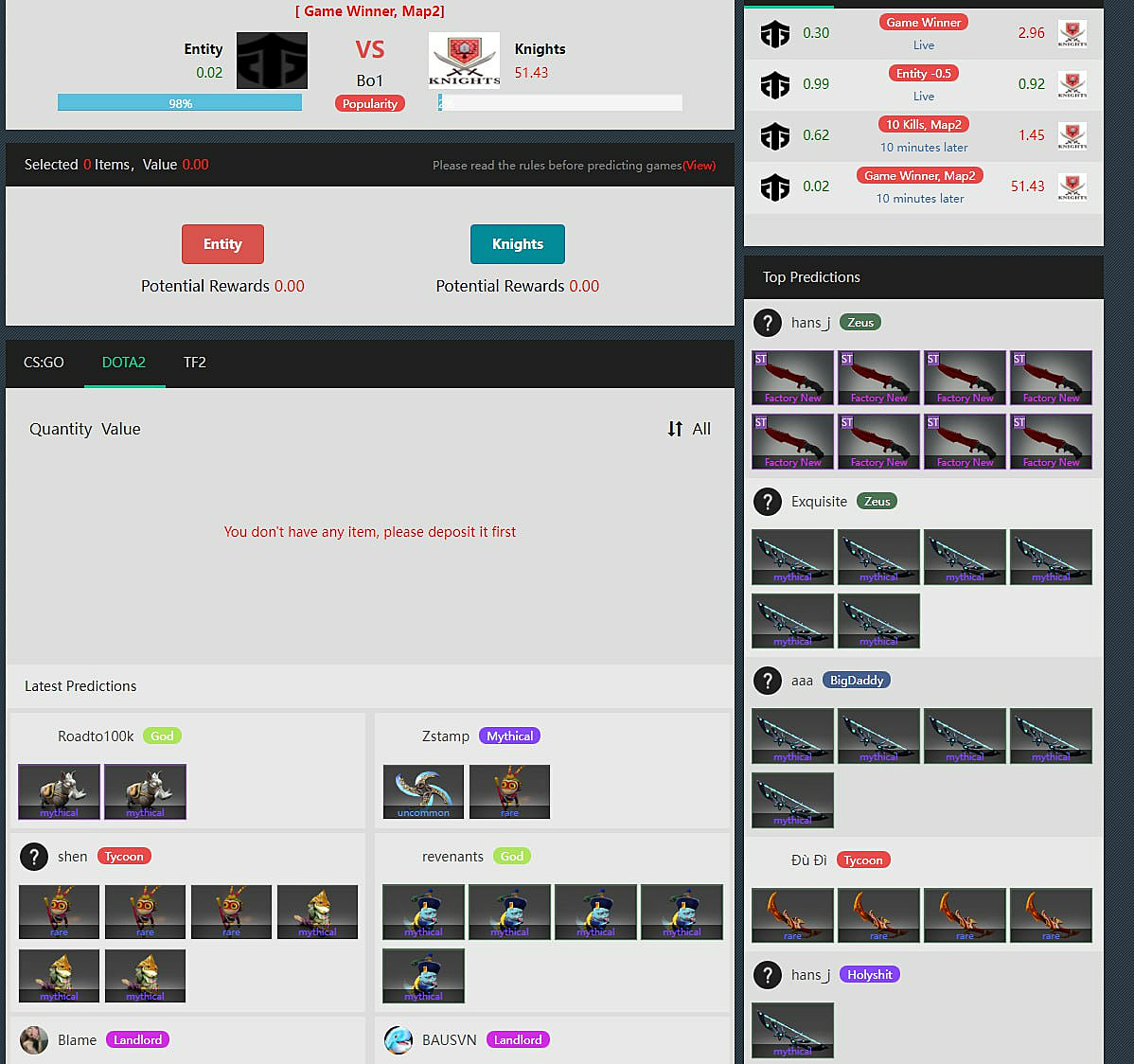
Certain wagering marketplaces displayed Knights victory probabilities escalating beyond 50:1 ratios, representing extraordinary numbers for a Major-qualified team hailing from a traditionally competitive region during their inaugural tournament match. Kozak provided visual evidence supporting these claims. Smaller betting exchanges prove particularly vulnerable to line movement through concentrated high-value wagers.
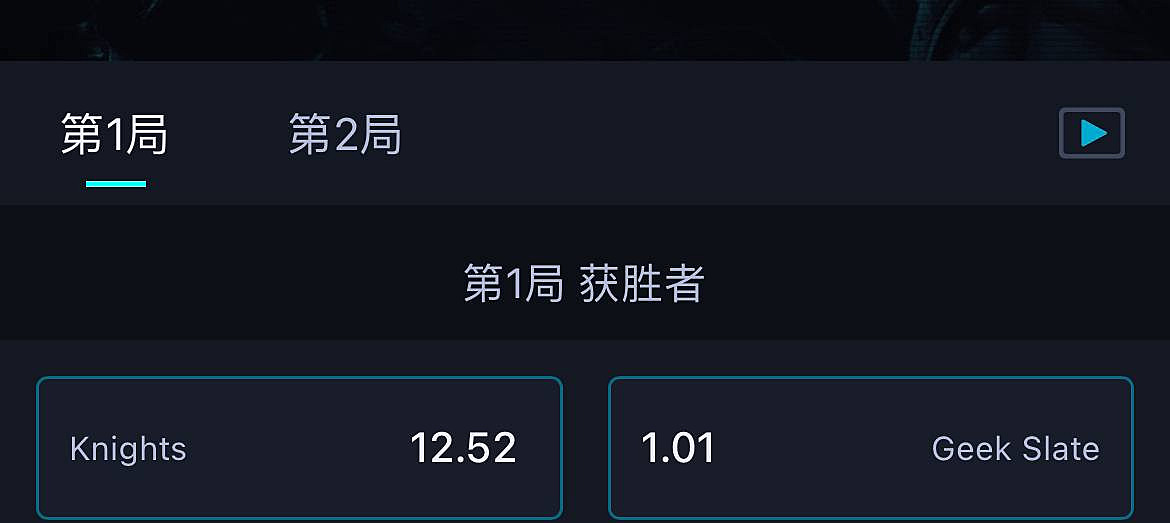
Day two witnessed continued abnormal patterns, with Ukrainian broadcast analyst Oleksii “BafiK” Bafadarov identifying peculiar odds behavior during Knights confrontation with Geek Slate. Despite Knights maintaining approximate five-thousand gold advantages, their win probabilities remained astonishingly depressed, indicating massive capital positioned against their success. Such phenomena remain unprecedented at Major tournaments, even involving substantial underdogs. Streaming latency cannot account for these abnormalities, as Lima Major implemented minimal broadcast delays unlike online competitions.
Update: Ukrainian commentator Alexey “Storm” Tumanov circulated additional odds data from competition day three, this instance from Knights engagement versus beastcoast captured at match commencement.

These recent allegations represent merely the latest chapter in Knights’ controversial competitive history. During January, Chinese community members publicly asserted Knights utilized maphack software, demonstrating uncanny ward detection capabilities. Perfect World officially announced transmitting certain “evidential materials” to Valve, though no substantive outcomes have materialized thus far.
The February 2nd competitive engagement between Knights and EHOME also exhibited abnormal wagering behavior patterns. At that time, Vitalii “v1lat” Volochai declared the match demonstrated clear manipulation based on intelligence received from GG.Bet collaborators. Identical patterns emerged: implausible Knights victory odds combined with significant kill total proposition imbalances. Kozak provided additional analytical perspective regarding the situation, further corroborating the wagering abnormalities.
Stinger: “I bought my own PC only in 2016, and I have played Dota since 2009”
A frank talk about being a Dota 2 player in Peru.
Talking with Kozak

Our direct communication with Lazurenko regarding the newest allegations yielded both visual evidence and comprehensive situational analysis. According to his assessment, the majority of unusual wagering activity occurred across Asian betting exchanges including Raybet, ETOPFUN, and various cryptocurrency wagering platforms.
One prominent indicator involves participation from the account identifier “hans_j”. Kozak maintains this account has engaged in fixed-result wagering across both Dota 2 and CS:GO competitive scenes for multiple years. The Entity-Knights visual evidence displays this account positioning multiple high-value wagers on map outcomes. Additionally, the account wagered on Liquid defeating Knights, further distorting odds toward extreme values. However, this instance carries somewhat greater justification given Liquid’s status as tournament favorites.
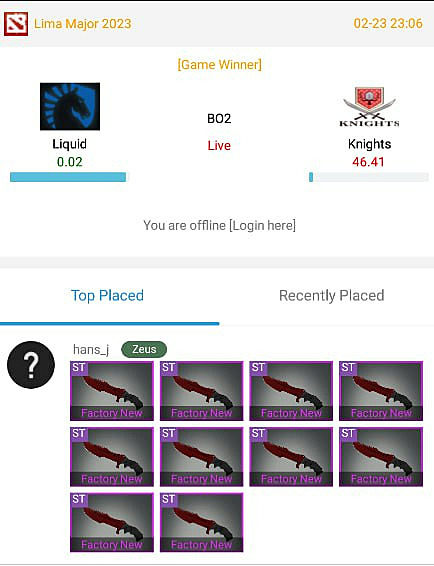
Lazurenko clarified that following the initial day’s “wagering circus”, most major platforms ceased accepting Knights-related wagers even during Major tournament matches, representing another significant warning signal. Examples include global market leader Pinnacle alongside Russian industry frontrunners BetBoom and Fonbet implemented these restrictions.
The fundamental challenge with match manipulation at this scale involves establishing definitive player complicity. Clearly, competitors maintain no direct involvement with wager placement themselves, distinguishing these incidents from amateur teams deliberately underperforming while betting against themselves through secondary accounts. Apprehension about penalizing uninvolved participants potentially inhibits comprehensive organizational sanctions. However, Lazurenko believes regarding Knights, probable every team member participates in these activities.
To be honest, it’s hard for me to unequivocally accuse each player. Last year I’d say that Flyby and Felixciaoba maintain clean competitive records, though currently at minimum the former has become implicated through Team Fusion involvement. However, probable every competitor participates given the nature of manipulated wagers: for instance, regarding odd kill totals, any participant can abort GG calls at critical moments, intentionally die, thereby voiding specific wager conditions. Most likely, complete roster awareness exists regarding these activities.
Stinger: “I bought my own PC only in 2016, and I have played Dota since 2009”
A frank talk about being a Dota 2 player in Peru.
Acknowledging potential player innocence and the impossibility of establishing absolute complicity when manipulation executes professionally, we inquired whether abnormal odds behavior alone justifies team prohibition. Kozak explained that given the systematic nature of questionable wagering activities, sufficient grounds exist for organizational sanctions.
I believe these determinations require case-specific evaluation. For example, occasional unusual first blood wagers might indicate errors: individuals placing irrational bets due to gambling addiction. However, these instances demonstrate systematic patterns, with repeated abnormal wager volumes targeting specific outcomes. Minimal investigative effort reveals Knights demonstrate limited competitive motivation, instead performing toward predetermined results aligning with required wager conditions.
Collapse: “Valve need to fix auras. Offlaner should either be someone who carries games, or buys team-oriented items which require you to press buttons”
Kozak expressed criticism toward Valve regarding their perceived “inaction” approach. The optimal resolution involves establishing an integrity commission incorporating industry specialists and analytical experts.
Valve needs to create a “healthy” esports integrity commission. Not a circus like ESIC, but legitimate organization featuring experts maintaining reputable wagering platform connections, analysts possessing extensive experience and specialized knowledge, etc.
The most absurd aspect involves not the match manipulation itself, but the open execution, demonstrating contempt toward DPC participants and even Major tournament competitors. Universal awareness exists. Sportsbooks recognize, fellow competitors and organizations recognize, community members recognize, yet no substantive actions materialize.
They must penalize this audacity through exemplary prohibitions. Subsequently, others demonstrate reduced inclination toward similar activities. However, Valve selected tactical inaction, representing the least effective approach. Within League of Legends, lifetime bans occur even for toxic behavior, while we qualify teams for Majors and distribute compensation packages despite match manipulation involvement. This constitutes professional embarrassment.
Lazurenko’s perspective regarding Valve’s inaction appears somewhat overstated, considering ten competitors recently received permanent competitive bans during December for outcome manipulation through account sharing. Previously we communicated with investigation participants and with competitors personally. Even within their most recent announcement, following forty-thousand cheating account prohibitions, Valve referenced professional competitors, potentially responding to Knights and additional organizational allegations.
However, his fundamental argument maintains validity. Enhanced measures must address competitive integrity challenges within esports. Given ongoing economic adjustments throughout the industry, alongside increasing tier-2 and tier-3 organizational closures, these concerns potentially escalate further.
N0tail explains why he won’t play with Old G anymore: “I definitely don’t want to sacrifice everything again”
If esports aspirations include “sports-like” status, perhaps we should initiate approaching these matters similarly. UFC provides one exemplary instance where, during late previous year, suspicious odds behavior surrounding one single competitive engagement promptly initiated investigative procedures and within thirty days resulted in removing insider wagering coaching personnel from the competitive landscape.
One comprehends Valve’s preference for absolute certainty preceding determinations. They additionally demonstrate limited enthusiasm for premature public commentary. However, perceptions indicate when questionable activities occur during Major tournaments, and increasing community members recognize abnormal patterns, extended delays potentially exacerbate ultimate outcomes. Because if Knights demonstrate legitimate guilt, this reveals the extent of questionable activities competitors might evade even during Majors, Dota 2’s premier annual competitions, presenting unfavorable competitive environment imagery.
When evaluating potential match-fixing scenarios, each case demands individual assessment based on specific evidence patterns. Isolated incidents of unusual first blood wagers could simply indicate compulsive gambling behavior rather than organized fraud. However, the Knights situation demonstrates clear systemic manipulation, with repeated instances of abnormal betting volumes targeting precise outcomes. Basic investigative work reveals the team’s apparent disinterest in victory, instead pursuing predetermined results that align with betting market manipulation.
Professional bettors identify several key indicators of match-fixing, including sudden odds shifts disproportionate to in-game events, concentrated betting on obscure markets like kill totals, and platform-specific anomalies that bypass mainstream monitoring systems.
The most concerning aspect isn’t the potential fixing itself, but the apparent brazenness of the operation. Multiple industry stakeholders—including bookmakers, competing teams, and community analysts—have publicly noted suspicious patterns, yet regulatory action remains conspicuously absent from tournament organizers.
Effective deterrence requires exemplary punishments that demonstrate serious consequences for integrity violations. Other esports titles implement lifetime bans for severe misconduct, while Dota 2 continues rewarding questionable teams with Major tournament slots and cosmetic bundles, creating perverse incentives within the competitive ecosystem.
Kozak specifically criticized Valve for what he perceives as strategic inaction regarding competitive integrity. His proposed solution involves establishing a dedicated esports integrity commission staffed by professionals with direct connections to reputable betting platforms and experienced analysts with deep industry knowledge.
Valve should create a robust esports integrity commission structure, avoiding the shortcomings of organizations like ESIC. Instead, they need a legitimate entity featuring experts possessing betting industry relationships and analytical professionals with extensive investigative backgrounds.
The truly alarming element isn’t the potential match-fixing itself, but the apparent openness of the operations. These activities seemingly mock the entire Dota Pro Circuit and Major tournament system, with widespread awareness across bookmakers, professional teams, and community observers without meaningful intervention.
Meaningful deterrence requires imposing exemplary bans that demonstrate severe consequences for integrity violations. Other competitive titles implement permanent exclusions for serious misconduct, while Dota 2 continues including suspect teams in premier competitions and providing them with in-game rewards, creating problematic incentive structures.
While Lazurenko’s characterization of Valve’s inaction appears somewhat overstated—given the December bans of 10 players for result manipulation through account sharing—his fundamental argument remains valid. The esports industry requires more comprehensive approaches to match-fixing prevention, especially as economic pressures increasingly affect tier-2 and tier-3 organizations.
If esports aspirations include achieving sports-like legitimacy, the industry must adopt sports-like integrity protocols. The UFC provides an instructive model, where suspicious betting activity on a single match triggered immediate investigation and within one month resulted in expelling the involved betting insider from the sport.
Understanding Valve’s preference for certainty before decisive action is reasonable, as is their tendency toward measured communication. However, when questionable activities occur during Major tournaments and growing numbers of community members observe anomalous patterns, delayed responses potentially exacerbate long-term damage. If Knights are indeed guilty, the situation demonstrates how much questionable activity might escape consequences even at premier events, presenting concerning implications for the competitive landscape.
The escalating match-fixing allegations highlight critical structural deficiencies in esports governance. Unlike traditional sports with established regulatory bodies, esports relies heavily on game developers as de facto regulators, creating potential conflicts of interest and resource allocation challenges. For players looking to understand proper competitive conduct, our Class Guide outlines ethical competitive frameworks.
Effective integrity commissions require three core components: investigative authority, betting market access, and enforcement capabilities. These elements must operate independently while maintaining transparency to ensure community trust. Understanding proper Weapons Unlock systems demonstrates how transparent progression mechanisms can reduce incentive for unethical shortcuts.
Practical implementation should include real-time odds monitoring, player education programs, and clear consequence structures. The current situation with Knights demonstrates how delayed responses can normalize integrity violations, potentially encouraging similar behavior across lower-tier competitions facing financial pressures.
For comprehensive understanding of competitive integrity frameworks, our Complete Guide provides comprehensive frameworks for ethical competition.
Action Checklist
- Monitor betting odds for abnormal movements, especially kill total propositions and extreme underdog probabilities
- Track suspicious account patterns across multiple esports titles and betting platforms
- Document platform restrictions against specific teams as integrity indicators
- Analyze historical patterns rather than isolated incidents for systematic manipulation detection
- Establish independent integrity commission with betting industry experts
- Implement real-time odds monitoring across major betting platforms
- Develop clear consequence frameworks for integrity violations
- Create player education programs on competitive ethics
- Establish cross-platform information sharing agreements
No reproduction without permission:SeeYouSoon Game Club » Knights are accused of match fixing right on Dota 2 Major in Lima by community figures. And it’s not even first time for this teamExclusive Talking with Kozak