
TL;DR
- Concrete powder requires sand, gravel, and specific dyes crafted through varied methods
- Water contact instantly transforms powder into solid concrete blocks for collection
- Building concrete farms dramatically increases production efficiency and reduces time investment
- Dye acquisition represents the most challenging aspect of the concrete creation process
- Proper tool selection and farm design can cut production time by over 50%
Concrete stands as one of Minecraft’s most versatile construction materials, offering both exceptional durability and extensive customization options through its coloring system. This building resource provides superior blast resistance compared to many alternatives, making it ideal for fortress construction and explosive-prone environments.
The aesthetic flexibility of concrete allows builders to create intricate color patterns and thematic designs that enhance any structure’s visual appeal. Unlike other building blocks, concrete maintains consistent coloration regardless of lighting conditions, ensuring your creative vision remains intact through day-night cycles.
While the multi-step manufacturing process may seem daunting initially, mastering concrete production unlocks unparalleled creative potential for base development and architectural projects throughout your Minecraft world.
Your concrete production journey begins with crafting concrete powder, the intermediary form that transforms upon water contact. This preliminary material combines three essential components at any crafting table interface.
Sand and gravel represent the foundation materials, readily available across most Minecraft biomes through simple excavation. Beach regions typically offer concentrated sand deposits, while gravel commonly appears in riverbeds, extreme hills, and underground cave systems. These materials require no specialized tools for collection, making initial gathering straightforward.
The dye component introduces complexity, as each color demands distinct acquisition methods. Blue dye derives from cornflowers or lapis lazuli, while green dye requires cactus smelting in a furnace. Red dye comes from poppies, beetroot, or rose bushes, and black dye originates from wither roses or ink sacs. Understanding these varied dye sources enables efficient color planning for your construction projects.
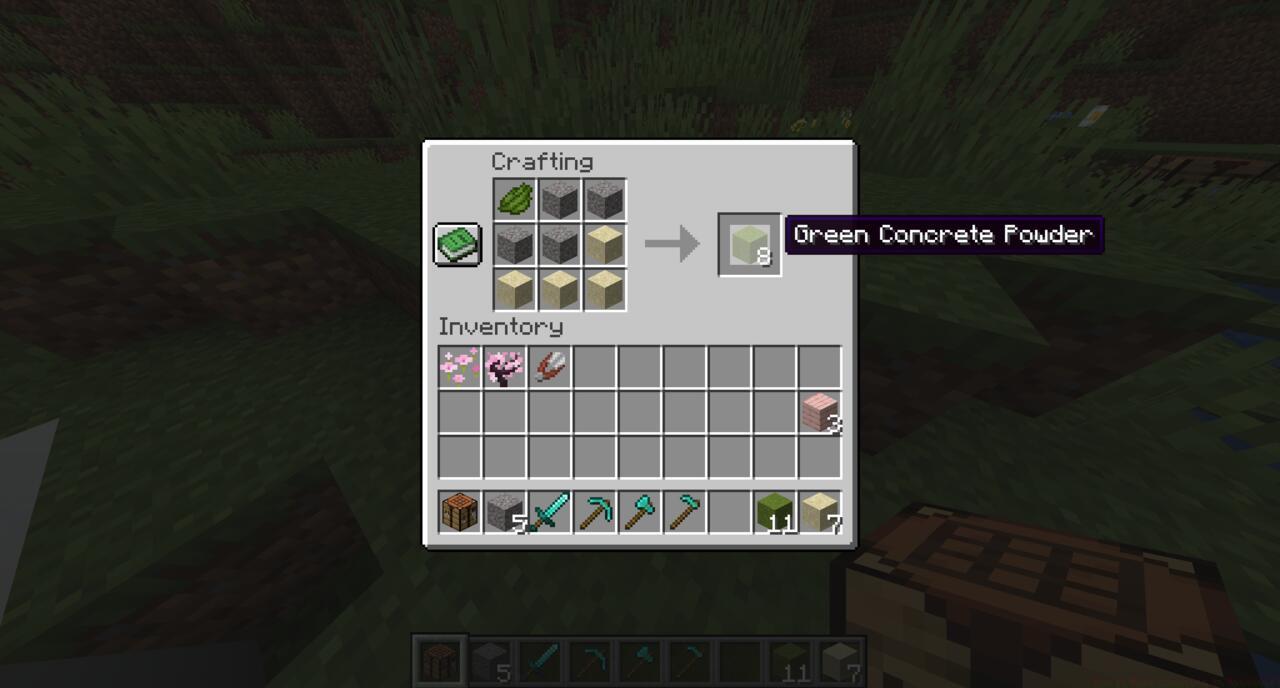
The concrete powder crafting recipe arrangement
Each complete crafting operation yields eight concrete powder blocks, efficiently converting your gathered resources into usable building materials. Strategic dye stockpiling during exploration prevents production bottlenecks when undertaking large-scale construction initiatives.
Once you’ve accumulated concrete powder, the transformation process requires contact with water source blocks. Placement directly in water or one block above water sources triggers immediate conversion to solid concrete.
The physics of this transformation follow specific game mechanics: powder blocks must touch water directly, not just be adjacent to it. Flowing water works equally well as source blocks, expanding your placement options for conversion sites.
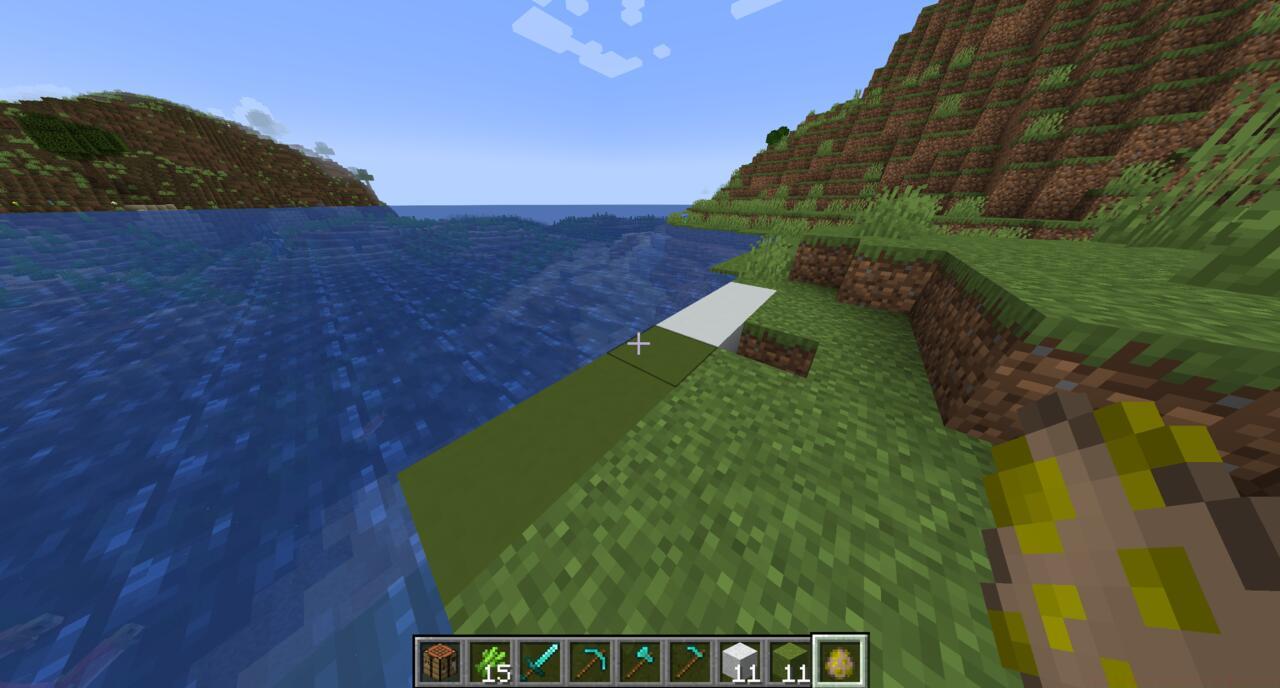
Demonstration of concrete powder conversion upon water contact
After transformation, concrete blocks require pickaxe mining for collection. Using the correct tool prevents block destruction and ensures all converted materials enter your inventory. Wooden pickaxes suffice for collection, though higher-tier tools accelerate the process.
Strategic placement considerations can optimize this final collection phase. Converting multiple powder blocks simultaneously in concentrated areas minimizes movement between mining operations, significantly reducing total production time.
Establishing dedicated concrete farms represents the most efficient approach for mass production. These specialized setups centralize the conversion process near your base, eliminating travel time to natural water sources.
Constructing an optimal farm begins with creating a substantial water reservoir, ideally 5×5 blocks or larger. Surround this pool with a single block layer elevated one block above the water surface, creating an ideal platform for rapid powder placement.
Advanced farming techniques incorporate redstone mechanisms and gravity block properties to semi-automate the production process. Designing systems where powder falls into water channels automatically can triple your hourly output compared to manual methods.
While mining remains necessary even in optimized farms, strategic tool selection and enchantments dramatically improve efficiency. Efficiency-enchanted diamond pickaxes can reduce collection time by over 60%, while beacon effects provide additional speed boosts for large-scale operations.
Farm location planning should prioritize proximity to both your primary storage facilities and resource stockpiles. This logistical consideration prevents unnecessary travel during production cycles, further enhancing your overall concrete manufacturing throughput.
Seasoned Minecraft builders recommend several strategies to streamline concrete production. Pre-planning your color requirements before gathering materials prevents wasted resources on unnecessary dye production. Creating centralized dye farms for commonly used colors ensures consistent supply for ongoing construction projects.
Avoid these common concrete crafting pitfalls: using incorrect tools for mining (which destroys blocks), placing powder too far from water sources, and underestimating the time investment for large-scale projects.
Optimization techniques include batch processing colors to minimize tool switching, establishing multiple small farms rather than one massive operation to reduce collection fatigue, and incorporating concrete production into broader resource gathering expeditions.
For builders undertaking monumental projects, consider exploring our Weapons Unlock guide to balance construction with other gameplay elements effectively.
Time management represents a crucial factor in efficient concrete production. A well-designed farm can produce approximately 64 concrete blocks in 3-5 minutes, while manual methods might require 8-10 minutes for the same quantity. These efficiency gains become increasingly significant as project scale expands.
Now that you’ve mastered concrete production techniques, explore our Complete Guide for additional Minecraft mastery strategies, or check our Class Guide to optimize your character development alongside construction projects.
Action Checklist
- Gather sand from beaches and gravel from riverbeds or caves
- Establish dye sources for desired colors through farming or exploration
- Craft concrete powder using 4 sand, 4 gravel, and 1 dye at crafting table
- Design and construct efficient concrete farm near base
- Convert powder to concrete through water contact and collect with pickaxe
- Implement optimization strategies like tool enchantments and batch processing
No reproduction without permission:SeeYouSoon Game Club » How To Make Concrete In Minecraft Master Minecraft concrete crafting with efficient farming techniques and advanced color dye strategies