
TL;DR
- Nectar builds character relationships and unlocks powerful Keepsakes that provide combat advantages
- Six primary acquisition methods include encounters, shops, crafting, and quest rewards with varying reliability
- Strategic gifting prioritization maximizes progression efficiency and combat effectiveness
- Advanced players should focus on resource-efficient acquisition methods and synergistic Keepsake combinations
- Common mistakes include poor resource allocation and overlooking character-specific progression requirements
Nectar serves as a crucial relationship-building currency in Hades 2, functioning as the primary method for deepening bonds with the game’s diverse cast of characters. This golden ambrosia unlocks character backstories, personal revelations, and significant gameplay advantages that directly impact your progression through the underworld.
The strategic importance of Nectar extends beyond simple character development. Each initial gift to a character unlocks their unique Keepsake – powerful items that provide combat bonuses, defensive enhancements, or resource advantages during your runs. Understanding which Keepsakes align with your playstyle becomes essential for optimizing your build strategy and overcoming increasingly difficult challenges.
However, Nectar remains a scarce resource that requires careful management. Unlike common crafting materials that appear frequently throughout runs, Nectar distribution is intentionally limited to encourage strategic decision-making about which characters to prioritize for relationship advancement and Keepsake acquisition.
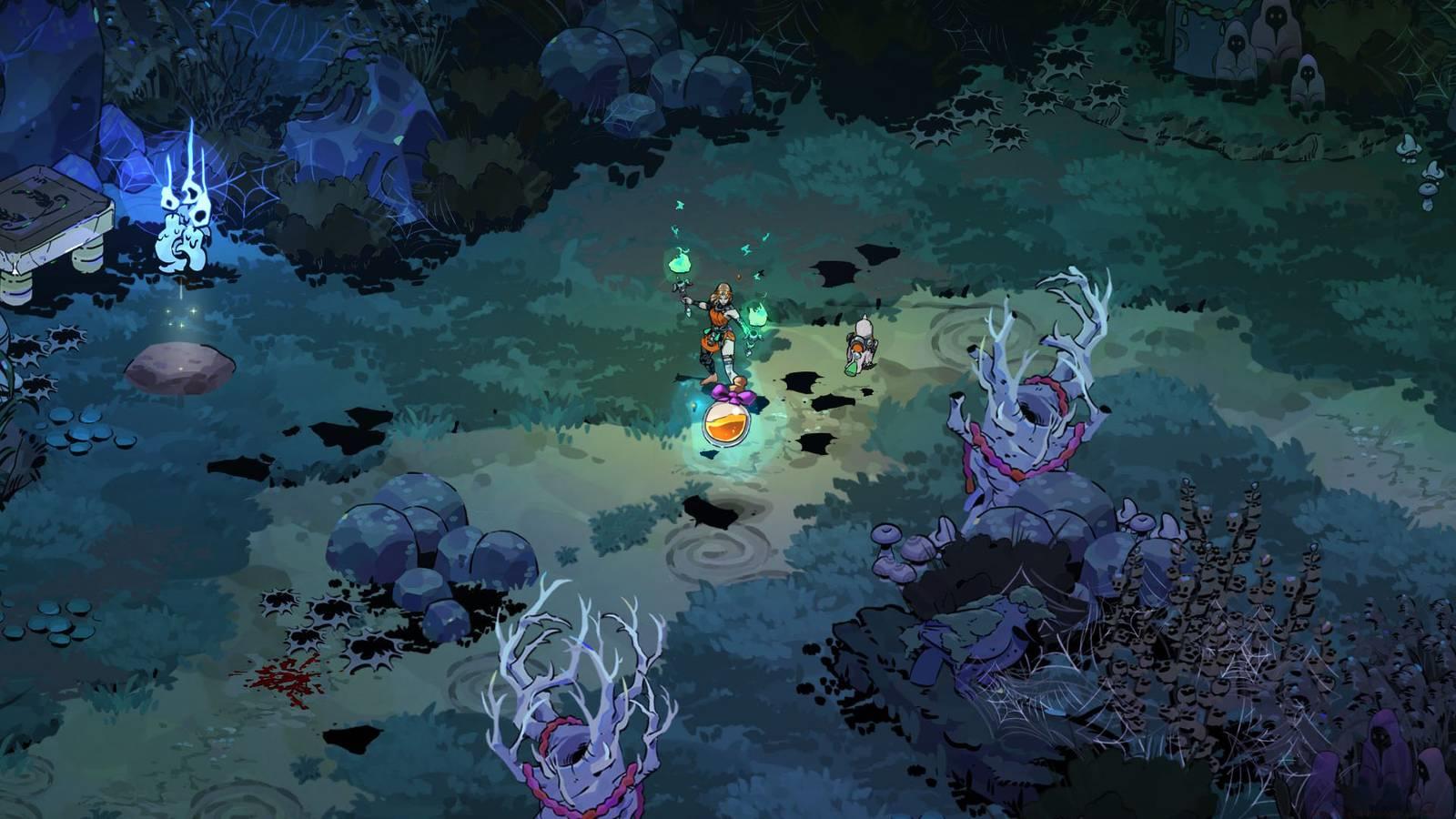
Successfully accumulating Nectar requires leveraging multiple acquisition pathways throughout your gameplay sessions. Advanced players develop systematic approaches to maximize their Nectar yield while minimizing resource expenditure and opportunity costs.
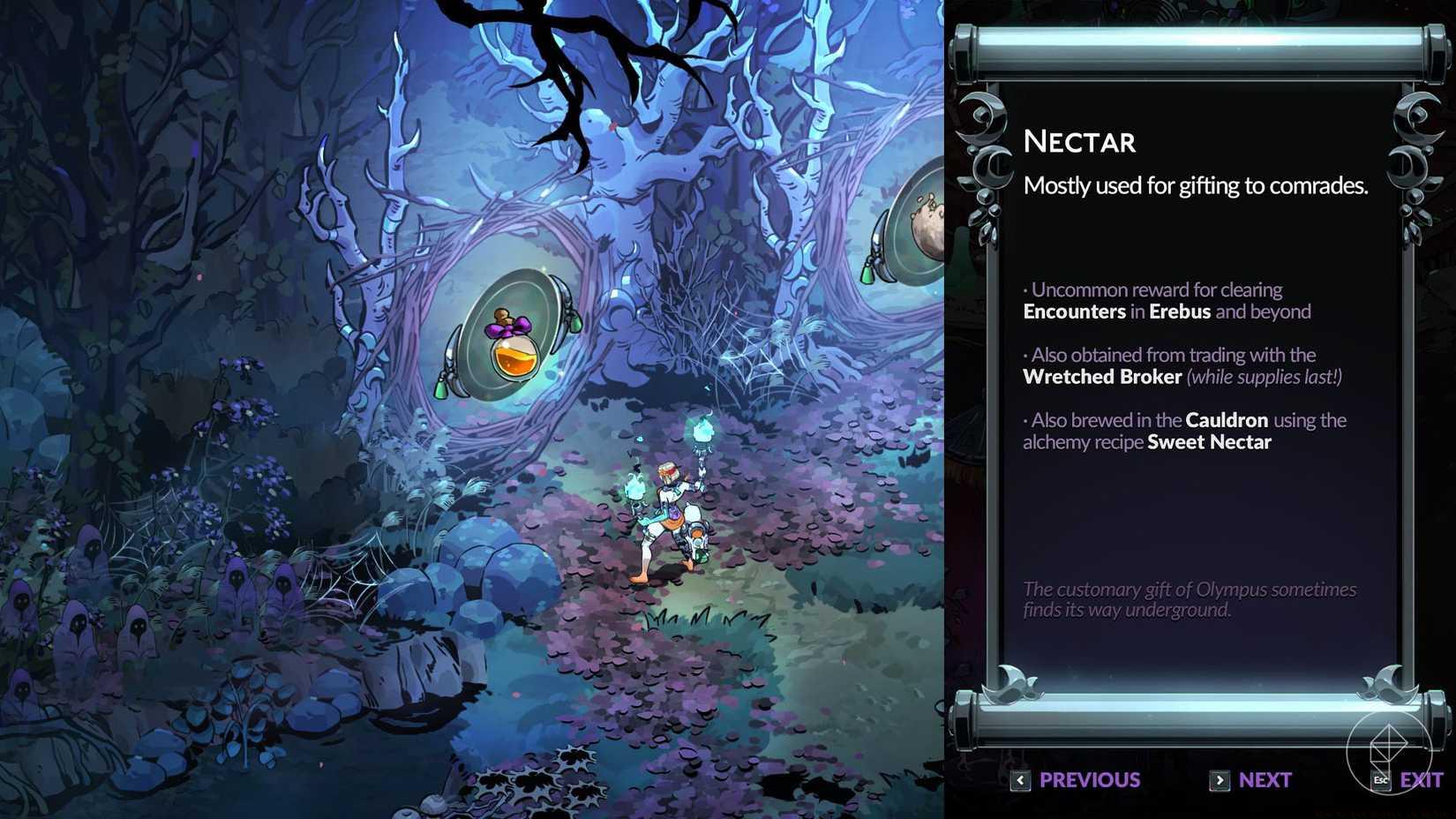
Graphic: Johnny Yu/Polygon | Source images: Supergiant Games via Polygon
Strategic Encounter Selection — During each run, carefully evaluate room rewards and prioritize paths offering Nectar when available. These encounters typically appear as chamber rewards rather than boss drops, making them more frequent but still relatively rare compared to other resources.
Wretched Broker Economy — Purchase one Nectar per night cycle for 30 Bones at the Wretched Broker. This provides a consistent acquisition method but competes with other valuable Bone purchases. Consider this option when you have surplus Bones or specific immediate Nectar needs.
Cauldron Crafting System — Unlock the Nectar crafting recipe after defeating Eris on the Surface and interacting with Aphrodite. This requires one Golden Apple and one Star Dust per Nectar, making it resource-intensive but reliable when you have excess rare materials.
Charon’s Shop Randomization — Nectar occasionally appears in Charon’s Shop as a random item for purchase with Gold. The appearance rate seems influenced by how recently you’ve acquired Nectar through other methods, with longer dry spells increasing likelihood.
Fates and Incantation Rewards — Complete specific prophecy chains in the Book of Shadows or unlock the “Kinship Fortune” incantation to receive Nectar as completion rewards. These provide substantial Nectar quantities but require significant progression investment.
Odysseus Gift Mechanics — The storyteller Odysseus periodically offers gifts to Melinoë, with Nectar being one potential reward. Building your relationship with him through regular interactions increases the frequency of these gifts.
Effective Nectar deployment requires understanding both immediate benefits and long-term progression implications. Different characters offer varying levels of gameplay advantage through their Keepsakes, making prioritization essential for efficient resource allocation.
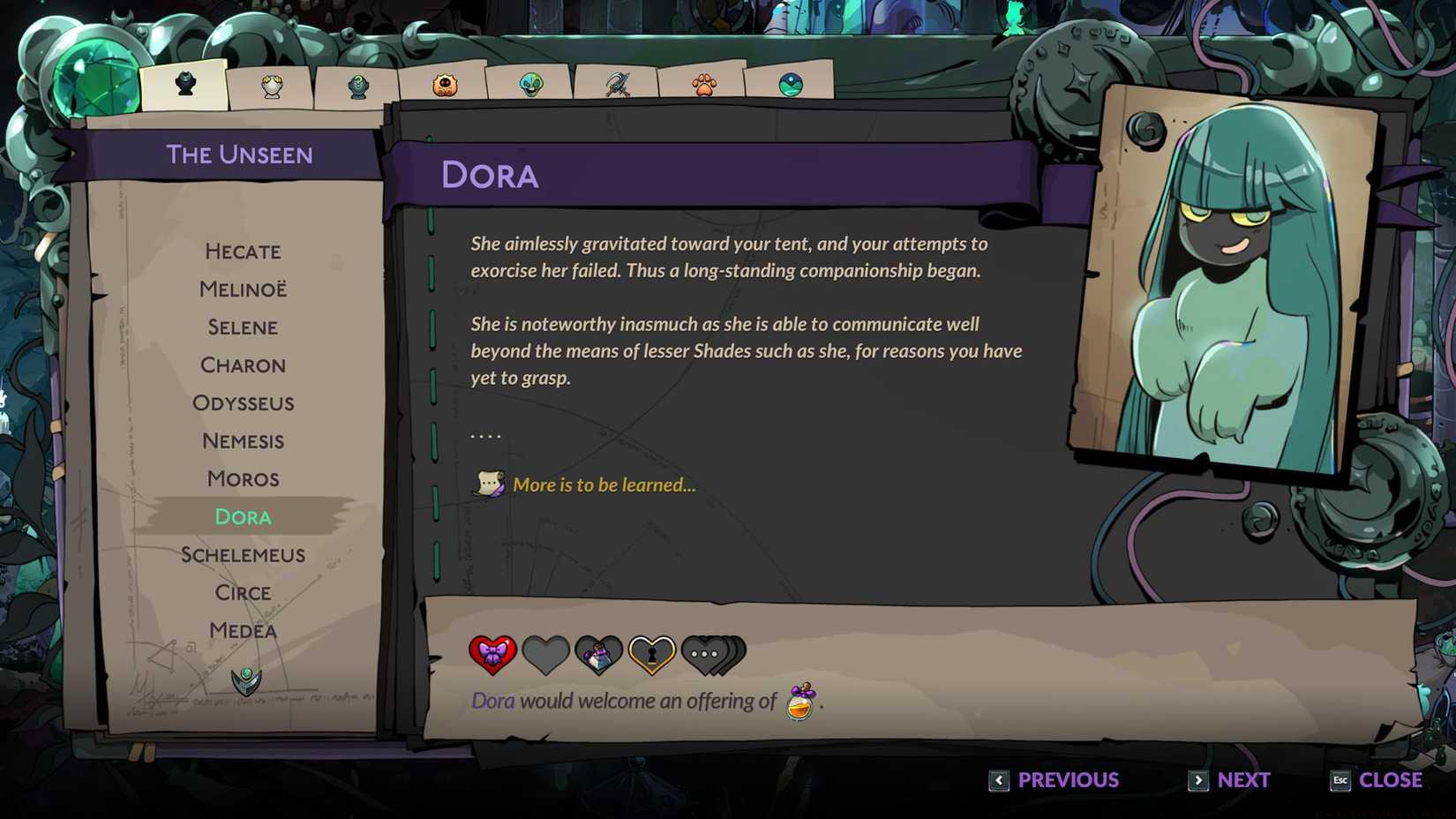
Image: Supergiant Games via Polygon
Keepsake Priority Analysis — Focus initial Nectar gifts on characters whose Keepsakes complement your preferred combat style. Defensive players might prioritize Dora’s protective Keepsake, while aggressive builds may benefit more from offensive-oriented character rewards. Research each Keepsake’s effects before committing your limited Nectar resources.
Relationship Progression Timing — Some characters unlock additional dialogue, story content, or gameplay modifications at specific relationship milestones. Plan your gifting to reach these thresholds efficiently rather than distributing Nectar evenly across all characters.
Common Optimization Mistakes — Many players waste Nectar by gifting randomly without strategic planning or overlooking character-specific progression requirements. Another frequent error is hoarding Nectar excessively rather than using it to unlock Keepsakes that could improve current run success rates.
Advanced Acquisition Cycling — Experienced players develop acquisition cycles that combine multiple methods. For example, using encounter Nectar for immediate gifting while saving crafted Nectar for specific character milestones, or timing Charon shop visits based on recent acquisition patterns.
Action Checklist
- Identify 2-3 Keepsakes that complement your primary playstyle for initial Nectar prioritization
- Establish daily Wretched Broker Nectar purchase as part of your resource collection routine
- Develop encounter path selection strategy that balances Nectar opportunities with other progression needs
- Track character relationship milestones and plan Nectar distribution to efficiently reach threshold rewards
- Implement acquisition cycling combining encounter, shop, and crafting methods for optimal Nectar accumulation
No reproduction without permission:SeeYouSoon Game Club » How to get Nectar in Hades 2 Master Nectar acquisition and usage in Hades 2 with advanced strategies and optimization tips