
TL;DR
- Pokémon Go Pass offers tiered rewards through gameplay activities with daily point caps
- June features Articuno at rank 100 with premium rewards requiring strategic planning
- Value depends on play frequency – ideal for daily players, questionable for casual users
- Smart progression involves focusing on high-point activities within daily limitations
- Free track provides decent rewards but premium offers significant legendary advantages
Following extensive global testing phases, Pokémon Go’s monthly subscription system, officially termed the “Go Pass,” has launched worldwide. This progression system mirrors the battle pass framework observed during the Unova Tour event, though with several key modifications that distinguish it from traditional gaming battle passes.
The fundamental principle remains straightforward: engage with Pokémon Go’s core gameplay loops to accumulate progression points. These points advance you through reward tiers, unlocking increasingly valuable items and Pokémon encounters as you climb the ranks.
Below we detail the complete mechanics behind Pokémon Go’s Go Pass system, including optimal point-earning strategies, progression limitations, and tactical approaches to maximize your rewards.
Similar to progression systems in contemporary live-service games, the Go Pass automatically tracks your gameplay activities to generate points. The primary methods for accumulating progression include:
- Successfully completing raid battles (awarding 100 points per victory)
- Hatching eggs from your inventory (granting 40 points per hatch)
- Catching wild Pokémon (providing 5 points per capture)
- Finishing daily research tasks (delivering 200 points per completed task set)
- Accomplishing weekly challenge objectives (yielding 100-200 points based on task complexity)
You can monitor available tasks and your current progression through the dedicated “events” interface within Pokémon Go’s menu system. Importantly, beyond the designated daily and weekly assignments, players face a hard cap of 250 additional points daily from combined raid completions, egg hatches, and Pokémon captures. This limitation prevents excessive grinding while encouraging consistent daily engagement.
Strategic Point Accumulation Methods
Optimizing your Go Pass progression requires understanding point efficiency. Daily tasks provide the highest point-to-time ratio at 200 points for typically 5-10 minutes of effort. Weekly challenges offer substantial rewards but may require specific gameplay conditions. For the 250-point daily cap from general activities, prioritize raid battles (100 points) over egg hatching (40 points) and catching (5 points) when time-constrained.
Common Progression Mistakes to Avoid
Many players overlook the daily point cap and waste time grinding catches beyond the limit. Others fail to claim daily tasks before reset. The most efficient approach involves completing daily tasks first, then using remaining playtime for high-value activities like raids before focusing on egg hatching and catching to reach the daily cap.
Determining whether the Go Pass represents a worthwhile investment requires evaluating both its monetary cost and the time commitment necessary to extract maximum value. Unlike some battle pass systems that offer exclusive cosmetic items, Pokémon Go’s pass primarily provides resources that accelerate collection and power progression.
For dedicated daily players who consistently complete research tasks and participate in raids, the Go Pass delivers substantial value through premium items, rare candy accumulations, and guaranteed legendary encounters. These players can typically reach rank 100 within 3-4 weeks of consistent play, maximizing their return on investment.
For casual or intermittent players who engage with Pokémon Go sporadically, the value proposition diminishes significantly. If you cannot consistently complete daily tasks or frequently hit the 250-point activity cap, you may struggle to reach higher reward tiers before the monthly reset, potentially wasting your purchase.

Image: Niantic
Cost-Benefit Breakdown
The Go Pass typically costs 500 PokéCoins (approximately $4.99). At maximum progression, players receive multiple premium raid passes, star pieces, lucky eggs, incubators, and a guaranteed legendary Pokémon. Purchasing these items individually would cost significantly more, making the pass economically efficient for committed players.
Player Profile Assessment
Ideal candidates for the Go Pass include: daily players who complete research tasks; raid enthusiasts participating in 3+ raids weekly; and collectors seeking guaranteed legendary encounters. Players who engage less than 4 days weekly should consider the free track or purchasing specific items as needed.
Before committing to the premium track, try the free version for one season to assess your natural progression pace. This trial period helps determine if your playstyle aligns with the pass requirements without financial investment. Many players overestimate their available playtime and underestimate the commitment needed for maximum rewards.
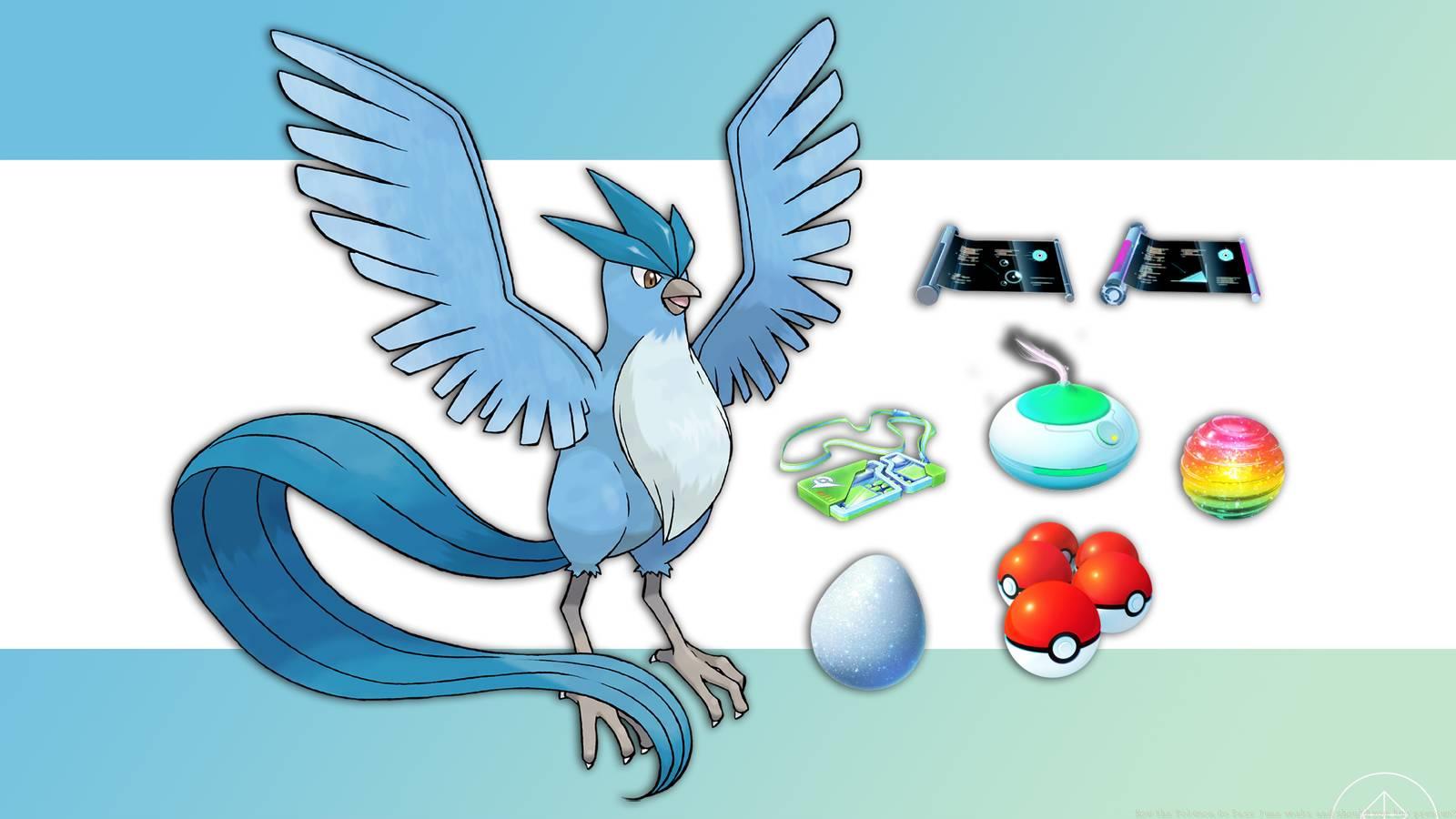
The current June iteration of the Go Pass showcases Articuno as the premium legendary reward at rank 100, accompanied by various item bundles spread throughout the progression track. This Ice/Flying-type legendary from the Kanto region represents a valuable addition to any collector’s roster, particularly for players lacking strong ice-type attackers for raid battles.
Beyond the headline Articuno encounter, the June pass includes strategically valuable items at key progression milestones. Early tiers (1-20) focus on consumable items like Poké Balls, potions, and berries, while mid-tier rewards (21-50) introduce premium items like incubators and star pieces. The final tiers (51-100) contain the most valuable rewards including multiple premium raid passes and the guaranteed legendary encounter.
Premium vs Free Track Analysis
The free track provides reasonable rewards for casual players, including standard items and occasional premium currency. However, the premium track dramatically accelerates item acquisition and guarantees the legendary Pokémon. Free players receive approximately 30% of the total value available to premium subscribers, making the paid option significantly more efficient for serious collectors.
Strategic Collection Approach
To maximize June rewards, focus on completing all daily tasks consistently while strategically using premium items from earlier tiers to accelerate later progression. For example, use star pieces from tier 35 during catch-intensive events to maximize stardust gains while progressing the pass. Schedule raid participation around weekly reward resets to ensure you don’t waste potential points.
Articuno’s placement at rank 100 requires consistent engagement throughout the month, but strategic players can achieve this with approximately 45-60 minutes of daily gameplay focused on high-efficiency activities. The Weapons Unlock strategies from other games apply here: prioritize high-value targets and manage your resources efficiently across multiple progression systems.
For players struggling with progression, consider reviewing Complete Guide principles about resource management in live-service games. The fundamental concepts of daily engagement and strategic prioritization translate well across different gaming ecosystems, including Pokémon Go’s pass system.
Action Checklist
- Complete all daily research tasks immediately after reset
- Prioritize raid battles over other activities for point efficiency
- Monitor daily point cap and switch activities once reached
- Use premium items from early tiers to accelerate later progression
- Evaluate play patterns for 1 season before purchasing premium
No reproduction without permission:SeeYouSoon Game Club » How the Pokémon Go Pass June works and should you buy premium? Complete guide to Pokémon Go Pass mechanics, value analysis, and June rewards with strategic tips