
Understanding Aglaea’s strategic sacrifice and narrative impact in Honkai Star Rail Version 3.3
Character Profile: Who is Aglaea?
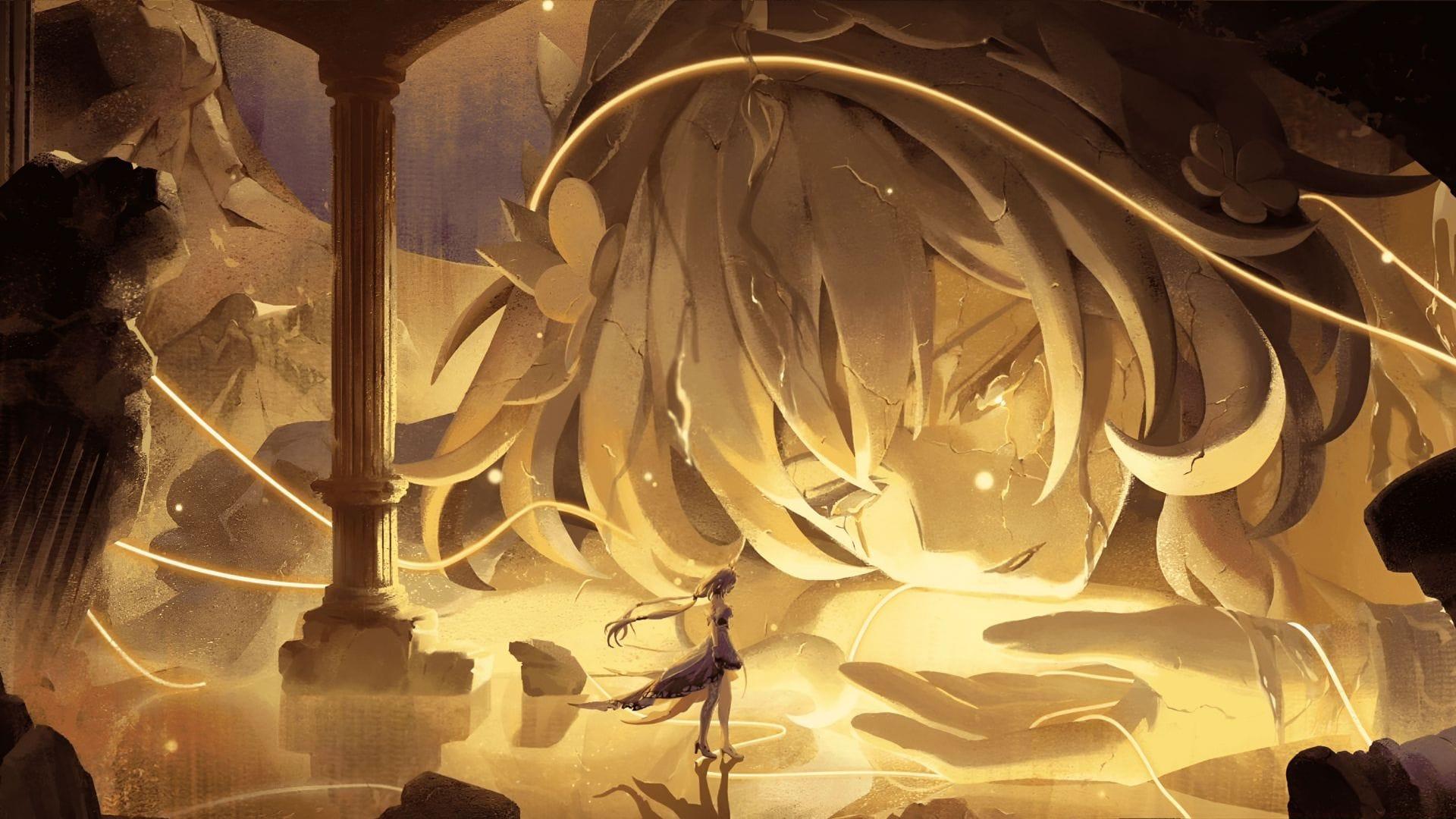
Honkai Star Rail’s Version 3.3 expansion advances the Trailblazing expedition throughout Amphoreus with The Fall at Dawn’s Rise mission, where Aglaea serves as the narrative cornerstone. This questline delivers the emotional climax for the current exploration arc within the Amphoreus territory, establishing new standards for character-driven storytelling in live service games.
Before her divine transformation, Aglaea practiced as a master dressmaker in Okhema, where she cultivated deep connections with the common populace. Her ascension to demigod status occurred after she successfully overcame and inherited the coreflame of “Romance” from Mnestia, the Titan of Romance. This inheritance granted her extraordinary abilities while maintaining her fundamental humanity.
As one of the Chrysos Heirs, she dedicated centuries to mediating between the divine inheritors and ordinary citizens within Okhema’s society. Her approach combined empathetic understanding with strategic guidance, utilizing golden threads that symbolized both her former craft and current divine capabilities. Unlike many power-wielders in gaming narratives, she consistently rejected using her coreflame abilities to dominate or harm civilians, instead fostering balanced relationships built on mutual respect.
Aglaea recognized her inevitable conclusion approaching after a millennium of demigod existence. Her physical vessel showed severe deterioration with dulled senses and corpse-like transformation, demonstrating that even Chrysos Heirs cannot permanently escape temporal decay. This awareness shaped her strategic decisions, transforming personal limitation into narrative advantage.
The Prophetic Sacrifice Sequence
The confrontation unfolds dramatically at Okhema’s bathhouse, where Caenis and Cleaner forces corner Aglaea. The antagonists employ psychological warfare, threatening the common citizens under her protection rather than targeting her directly. This tactical approach reveals the Cleaners’ understanding of Aglaea’s psychological vulnerabilities and moral priorities.
Caenis specifically references the mute and deaf child whom Aglaea previously rescued, who had gifted the dressmaker-turned-demigod a meaningful bracelet. To intensify pressure, Caenis threatens to blind the girl, exploiting Aglaea’s protective instincts and emotional connections to force compliance.
Facing this moral dilemma, Aglaea makes the strategic decision to acquiesce to Caenis’ scheme. The Cleaners execute their plan using a specialized dagger designed specifically to eliminate Chrysos Heirs, stabbing her through the heart. Her physical form collapses to the bathhouse’s lower level as horrified citizens witness the event, creating the visceral emotional impact she calculated would shift public sentiment.
Following her mortal death, Aglaea manifests as a golden nymph apparition approaching Grand Craftsman Chartonus with a final request. She instructs him to forge her residual divinity into the very bracelet gifted by the rescued child, transforming sentimental object into powerful artifact. This brilliant narrative device connects emotional history with practical utility.
The imbued bracelet subsequently fulfills its ultimate purpose by safeguarding Phainon and companions from descending into the golden pool using her divine thread capabilities. When the threads ultimately fail, the bracelet descends into the golden pool at the Sky Titan’s Fortress of Dome “Eye of Twilight” location. As it dissolves, her divine essence releases, actualizing the prophecy of her “final bath in warm and radiant gold” in both literal and metaphorical dimensions.
Narrative Impact and Legacy
Aglaea’s sacrifice generates immediate and profound consequences throughout the game’s narrative ecosystem. Her strategic death accomplishes multiple objectives simultaneously: converting public opinion to support the Chrysos Heirs, advancing the Flame-Chase journey to its conclusion phase, and compelling Phainon’s transformation from carefree companion to determined leader.
The revelation comes through a posthumous letter to Phainon, exposing her calculated planning and intentional timing. She understood that only an event of such emotional magnitude could mobilize Okhema’s populace and activate Phainon’s latent leadership capabilities. This demonstrates sophisticated narrative construction where character agency drives plot progression rather than external forces.
Phainon’s character evolution represents one of Honkai Star Rail’s most compelling development arcs. Transitioning from lighthearted observer to committed leader, his transformation validates Aglaea’s strategic planning. Her sacrifice creates the necessary conditions for his growth while establishing the foundation for the final confrontation against Aquila, the Sky Titan.
Aglaea’s narrative conclusion transcends mere character death, representing intentional transcendence. By choosing her terms of departure rather than yielding to Cleaner intimidation, she demonstrates ultimate agency. This moment enriches Honkai Star Rail’s emotional depth while expanding the game’s worldbuilding sophistication, creating lasting impact for both characters and players.
Gameplay and Story Integration
The Fall at Dawn’s Rise mission exemplifies masterful integration of narrative and gameplay mechanics. Players experience Aglaea’s story through interactive sequences that balance emotional engagement with progression requirements. The mission structure allows character development to unfold organically while maintaining gameplay momentum.
For optimal experience, players should focus on environmental storytelling elements throughout the bathhouse sequence. Pay close attention to NPC dialogues and visual cues that foreshadow the coming sacrifice. The golden bracelet’s transformation from sentimental object to divine artifact represents one of Honkai Star Rail’s most sophisticated symbolic narrative devices.
Common player mistakes include rushing through dialogue sequences or overlooking environmental details that enrich the emotional impact. The mission’s power derives from careful pacing and attention to character interactions. Advanced players should revisit the sequence to appreciate the nuanced foreshadowing and symbolic elements that may be missed during initial playthroughs.
Aglaea’s narrative arc demonstrates HoYoverse’s evolving approach to character-driven storytelling in live service games. Her sacrifice establishes precedent for future character developments while providing template for balancing emotional weight with gameplay functionality. The lasting player emotional engagement confirms the effectiveness of this narrative approach.
No reproduction without permission:SeeYouSoon Game Club » How did Aglaea die in Honkai Star Rail? Understanding Aglaea's strategic sacrifice and narrative impact in Honkai Star Rail Version 3.3