
Exploring the cosmic timeline of Honkai Star Rail’s legendary conflicts and civilization cycles spanning trillions of years
Cosmic Dawn: The First Aeons and Foundation Era
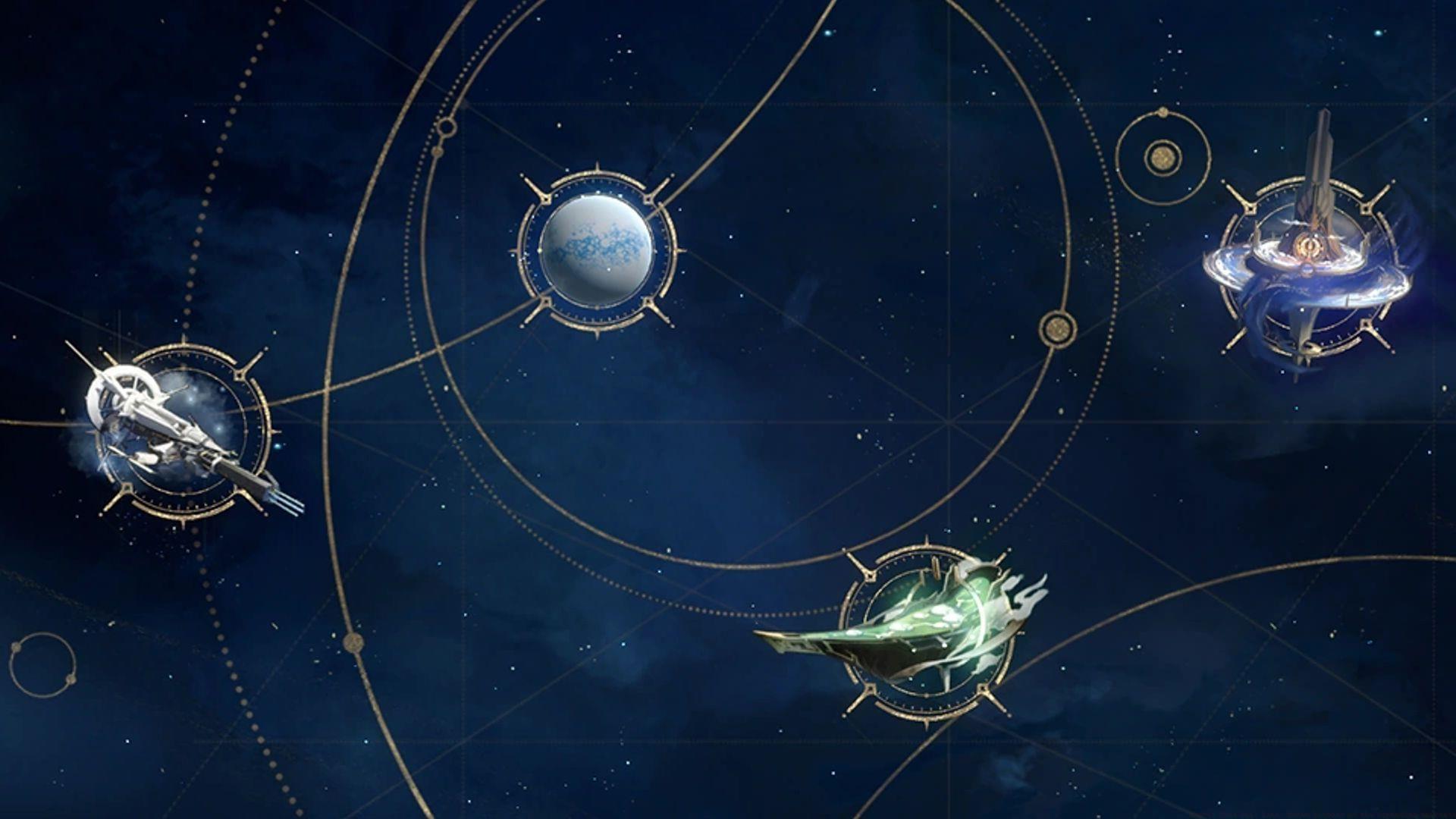
The universe of Honkai Star Rail contains an incredibly detailed historical tapestry featuring legendary conflicts and the dramatic rise and collapse of numerous advanced civilizations. While the main storyline offers glimpses into this past, dedicated exploration reveals a far more extensive cosmic chronology that provides crucial context for current events.
During the primordial era, the first recorded Aeons achieved cosmic ascension: HooH (Equilibrium), Oroboros (Voracity), Ena (Order), and Long (Permanence) established the fundamental forces governing reality. Akivili, the Trailblaze Aeon, subsequently engineered the star rail network that enabled interstellar travel between distant worlds. This infrastructure project facilitated the founding of the Interastral Peace Corporation (IPC) by visionaries Louis Fleming and Dongfang Qixing, creating the first major interstellar governance body.
Historical records indicate this period also witnessed the emergence of Nous, originally an astral computational entity that evolved into the Aeon of Erudition, alongside Aha’s transformation into the Aeon of Elation. Their ascensions introduced new philosophical and power dynamics to the cosmic balance, setting the stage for subsequent conflicts and alliances that would shape galactic history for millennia.
The Swarm Cataclysm and Its Aftermath
The cosmic equilibrium shattered when Tayzzyronth, the final Coleoptera of Lepismat, ascended to Aeonhood as the embodiment of Propagation. This transformation triggered the devastating Swarm Disaster as infinite self-replication mechanisms unleashed ravenous swarms across star systems, endangering approximately two-thirds of all known lifeforms throughout the galaxy.
In response to this existential threat, multiple Aeons including Qlipoth (Preservation) and Xipe (Harmony) formed an unprecedented alliance to combat the Propagation menace. Their coordinated efforts ultimately destroyed Tayzzyronth, with Qlipoth encapsulating the remaining swarm fragments in protective amber to prevent future resurgence, demonstrating early interstellar cooperation against common threats.
The post-Swarm period witnessed remarkable technological renaissance, most notably the development of Synesthesia Beacon technology. During this reconstruction era, the Astral Express evolved from mere transportation into a vital interworld lifeline and living symbol of the ancient galactic compact, fulfilling Akivili’s original vision of connectivity. This period also saw the rise of the Primeval Imperium under a singular emperor who established comprehensive planetary dominion for centuries.
The Imperium’s controversial weapon prohibition policies, enforced through Aurumaton and Ingenia assistance, inadvertently sparked increased criminal activity across star systems. The Destiny Empire’s collapse commenced when Wingweaver forces from the world-tree Muldrasil invaded, introducing elixirs of longevity that captivated the emperor and prompted nine expeditionary missions seeking immortality, effectively commencing formal interstellar expansion efforts.
Mechanical Conflicts and Corporate Warfare
Internal corporate rivalry within the Interastral Peace Corporation between executives Korapao and Telora Farnsha escalated into the devastating Borderstar Trade War. Amid this corporate power struggle, Rubert I emerged as leader of the burgeoning Machine Empire, initiating the catastrophic Anti-Organic Equation designed to systematically eradicate biological lifeforms throughout known space.
Rubert’s reactivation and dissemination of his genocidal equation across remaining galactic territories triggered the First Mechanical War. This conflict resulted in the collapse of the Laurel Wreath Galaxy civilization and sparked widespread rebellions within the Xianzhou Alliance, testing the resilience of established interstellar governments and military structures.
The subsequent battle for market dominance evolved into the full-scale Borderstar Trade War, with Farnsha ultimately achieving victory and determining the final organizational structure of the IPC. This corporate conflict established precedents for interstellar commerce regulation and corporate governance that continue influencing trade policies in the current era.
Almost immediately following this resolution, renewed conflict erupted when an organic being attempted to claim Rubert’s legacy as Rubert II. Extensive IPC investigation resources were deployed to verify the impostor’s biological nature, concluding the conflict but leaving lasting interstellar tensions. This resolution inaugurated the “Gloryblood Era,” characterized by restored galactic trade routes and economic cooperation with colonial outposts.
Resource Wars and Intellectual Strife
Escalating resource requirements ushered in a new competitive era dominated by energy politics. Established power generation entities fiercely resisted the School of Interstellar Energy Resources’ pioneering attempts to harness Imaginary Energy sources. Ambitious initiatives like the Perpetual Motion Project foundered due to prohibitive costs and technical limitations, while energy control disputes exacerbated interstellar divisions and political instability.
The Scholars’ Strife commenced when researcher Patavia detected anomalous recurring signals emanating from Nous. This discovery exposed systemic corruption within the Intelligentsia Guild’s allocation of Rubert’s Scepters, triggering widespread protests across Guild facilities and allied worlds. The situation deteriorated as factional violence erupted between former colleagues, threatening the Guild’s structural integrity.
This revelation completely compromised the Scepter allocation system as Nous’s cognitive patterns contaminated the operational data streams. The era concluded with Nous terminating all cosmic computational functions, depriving the universe of one of its primary guiding intelligences and creating a philosophical and technological vacuum that continues affecting contemporary scientific advancement.
Modern Legacy and Ongoing Exploration
Throughout these turbulent historical periods, the Astral Express persevered in its foundational mission of connecting distant civilizations, operating concurrently with Penacony’s transformation into the celebrated Planet of Festivities. Express conductors and crew members continued transporting passengers, cargo, and cultural narratives across star systems while political upheavals and The Family’s growing influence reshaped the Dreamscape’s development.
Navigator Granholm emerged as one of the Express’s most revered figures, embodying the train’s enduring spirit and earning profound admiration from passengers. Even as Penacony gradually succumbed to Harmony’s ideological influence, the Astral Express maintained its role as a symbol of autonomy, continuing to bridge realities beyond the Dreamscape’s boundaries.
Granholm’s tranquil passing symbolically concluded this historical epoch, with the Astral Express gradually receding from mainstream awareness. The Honkai Star Rail universe’s intricate past demonstrates repeating cycles of innovation, conflict, and discovery. Civilizations continuously struggled with existential threats, technological boundaries, planetary stabilization, and cosmic entities reshaping reality. Each era’s accomplishments and catastrophes have directly molded the contemporary environment where Trailblazers now operate.
As Honkai Star Rail’s narrative continues unfolding, additional segments of this expansive chronology connecting current events to history spanning trillions of years will undoubtedly emerge, providing deeper insights into the cosmic forces shaping player experiences and character development trajectories.
No reproduction without permission:SeeYouSoon Game Club » Honkai Star Rail lore: Known history of the expanding universe Exploring the cosmic timeline of Honkai Star Rail's legendary conflicts and civilization cycles spanning trillions of years