
TL;DR
- Team coordination is essential – solo play leads to failure against skilled ghosts
- Master equipment switching: P.K.E. meter stuns, then traps auto-switch to proton packs
- First tether controls ghost movement – coordinate trap placement accordingly
- Overheating management requires passing tether control to teammates strategically
- Ghost rifts are priority targets – destroy them to limit respawn capabilities
Prepare yourself for the ultimate ghost hunting experience before jumping into Spirits Unleashed. This comprehensive guide will transform you from novice to professional ghostbuster.
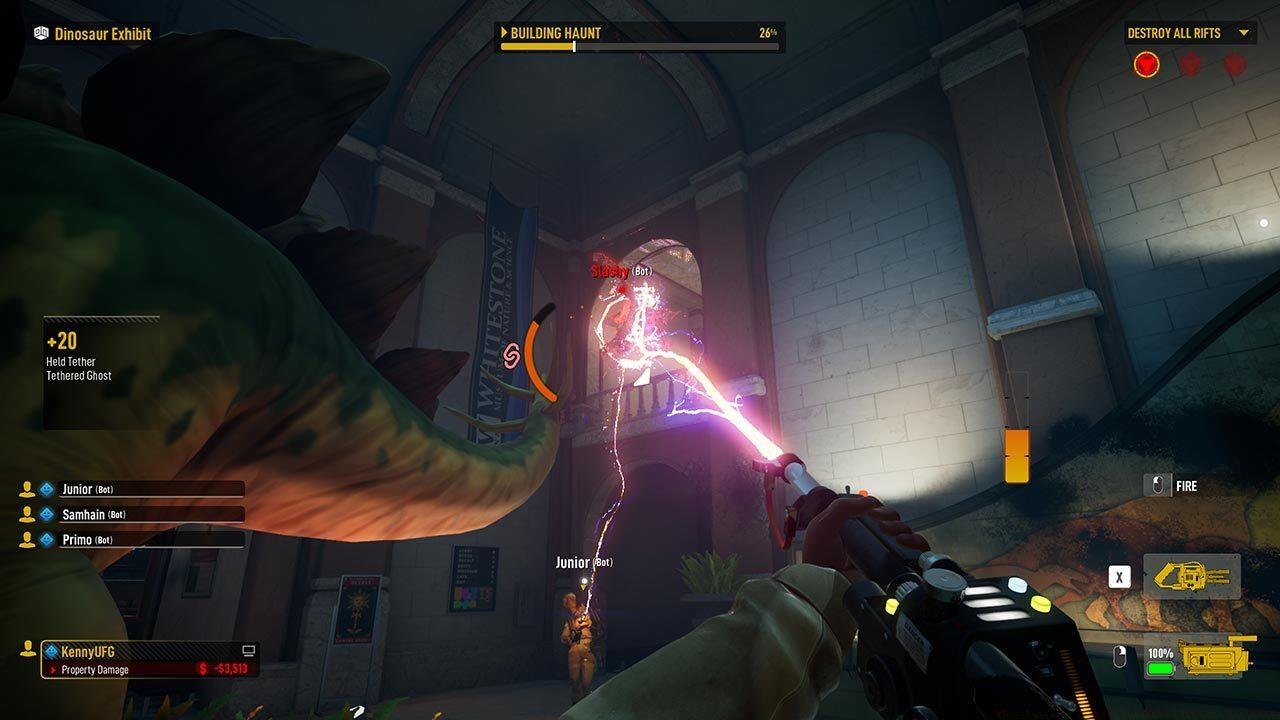
Effective team coordination separates successful ghostbusters from failed operations.
Ghostbusters: Spirits Unleashed represents the newest evolution in asymmetrical multiplayer gaming. Functioning as a narrative continuation of the recent cinematic installment, it’s packed with beloved franchise callbacks and references. The game maintains the signature player-versus-player dynamics characteristic of this gaming category. The spectral participant must successfully haunt designated areas while evading proton-wielding adversaries. Meanwhile, the four-person ghostbuster squad requires synchronized cooperation to capture the ghostly opponent while minimizing collateral destruction.
Whether your goal involves terrifying non-player characters or pursuing phantoms alongside allies, achieving victory demands strategic planning. Ghosts possess an extensive repertoire of deceptive maneuvers to overcome. Similarly, Ghostbusters benefit from customizable, upgradeable gear. Those players who master tactical deployment of tools and abilities at optimal moments typically emerge triumphant. This guide provides foundational knowledge to navigate the initial learning curve of Ghostbusters: Spirits Unleashed.
Similar to other titles in this genre, Spirits Unleashed prioritizes collaborative play over individual heroics. The four-ghostbuster configuration clearly indicates that each member should contribute to spectral containment. The less apparent aspect involves understanding proper team integration protocols; successful stream-crossing represents merely one component of the overall strategy.
Multiple strategic considerations demand attention during each match. One critical early-game realization involves the substantial delay when transitioning between your P.K.E. Meter and proton pack. This equipment swap latency creates significant challenges when attempting to ensnare detected ghosts without teammate assistance.
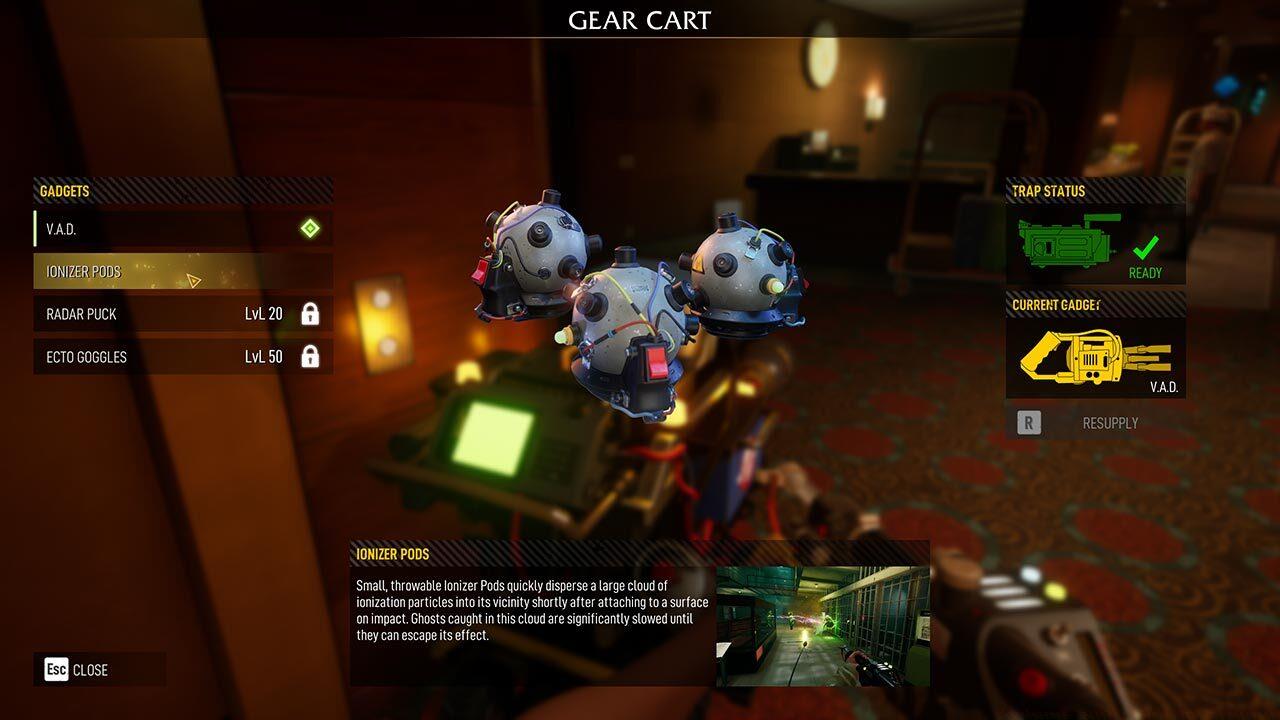
Progressive equipment unlocks dramatically enhance your ghostbusting capabilities over time.
The P.K.E. meter serves dual purposes: detecting ghostly entities and locating their dimensional rifts—portals enabling post-capture resurrection. Additionally, it can temporarily disable ghosts, forcibly ejecting them from possessed objects or civilians, rendering them exposed briefly. Manual transition to your proton pack consumes excessive time, typically allowing the stun effect to dissipate before tethering initiation. Deploying your trap initially accelerates this process since that action automatically switches your equipped item to the proton pack. However, both approaches prove inferior to having teammates simultaneously deploy traps or activate their proton streams; coordinated teams can capture ghosts within moments of stunning when properly prepared. Essentially, you should synchronize offensive maneuvers whenever possible.
Proper communication and visibility ensure your team operates at peak efficiency during hunts.
Advanced Equipment Tip: The P.K.E. meter’s stun function requires precise timing. Wait until the ghost commits to an action animation for maximum effect. Early activation allows evasion, while delayed stunning reduces capture windows significantly.
Ghostbusters: Spirits Unleashed contains several tethering system nuances not covered in tutorial sessions. The primary revelation involves movement control assignment: the initial ghostbuster establishing tether connection dictates spectral movement direction.
To successfully tether a ghost, maintain proton beam contact sufficiently long to create entanglement. Once wrapped, you can direct them toward deployed traps for containment. The first player achieving tether status controls ghost positioning. Supporting teammates enhance containment durability by extending tether duration; they essentially increase escape difficulty. This knowledge proves crucial for two strategic reasons. First, it impacts team composition optimization. Guiding ghosts toward specific traps becomes more efficient when aware of the controlling player. If Teammate Alpha initiates primary tether, you should position your trap relative to their location rather than Teammate Beta’s position.
Progressive haunting visibly transforms environments, creating tactical challenges for ghostbuster teams.
The secondary consideration involves proton pack overheating mechanics. Continuous ghost bombardment has limited duration before requiring venting procedures. Solo tethering results in ghost release during cooling periods. However, if you established primary tether and additional teammates contribute their beams, you can transfer control authority by disengaging. Primary tether responsibility transitions to subsequent players based on their beam activation sequence, providing essential “reloading” opportunities.
Strategic rift destruction severely limits ghost resurrection capabilities, often determining match outcomes.
Pro Tethering Strategy: Designate specific roles before matches: primary tethers, trap specialists, and support gunners. Role clarity prevents overlapping functions and maximizes team efficiency.
New players frequently encounter several preventable errors that hinder their ghostbusting effectiveness. Understanding these common pitfalls dramatically accelerates skill development.
Equipment Switching Timing: The most prevalent mistake involves premature proton pack activation after P.K.E. meter stuns. Optimal procedure: stun ghost → deploy trap → proton pack auto-activates → initiate tethering. Attempting manual equipment transitions typically wastes the brief vulnerability window.
Communication Breakdowns: Silent teams experience repeated failure. Establish callouts for ghost sightings, rift locations, and tether status. Voice communication improves capture rates by approximately 40% according to community metrics.
Trap Placement Errors: Novices often deploy traps too early or in inaccessible locations. Ideal placement occurs after tether initiation within ghost trajectory paths. Poor positioning forces unnecessary tether redirection, increasing escape opportunities.
Advanced Tactical Consideration: Prioritize rift destruction during early match phases. Each eliminated rift permanently reduces ghost respawn capacity, creating progressive advantage throughout the encounter.
For those seeking deeper strategic insights, our Complete Guide to team-based gameplay offers transferable coordination principles that enhance Spirits Unleashed performance.
Action Checklist
- Practice equipment switching: P.K.E. stun → trap throw → auto proton pack
- Establish team roles (primary tethers, trap specialists, support) before matches
- Master tether control passing: disengage when overheated, let teammates maintain capture
- Prioritize rift destruction within first 3 minutes of match
- Coordinate trap placement relative to primary tether controller position
No reproduction without permission:SeeYouSoon Game Club » Ghostbusters: Spirits Unleashed Tips For Beginners Master ghost hunting mechanics, team coordination strategies, and advanced tactics for Spirits Unleashed success