
Exploring Nibelung’s ancient legacy and its profound impact on Genshin Impact’s world-building and lore
Nibelung’s Origins and Early Teyvat
Before the Seven Archons established their dominion, Teyvat’s primordial age was governed by powerful elemental beings, with Nibelung reigning as the supreme Dragon King. These ancient sovereigns fundamentally shaped the world’s foundation during its formative epochs, establishing the elemental laws and geographical structures that persist today. Historical evidence suggests dragon civilization predates human settlement by millennia, with Nibelung’s rule representing the pinnacle of draconic power.
Strategic Insight: When exploring ancient ruins, pay attention to dragon motifs and elemental alignments – they often reveal connections to Nibelung’s era and provide context for current world mechanics.
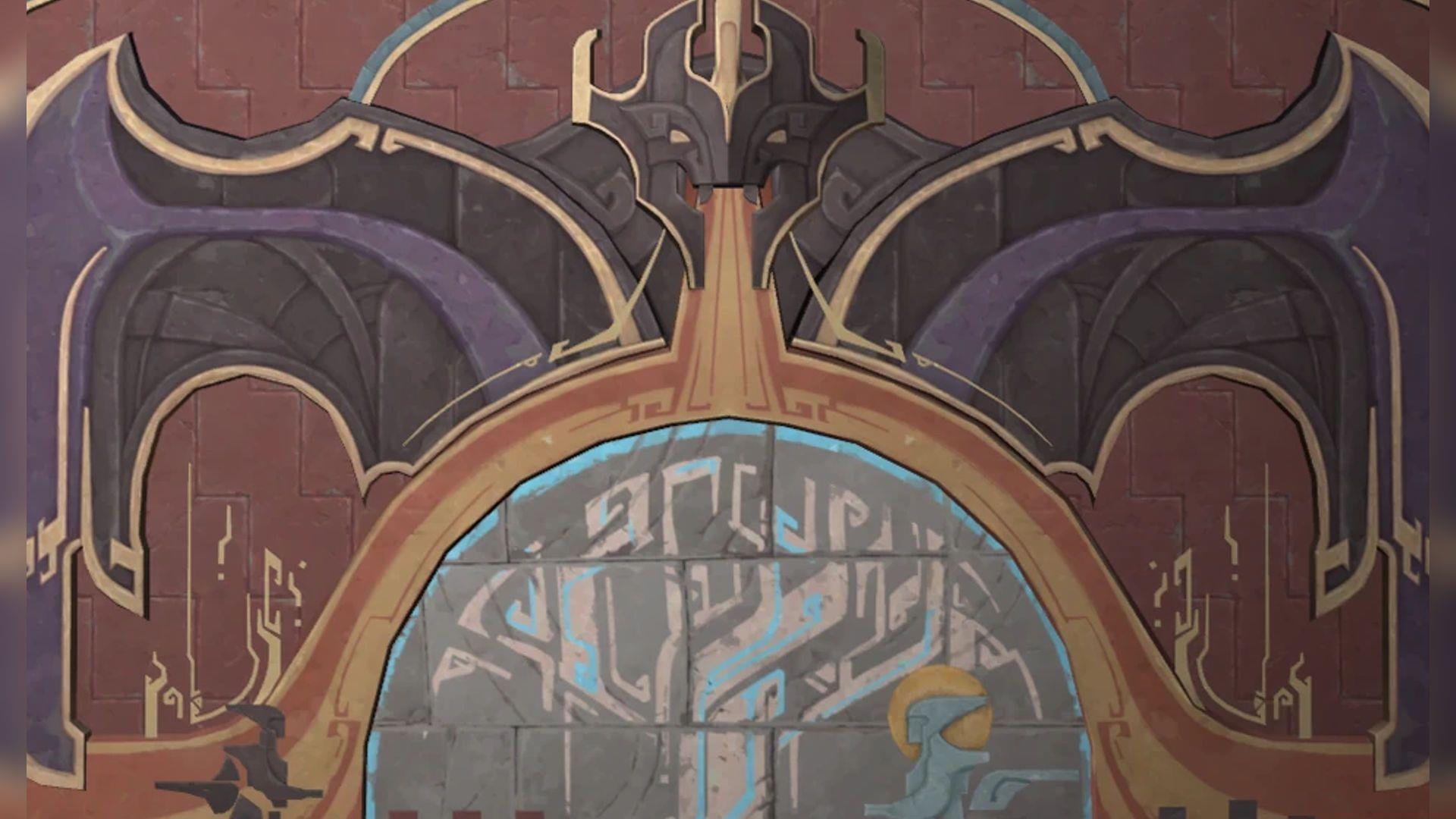
Archaeological artifacts, particularly the murals in Ochknatlan, portray Nibelung as a magnificent white dragon soaring above pristine landscapes, indicating a period of harmony before cosmic turmoil. Critical lore reveals that a mysterious interstellar traveler once approached Nibelung with a dire prophecy of Teyvat’s impending destruction, offering him escape from the coming catastrophe. Contrary to preservation instincts, Nibelung defiantly rejected this cosmic evacuation, choosing instead to confront the threat directly.
Common Mistake: Many players assume the ‘cosmic voyager’ was the Heavenly Principles, but lore evidence suggests this was a separate entity with different motivations and capabilities.
Rather than abandoning his domain, Nibelung initiated an ambitious dragon exodus project, developing advanced spatial technology to transport his people beyond Teyvat’s atmospheric boundaries. This endeavor resulted in the construction of massive celestial towers, including the prominent structure at Chichen Uctokah, representing one of Teyvat’s earliest technological revolutions. His vision extended beyond mere survival, aiming to establish autonomous dragon civilizations in extraterrestrial realms.
The Great Rebellion and Its Aftermath
When the Heavenly Principles descended to impose their celestial governance, Nibelung mounted determined resistance, refusing to submit to external authority. His rebellion strategy involved venturing deep into the Abyss to acquire forbidden knowledge – power sources prohibited by cosmic law that promised victory against divine oppression. After obtaining these dangerous capabilities, Nibelung mobilized the dragon armies into full-scale warfare, intending to preserve draconic autonomy against celestial domination.
Optimization Tip: Understanding this historical conflict helps explain current faction relationships and why certain areas remain contested between celestial, abyssal, and elemental forces.
The resulting cataclysm nearly obliterated Teyvat’s fundamental structure, with the war concluding in Nibelung’s defeat and death, followed by systematic suppression of dragonkind. To stabilize the ravaged world, the Heavenly Principles deployed Celestial Nails – massive divine artifacts that terraformed damaged regions and suppressed remaining rebellious energies. These nails created geographical features players encounter today, including unusual terrain formations and elemental anomalies.
Though militarily defeated, Nibelung’s rebellion significantly weakened the Heavenly Principles, draining their power to such extent that they entered prolonged dormancy to recuperate. This vulnerability forced them to establish the Gnosis system, delegating administrative authority to the Seven Archons while maintaining ultimate sovereignty. The war’s most enduring consequence was introducing forbidden knowledge and Abyssal corruption into Teyvat’s ecosystem, creating perpetual threats that continue challenging both archons and humanity.
Strategic Insight: The Gnosis system’s creation directly resulted from Nibelung’s weakening of the Heavenly Principles, explaining why archons have limited power compared to primordial beings.
Legacy and Modern Implications
Nibelung’s controversial legacy inspired subsequent dragon sovereigns to pursue similar paths with varying outcomes. Apep, despite witnessing the catastrophic results of Nibelung’s rebellion, similarly sought forbidden knowledge and suffered consequent corruption, demonstrating the persistent allure of these dangerous powers. Meanwhile, Xiuhcoatl adopted an alternative strategy, attempting to counter Abyssal influence by transmuting his entire domain into primal information manifested as Phlogiston – pure elemental essence immune to corruption.
Common Mistake: Players often confuse Phlogiston with ordinary pyro energy, but it represents a more fundamental form of elemental information with unique properties.
Contemporary perspectives from characters like Neuvillette reflect critically on Nibelung’s methodology, arguing that his solitary confrontation approach fundamentally misunderstood the nature of the Abyssal threat. Modern dragon philosophy emphasizes collaborative resistance, believing that only through dragon-human cooperation can Teyvat’s corruption be permanently resolved. This represents a significant ideological evolution from Nibelung’s isolationist strategy.
Theoretical speculation among Teyvat’s scholars increasingly identifies Nibelung as a potential Descender – beings originating outside Teyvat’s reality with capability to influence its fundamental laws. This classification suggests Nibelung transcended ordinary draconic nature, possessing willpower sufficient to challenge cosmic order itself. If validated, this theory implies Nibelung’s influence extends beyond historical significance into ongoing narrative developments, potentially including future game expansions and character storylines.
Optimization Tip: Tracking Descender theories helps predict future story developments and understand character motivations across different regions and updates.
Strategic Insights and Gameplay Connections
For players seeking to maximize their understanding of Genshin Impact’s complex lore, Nibelung’s story provides critical context for numerous gameplay elements. The spatial technology he developed explains architectural anomalies across Teyvat, particularly the massive towers that seem designed for purposes beyond human comprehension. These structures may become relevant in future updates as transportation mechanisms or dungeon entrances.
The conflict between dragon sovereignty and celestial authority establishes the philosophical foundation for current faction dynamics, helping players understand why certain characters oppose the established order. This historical context enriches story quests and world interactions, particularly when dealing with dragon-related characters or Abyss-order missions.
Avoid common misinterpretations by recognizing that Nibelung wasn’t inherently evil – his actions stemmed from protective intentions toward dragonkind, however catastrophic the consequences. This nuanced understanding enhances appreciation for moral complexity within Genshin Impact’s narrative, moving beyond simple hero-villain dichotomies.
Future content will likely explore Nibelung’s legacy through additional dragon sovereign reveals, expanded Abyss mechanics, and potentially even time-travel or flashback sequences showing his era directly. Strategic players should monitor lore developments related to Descenders and primordial history, as these narrative threads connect directly to endgame content and major plot advancements.
No reproduction without permission:SeeYouSoon Game Club » Genshin Impact lore: Who is Nibelung? Exploring Nibelung's ancient legacy and its profound impact on Genshin Impact's world-building and lore