
Uncovering King Deshret’s tragic legacy and practical gameplay connections in Genshin Impact’s Sumeru desert
Understanding King Deshret’s Identity and Origins
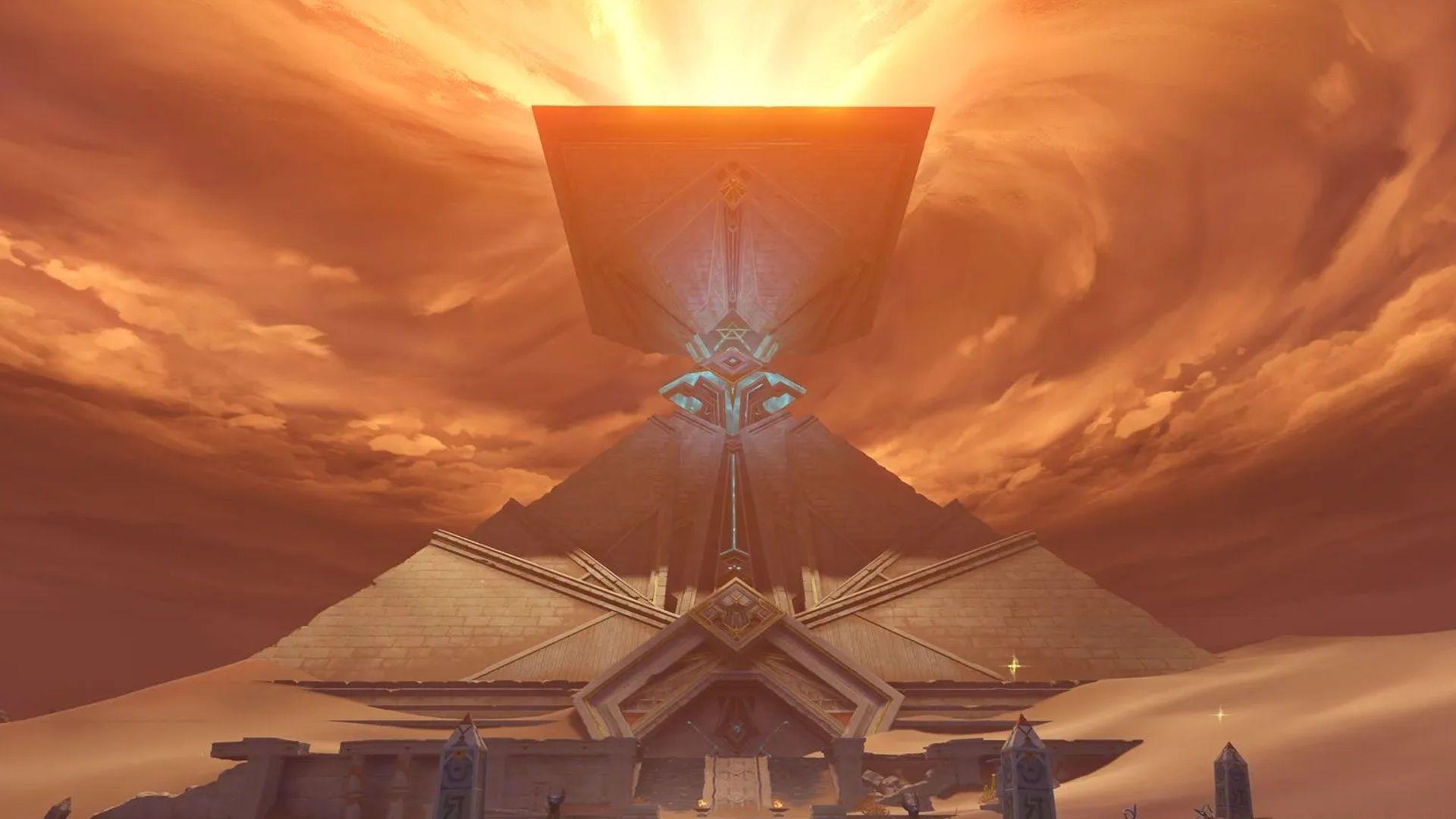
The Sumeru region’s release introduced players to a complex mythological tapestry spanning nearly three years of Genshin Impact storytelling. Through extensive world quests involving the Aranara, Pari, and Jinn, we’ve uncovered the foundational narrative of three divine beings who shaped the nation’s destiny: King Deshret, the Goddess of Flowers Nabu Malikata, and the Greater Lord Rukkhadevata.
Known alternately as Al-Ahmar or Amun, King Deshret governed the desert territories as one-third of Sumeru’s divine triumvirate. This powerful coalition ushered in the prosperous Era of Three Companions, a golden age where wisdom, beauty, and ambition coexisted in harmony. Modern Eremite clans proudly trace their lineage back to his once-magnificent civilization.
Each deity embodied distinct philosophical concepts: Rukkhadevata represented accumulated wisdom and natural order, Nabu Malikata personified lunar beauty and artistic grace, while Deshret championed boundless ambition and radical freedom. His divine vision centered on creating an ideal society independent from Celestia’s Heavenly Principles and Teyvat’s established cosmic laws.
Deshret’s technological prowess became legendary, with his expertise manifesting through advanced machinery and primal constructs that still puzzle researchers today. However, this innovative spirit gradually morphed into dangerous obsession as he sought knowledge beyond mortal comprehension.
Practical Insight: When exploring Sumeru’s desert regions, pay close attention to architectural styles and mechanical remnants. Deshret’s technological signature appears in symmetrical geometric patterns and solar-aligned structures, distinguishing his work from later civilizations.
The turning point in Deshret’s narrative emerged when his pursuit of transcendence led him to forbidden knowledge originating from the Abyss’s deepest realms. This corrupting influence directly connects to the Withering zones and Eleazar disease that plague modern Sumeru, environmental hazards players regularly encounter during exploration.
Deshret maintained an especially close bond with Nabu Malikata, collaborating with her to actualize his utopian vision despite Rukkhadevata’s repeated warnings about the catastrophic risks involved. Their partnership would ultimately exact a devastating price that reshaped Sumeru’s destiny forever.
The Tragic Downfall: From Ambition to Catastrophe
Nabu Malikata’s sacrificial act to contain the spreading corruption marked the narrative’s pivotal moment. Her death plunged Deshret into profound grief that rapidly deteriorated into destructive madness. This emotional collapse triggered increasingly desperate attempts to resurrect both his beloved companion and their shared dream.
In his mourning, Deshret commissioned the Eternal Oasis construction with Jinn assistance, incorporating a Celestial Nail as the centerpiece memorial. This location remains accessible to players today as one of Sumeru’s most visually stunning hidden areas, though reaching it requires completing specific world quest chains.
As his obsession intensified, Deshret disregarded Rukkhadevata’s continued warnings, conducting experiments that unleashed corrupted knowledge streams throughout the desert. This pollution warped both natural environments and living consciousness, creating the distorted landscapes and creatures players now navigate.
The catastrophe reached its climax when Deshret finally confronted the devastation his grief had wrought upon his people and domain. In the aftermath, Rukkhadevata intervened to seal the remaining forbidden knowledge, preventing total annihilation. Overwhelmed by remorse, Deshret ultimately sacrificed himself amid his civilization’s ruins.
Common Mistake Avoidance: Many players miss the connection between Deshret’s story and current gameplay mechanics. The Withering zones directly result from his forbidden knowledge experiments, while Eleazar disease stems from the same corruption. Understanding this lore enhances environmental storytelling appreciation.
Contemporary Aaru Village inhabitants proudly identify as Deshret’s descendants, maintaining vigilant protection over ruins and monuments bearing his name and aspirations. Their cultural identity remains intrinsically linked to his legacy, influencing how they interact with outsiders and protect ancient secrets.
The psychological complexity of Deshret’s arc offers valuable character study material. His transformation from visionary idealist to tragic figure demonstrates how noble aspirations can transform into destructive obsessions when pursued without ethical constraints—a recurring theme throughout Genshin Impact’s narrative architecture.
The Seven Pillars: Deshret’s Trusted Emissaries
King Deshret appointed seven supremely powerful sages as his emissaries, later renowned as the Seven Pillars. Their primary responsibility involved maintaining social order and providing guidance to diverse desert tribes. Despite extensive world quest coverage of Sumeru’s arid regions, substantial gaps remain in our understanding of these figures.
Hermanubis stood preeminent among them, celebrated for his unparalleled wisdom. Selected from the Tighnarian people, he earned Deshret’s complete trust as a key advisor. Following his patron’s downfall, Hermanubis established the Temple of Silence to preserve their civilization’s knowledge.
When marauders assaulted the temple, Hermanubis fragmented his spiritual essence into protective shards to safeguard his followers. These dispersed power fragments eventually descended through generations, now manifesting within Cyno—the formidable General Mahamatra players recruit in-game.
The Ibis King, alternatively called Thoth, originally served as a Deshret courtier before suffering disgrace. His “Lord of Lies” epithet references his silver tongue and manipulative oratory skills, traits that prompted his exile to Aaru alongside two fellow courtiers. Nefer’s documented encounters perpetuate his deceptive reputation, illustrating how Deshret’s court balanced wisdom with ambition-fueled deceit.
Apep, the Dendro Dragon Sovereign encountered during Nahida’s second story quest, previously ruled Sumeru before the Heavenly Principles’ ascendancy. Deshret negotiated a strategic pact with this ancient entity, facilitating his kingdom’s expansion.
Their agreement stipulated that Apep would assimilate Deshret’s wisdom posthumously to achieve transcendent understanding. Unfortunately, Deshret’s forbidden knowledge experiments corrupted Apep instead, physically decaying her form and catalyzing the Withering phenomenon that still affects Sumeru.
Advanced Player Tip: When facing Apep in Nahida’s story quest, recognize that her corrupted state directly results from Deshret’s actions. This knowledge provides strategic context for the battle’s mechanics, which metaphorically represent cleansing the corruption he introduced.
The Seven Pillars’ incomplete documentation suggests Hoyoverse may expand their stories in future updates. Savvy lore enthusiasts should meticulously document desert world quest dialogues and environmental clues for emerging narrative connections.
Lasting Impact and Modern Relevance
Millennia after his civilization’s collapse, Deshret’s legacy persists through magnificent ruins like Khaj-Nisut and his monumental Mausoleum dominating Sumeru’s desert heartland. These locations showcase his technological innovations through Primal Constructs, Primal Light systems, and intricate mechanisms of mysterious origin.
Eremite communities safeguard Deshret’s surviving artifacts as sacred religious objects. They venerate him as a deity who championed freedom and defied Celestia’s authority. However, this devotion has spawned interpretative factions within their culture, some misconstruing his original intentions and historical narrative.
Exploration Strategy: When investigating Deshret-era ruins, prioritize solving the prism and light-based puzzles. These often conceal premium rewards and lore fragments. The Mausoleum’s underground levels particularly require understanding his technological principles for successful navigation.
King Deshret’s chronicle embodies ambition’s transformation into tragedy within Genshin Impact’s narrative universe. He pursued freedom and transcendental truth beyond mortal limitations, yet that identical quest precipitated his ultimate ruin. The surviving ruins function as poignant reminders that even divinity’s most powerful manifestations remain vulnerable to their aspirations’ weight.
The cultural divide between desert and rainforest Sumeru inhabitants directly stems from Deshret’s ideological conflict with Rukkhadevata. This historical tension manifests in current faction dynamics and provides rich role-playing opportunities for engaged players.
Deshret’s narrative importance extends beyond historical significance—it establishes foundational principles for understanding Sumeru’s political landscape, technological development, and ongoing supernatural phenomena. Each desert expedition becomes more meaningful when contextualized within his tragic legacy.
As Genshin Impact’s storyline evolves, Deshret’s influence may resurfaces through new character connections, region expansions, or artifact set lore. Maintaining comprehensive knowledge of his saga ensures players can fully appreciate these future narrative developments.
No reproduction without permission:SeeYouSoon Game Club » Genshin Impact lore: King Deshret and the Seven Pillars Uncovering King Deshret's tragic legacy and practical gameplay connections in Genshin Impact's Sumeru desert