
A comprehensive analysis of Max Payne’s enduring narrative appeal versus its outdated gameplay mechanics for modern players
The Unforgettable Narrative: Why Max Payne’s Story Still Resonates
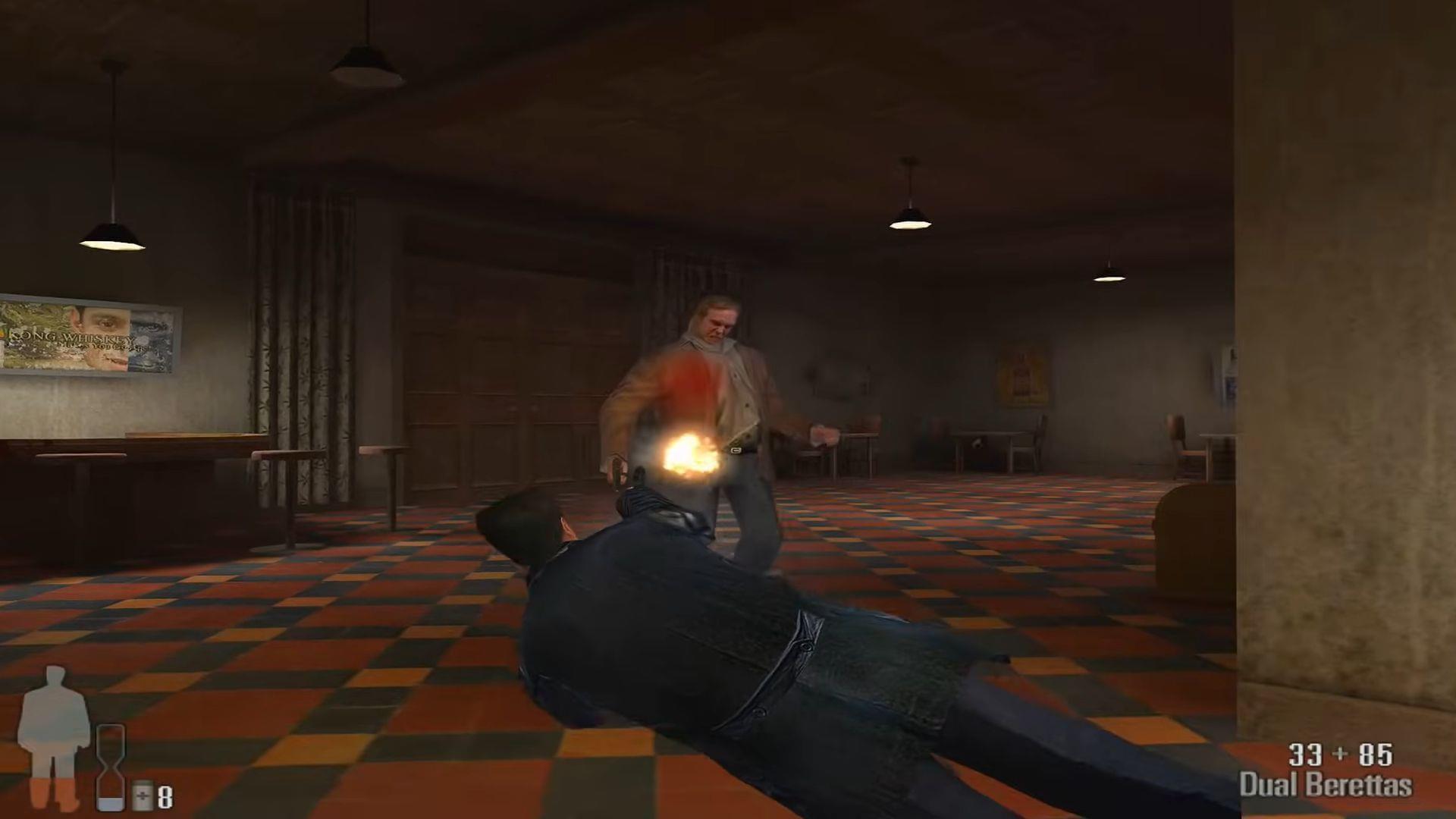
Despite being released over twenty years ago, Max Payne continues to captivate players with its emotionally charged narrative that explores profound themes of loss and retribution. The game introduces us to a detective whose personal tragedy—the brutal murder of his wife and child—serves as the catalyst for a descent into darkness that remains compelling today.
Note: This analysis combines objective technical assessment with subjective narrative evaluation based on two decades of gaming evolution.
Looking for gaming analysis and recommendations? Explore our latest game reviews, retro gaming retrospectives, and narrative-focused examinations
The central plot follows Max Payne’s investigation into Valkyr, a powerful narcotic that triggered the violence that destroyed his family. This journey transforms from personal vendetta to exposing institutional corruption, weaving together pharmaceutical malfeasance with governmental conspiracy in ways that feel surprisingly relevant. What elevates this beyond typical revenge narratives is its psychological depth—Max constantly battles internal demons while confronting external enemies.
As players guide Max through his quest for truth, they experience his ongoing struggle with survivor’s guilt and moral compromise. The storytelling adopts a gritty, film-noir aesthetic that explores vengeance and redemption with remarkable maturity for its era. Through graphic novel-style cutscenes and internal monologues, the game develops its protagonist with nuance that many contemporary titles still struggle to match.
Max Payne succeeds because it treats trauma with respect, allowing character development to unfold organically rather than through exposition. Each narrative revelation serves dual purposes: advancing the conspiracy plot while deepening our understanding of Max’s deteriorating psyche. This layered approach to storytelling explains why the narrative continues to engage players despite technological obsolescence.
Practical Narrative Tip: Pay close attention to environmental storytelling—the game uses setting details to reinforce thematic elements without explicit dialogue. Notice how locations evolve to mirror Max’s psychological state throughout his journey.
Gameplay Assessment: Revolutionary Then, Clunky Now
Max Payne pioneered the third-person shooter genre with its innovative “Bullet Time” mechanic—a slow-motion system allowing precise aiming during acrobatic dives. While groundbreaking in 2001, this system reveals its age through cumbersome implementation that frustrates modern gaming sensibilities. The mechanic itself remains conceptually brilliant but suffers from execution that hasn’t aged gracefully.
Contemporary players will immediately notice the awkward control scheme that feels particularly dated. Character movement employs what veterans call “tank controls”—directional inputs that rotate Max rather than moving him relative to camera perspective. This creates disorienting camera management issues during intense firefights, especially in confined environments where spatial awareness becomes crucial.
The artificial intelligence presents additional challenges for modern expectations. Enemy behaviors follow predictable patterns with limited tactical variation, making combat encounters feel repetitive compared to contemporary shooters featuring adaptive AI systems. This simplicity reduces challenge for experienced players while creating artificial difficulty through control limitations rather than intelligent opposition.
Common Control Mistakes: New players frequently struggle with these specific issues:
1. Overusing Bullet Time without managing the limited resource meter
2. Attempting precise platforming with the imprecise movement system
3. Underestimating enemy spawn patterns in later chapters
4. Neglecting painkiller management during extended combat sequences
Optimization Strategy: Advanced players can improve their experience by:
– Mapping dive maneuvers to easily accessible buttons for quicker activation
– Mastering the rhythm of Bullet Time activation and deactivation
– Learning enemy spawn locations to pre-position effectively
– Utilizing environmental explosives that weren’t emphasized in original tutorials
The learning curve proves particularly steep for gamers accustomed to fluid, responsive controls in titles like Control or newer Max Payne sequels. Patience becomes essential when adapting to systems that prioritize cinematic presentation over intuitive interaction—a design philosophy that has evolved significantly in subsequent decades.
Technical Performance Across Platforms
Visually, Max Payne demonstrates its age through low-resolution textures and primitive character models that lack the detail expected from modern gaming hardware. Environmental assets appear flat and repetitive, while facial animations utilize limited expression ranges that diminish emotional impact during cutscenes. These limitations become particularly noticeable on high-resolution displays where upscaling artifacts frequently appear.
Performance varies dramatically depending on platform selection. PlayStation versions (both PS4 and PS5) suffer from inconsistent frame rates that trace back to original PS2 era optimization issues. These fluctuations disrupt gameplay flow during intensive combat sequences where timing proves essential for successful Bullet Time execution.
Xbox Series X/S implementations provide more stable performance with consistent frame pacing that enhances playability. However, these versions still cannot overcome fundamental resolution limitations inherent to the original game assets. The PC edition remains the definitive technical experience, supporting higher frame rates and resolution scaling that partially mitigates visual aging.
Platform-Specific Recommendations:
– PC: Utilize community-created texture packs and widescreen patches for enhanced visuals
– Xbox: Accept the stable performance while acknowledging visual limitations
– PlayStation: Consider performance mode settings if available, though options remain limited
– All Platforms: Lower expectations for visual fidelity and focus on narrative elements
Technical preservation efforts have been inconsistent, with some platforms receiving better maintenance than others. This creates uneven experiences that potential players should research before selecting their preferred version. Emulation through backward compatibility introduces additional variables that may affect stability depending on specific hardware configurations.
The audio design has aged somewhat better than visual elements, with weapon effects and voice acting retaining their atmospheric quality. However, environmental audio lacks the spatial precision of modern implementations, reducing immersion during exploration sequences between combat encounters.
The 2025 Verdict: Should You Play Max Payne Today?
The reality is complex. While Max Payne deserves its classic status for narrative innovation and genre influence, recommending it universally proves challenging given substantial gameplay limitations. The title excels primarily as historical artifact—a window into early-2000s game design that pioneered storytelling techniques later refined by subsequent titles.
Ideal candidates for this experience include:
1. Narrative enthusiasts willing to tolerate dated mechanics for compelling storytelling
2. Game design students analyzing historical genre evolution
3. Series completionists preparing for the upcoming remake
4. Retro gaming specialists with high tolerance for archaic control schemes
Less suitable audiences encompass:
1. Players accustomed to modern third-person shooter responsiveness
2. Gamers prioritizing graphical fidelity over narrative depth
3. Those with limited patience for learning unintuitive control systems
4. Casual players seeking accessible, straightforward experiences
For determined players, the PC version provides the most accommodating technical foundation. Community modifications can address some visual limitations, though core gameplay mechanics remain fundamentally unchanged. Approaching the game as interactive period piece rather than contemporary entertainment helps manage expectations regarding its numerous antiquated elements.
The upcoming remake promises to address many discussed limitations while preserving the narrative essence. However, experiencing the original provides valuable context for appreciating subsequent design evolution. This historical perspective transforms frustrations with outdated systems into appreciation for how far game design has progressed in addressing those very limitations.
Ultimately, Max Payne serves as reminder that compelling storytelling can transcend technological obsolescence—but only for audiences prepared to meet its considerable demands. The journey remains worthwhile for those positioned to appreciate its achievements within appropriate historical context.
No reproduction without permission:SeeYouSoon Game Club » game: Is Max Payne worth playing in 2025? A comprehensive analysis of Max Payne's enduring narrative appeal versus its outdated gameplay mechanics for modern players