
Master the asymmetrical horror combat with advanced strategies and essential Evil Dead gameplay insights
Game Overview and Key Features
Evil Dead: The Game delivers an immersive multiplayer horror experience that authentically captures the franchise’s signature blend of terror and dark humor. Players can embody either survivors battling against supernatural forces or take control of demonic entities seeking to eliminate human intruders.
This asymmetrical horror title stands as a genuine tribute to Sam Raimi’s iconic universe, delivering both fan service and compelling gameplay mechanics that will satisfy series enthusiasts and newcomers alike. Groovy indeed!
Since its cinematic debut in the 1980s, the Evil Dead franchise has expanded across multiple media formats, culminating in this comprehensive gaming adaptation. Participants can assume the roles of beloved characters including Henry the Red, the formidable Henrietta, and Kelly Maxwell from both the original films and television series. The gameplay offers substantial depth through its asymmetrical design, pitting teams of four survivors against a single powerful demon player in intensely chaotic encounters.
Upon launching the game, players immediately encounter meticulous attention to franchise authenticity. Detailed character models and atmospheric environments recreate the Evil Dead universe with precision, from the iconic Oldsmobile to Necronomicon-inspired menu interfaces accompanied by haunting musical scores. The main menu presents extensive options for both settings and gameplay modes, allowing players to join matches as survivors with friends or random participants, or venture solo with AI companions.
Private match creation provides additional flexibility, while challenging missions (currently five with a sixth planned) enable character unlocks for Amanda Fisher, Lord Arthur, and Pablo Simon Bolivar. These missions also reveal additional lore through Knowby recordings. While customization options for keybinds, sensitivity, and graphics are comprehensive, accessibility features remain limited. Mission design proves exceptionally demanding, with checkpoint absence creating frustrating repetition for minor errors. The progression system’s multiplayer requirement for experience gain disadvantages solo players, rendering single-player modes functionally tutorial-like rather than fully rewarding experiences.
 Saber Interactive
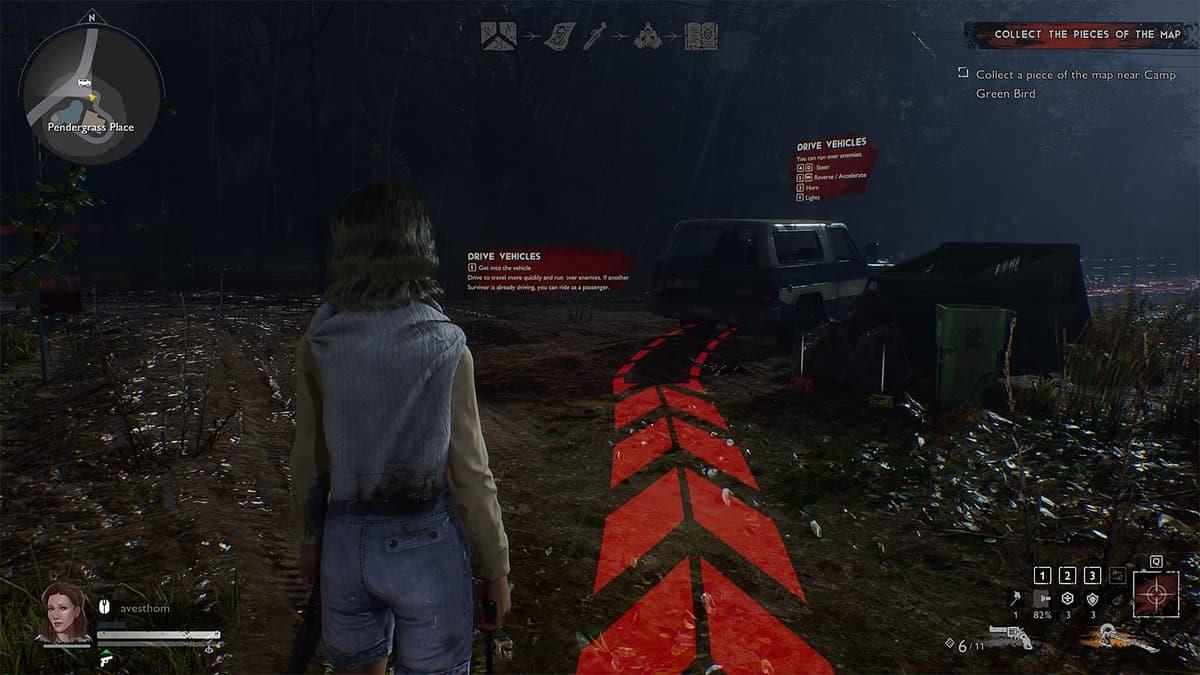
What would Evil Dead be without an old, vintage car to plow down a few Demons in?
Survivor Gameplay Deep Dive
Contrary to typical gaming tutorials that often feel obligatory, Evil Dead: The Game implements an unexpectedly engaging introductory system. The survivor tutorial successfully blends immersion with education, encouraging cautious exploration despite clear directional markers—especially effective during late-night sessions when tension runs high. Survivors must collaborate to locate map fragments within a 30-minute timeframe, progressing toward the Kandarian Dagger and Lost Pages of the Necronomicon. These artifacts must be secured before confronting the mysterious Dark Ones, culminating in a final confrontation using the Book of the Dead to banish demonic forces permanently. The audio design enhances this experience significantly, creating unnerving soundscapes that maximize immersion through quality headphones.
Everything we know about Evil Dead Burn
Dying Light: The Beast review – Fun but forgettable zombie-slaying
Everything we know about Dying Light: The Beast after PC specs revealed
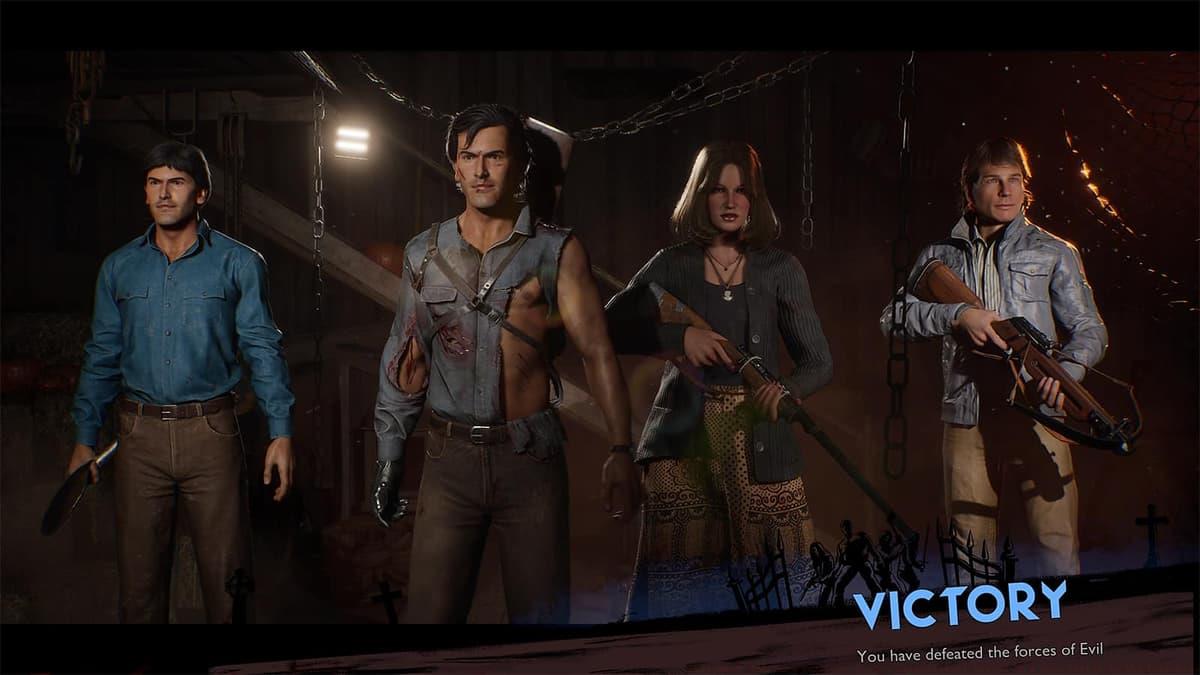
Matches incorporate multiple interconnected gameplay systems: item chests with varying rarity levels (Common, Rare, Epic, Legendary), drivable vehicles for escape or offensive maneuvers, diverse weapon types, map exploration, Necronomicon rituals, and the Pink F upgrade mechanism. These temporary match-based enhancements affect six core attributes: Melee, Ranged, Health, Fear, Stamina, and Shield capabilities. Demons utilize Infernal Energy to upgrade their abilities including Possession, Portal summoning, Boss enhancements, and Trap effectiveness. Fear management represents a particularly innovative mechanic—survivors must remain near light sources and teammates to avoid vulnerability to demonic possession. Character specialization occurs through seven distinct classes. The survivor team composition includes four roles: Leader (team buffing), Warrior (close-quarters combat), Hunter (ranged superiority), and Support (healing and assistance).
 Saber Interactive
Work (and stick) together to ensure the best chance of banishing those Kandarian Demons. The demonic opposition features three primary classes with single character options: Eligos the Puppeteer (possession specialist), Evil Ash the Necromancer (skeletal unit summoning), and Henrietta the Warlord (unit enhancement). To maintain balance, demon players can summon and control various units with specialized abilities designed to disrupt and damage survivor teams.
Demon Mastery and Tactics
Demon gameplay initiates with a first-person spectral perspective that perfectly replicates the cinematic camera work from the film series. This floating, weightless viewpoint enables rapid map traversal at accelerated speeds—though players susceptible to motion sickness should proceed cautiously. Movement generates Infernal Energy, the resource required for possessing survivors, Deadites, environmental objects like trees and vehicles. Tree possession introduces prop-hunt elements, allowing demon players to assault unsuspecting survivors with animated branches. Additional demon capabilities include trap placement at strategic locations and supply chests to induce fear, plus portal deployment that releases demonic units when activated by survivors.
Advanced demon strategy involves systematic map control through careful energy management. Successful demon players prioritize early game pressure by placing traps near objective locations while conserving energy for crucial possessions during key moments. The Puppeteer class excels at psychological warfare through relentless possession attacks, while Necromancers should position flautist skeletons in concealed areas to maximize buff coverage. Warlords benefit from aggressive unit spawning near survivor gathering points to overwhelm teams before they consolidate resources.
 Saber Interactive
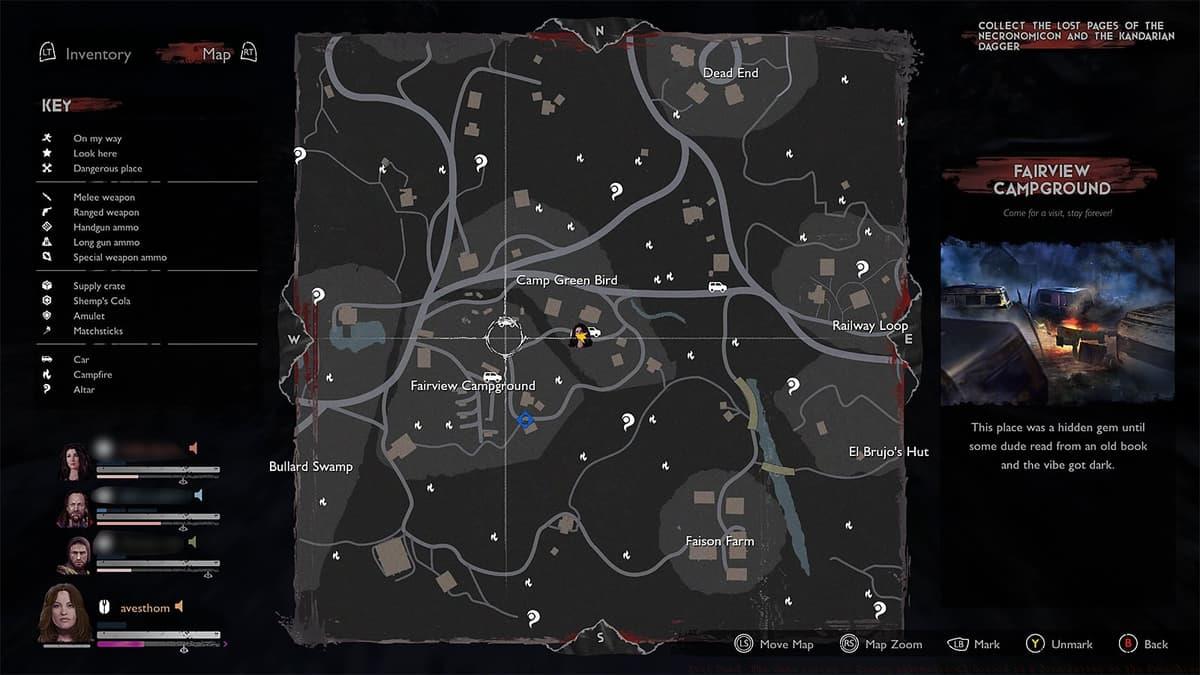
Evil Dead: The Game has a surprisingly large map to explore.
Progression Systems and Rewards
Multiplayer performance rewards players with Skill Points and Spirit Points regardless of match outcome. These resources facilitate character improvement through individual ability unlocks (via Spirit Points applicable to any character) and class-specific skill trees. While skill trees remain consistent within classes, progression must be completed separately for each character. This system preserves class identity while allowing nuanced customization—Army of Darkness Ash can specialize in chainsaw proficiency as a Warrior, while Henrietta’s Warlord capabilities can be enhanced to improve unit effectiveness against human opponents.
Optimal progression strategy involves focusing Spirit Points on 2-3 primary characters initially rather than distributing resources thinly across the roster. Prioritize unlocking core abilities that synergize with your preferred playstyle before investing in secondary perks. For survivors, essential early upgrades include fear resistance, stamina efficiency, and weapon specialization. Demon players should initially enhance possession duration, basic unit effectiveness, and energy regeneration to establish early game dominance.
Combat and Environmental Systems
 Saber Interactive
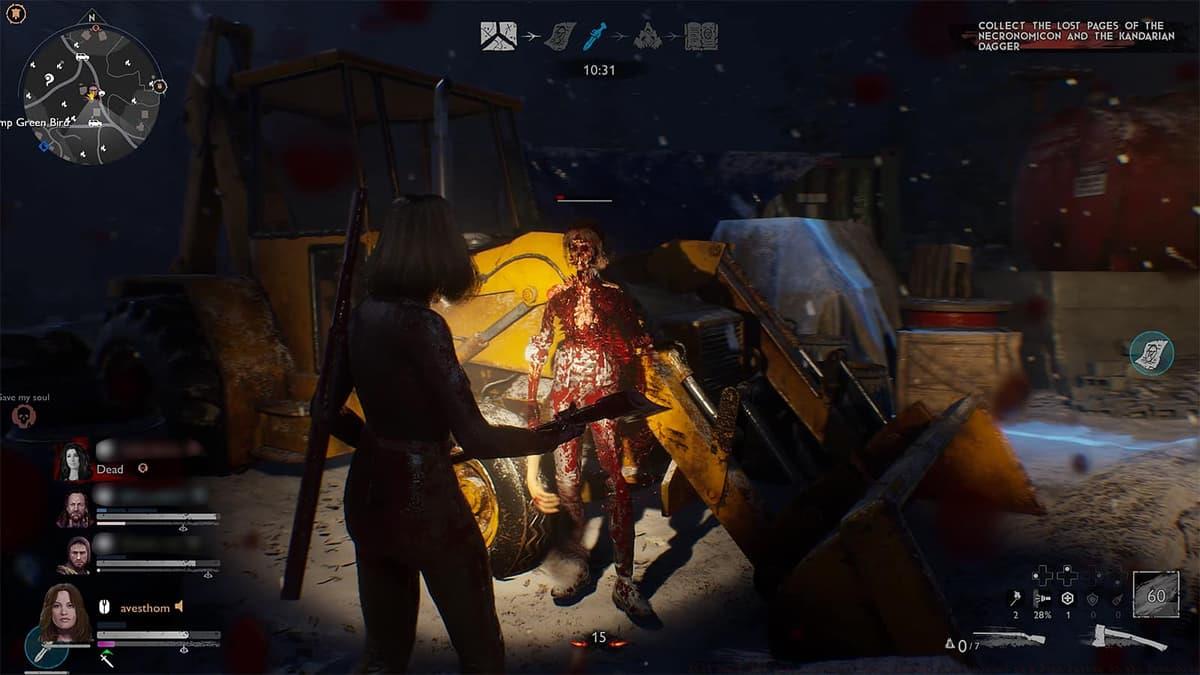
Evil Dead: The Game is chock-full of over-the-top gore. An Evil Dead experience would be incomplete without copious bloodshed, and Saber Interactive delivers this in spectacular fashion. Survivors dismantle Deadites through shooting, bludgeoning, and executing elaborate finishers that sever limbs, melt flesh to bone—transforming enemies into skeletal forms—and spray crimson viscera across screens and characters. The unapologetic gore complements weighty combat mechanics on both sides, where dodging and strategic positioning enable well-timed attacks. Cooperative takedowns of resilient enemies provide particularly satisfying moments. The expansive game world (with additional Castle Kandar map forthcoming as free DLC) encourages thorough exploration. Numerous points of interest contain valuable loot including weapons, consumables (Shemp’s Cola for health restoration, amulets for shield regeneration), and ammunition. Locations range from airplane crash sites and abandoned residences to convenience stores, haunted cabins, and eerie doll factories. Survivor success heavily depends on team cohesion and communication. While voice chat functionality exists, many players utilize the emote system to request assistance, coordinate movement, or redirect distracted teammates toward objectives.
Fallen survivors enter a downed state when their health depletes, beginning a bleed-out timer. Teammates can revive them during this period, but excessive delay results in spiritual transformation. These spirits must be collected and transported to Altars for resurrection rituals. Effective teamplay involves designating a support player to focus on revival duties while others provide covering fire or distraction. Advanced teams should establish predetermined rally points near altars to streamline resurrection processes during intense encounters.
Evil Dead: The Game successfully merges numerous multiplayer gameplay systems into a cohesive horror experience with impactful combat. Diverse modes and classes accommodate various preferences, though repetitive finisher animations, limited accessibility options, and experience restrictions present notable drawbacks. Despite these issues, the foundation demonstrates significant potential for longevity through future content updates and community support. Reviewed on PC.
No reproduction without permission:SeeYouSoon Game Club » Evil Dead: The Game review – Groovy asymmetrical horror is a love letter to the franchise Master the asymmetrical horror combat with advanced strategies and essential Evil Dead gameplay insights