
Essential Diablo 1 lore guide with character strategies and sequel connections explained
The Eternal Conflict: Sanctuary’s Origins
With Diablo 2: Resurrected arriving soon, understanding the foundational narrative of the original game becomes essential. Let’s explore the rich backstory that established this iconic franchise.
Diablo 2: Resurrected brings the classic back to life, but like many sequels, it builds upon established lore. Understanding Diablo 1’s narrative provides crucial context for appreciating the expanded universe. Prepare to immerse yourself in the eternal struggle between celestial forces.
The Diablo universe contains extensive mythology that rewards deep exploration. While we could dedicate volumes to prequel events, this guide focuses on delivering essential knowledge for diving into Diablo 2: Resurrected with confidence. We’ll cover foundational plot points while preserving Diablo 2’s narrative surprises. The series unfolds on Sanctuary, a world resembling Earth but trapped in perpetual warfare between angelic and demonic forces. Drawing inspiration from apocalyptic literature and mythological conflicts, Diablo creates a rich tapestry of cosmic struggle. Heaven hosts righteous angels while Hell swarms with vicious demons—both factions view humanity with suspicion since humans represent a hybrid species in this cosmology. Their celestial war consistently spills into mortal realms. Diablo stands as the most feared demonic entity. As a Prime Evil alongside his brothers Baal and Mephisto, he commands the title Lord of Terror. 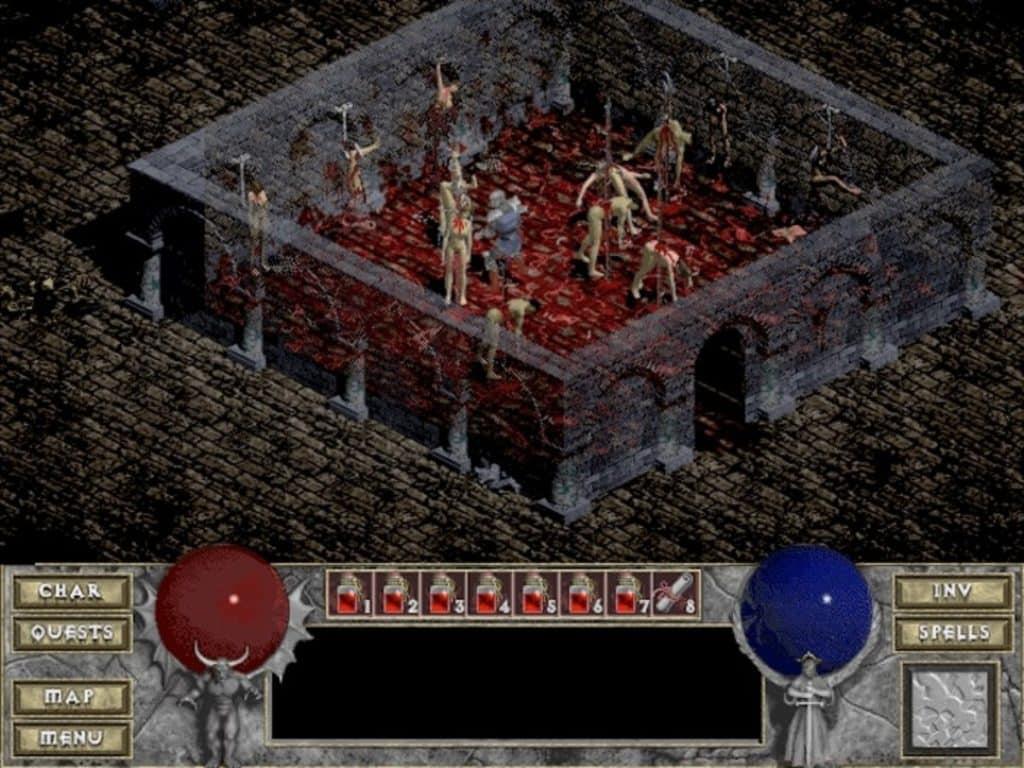 The Butcher’s lair presents early combat challenges
Tristram’s Corruption and the Hero’s Quest
Fortunately, Diablo 1 presents a relatively straightforward narrative compared to later series entries. Angels initially dominate the war, leading to Diablo and his brethren’s imprisonment within mystical Soulstones. These magical prisons cannot completely contain the Prime Evils’ corrupting influence. Compounding the danger, Soulstones require human bearers who may lack the spiritual strength to resist the evil they contain. The adventure commences in legendary Tristram, where a neighboring monastery has fallen to demonic infestation, demanding heroic intervention. This sacred site was constructed directly above Diablo’s Soulstone, allowing its malevolent energy to first corrupt Archbishop Lazarus, then King Leoric. Both transformed into undead abominations lurking within the monastery’s depths. Diablo managed to breach our world by possessing the monarch’s son, Prince Albrecht. This possession triggers the protagonist’s journey into the monster-infested structure. Players select from three distinct archetypes matching their preferred combat approach: the durable Warrior, agile Rogue, or mystical Sorcerer.
As the narrative progresses, adventurers penetrate deeper into the complex, systematically eliminating major antagonists along the descent. Their journey includes triumphs over terrifying Butcher, fallen Archbishop Lazarus, and Leoric reborn as Skeleton King. Throughout this ordeal, Tristram’s residents provide crucial assistance, including blacksmith Griswold, sorceress Adria, merchant Wirt, and sage Deckard Cain. Cain belongs to an ancient brotherhood originally responsible for imprisoning Diablo using Soulstones, aided by sympathetic angel Tyrael. 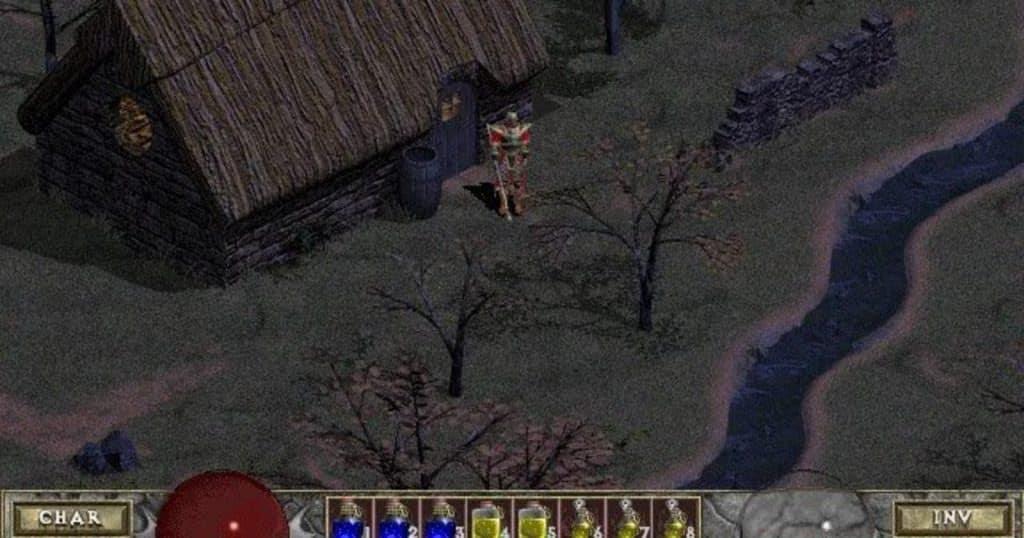 Tristram serves as your sanctuary throughout the nightmare
Boss Encounters and Hell’s Descent
The hero’s path leads through multiple dungeon tiers—starting with the monastery, descending into catacombs, then navigating caverns that open directly into Hell’s domain. Eventually confronting and defeating Diabol himself seemingly ends the immediate danger. The demon’s essence returns to its Soulstone as Prince Albrecht’s body collapses. In a fateful decision, the victor must become Diablo’s new vessel, containing the evil within themselves. This conclusion wraps Diablo 1’s primary narrative, but additional context bridges to Diablo 2’s beginning. The sequel reimagines the original three character options as specific individuals rather than player avatars. Narrative adjustments establish that all three heroes collaborated to overcome Diablo collectively.
The Warrior emerges as Prince Aiden, King Leoric’s additional son attempting to purge his family’s taint. His companions include Rogue Moreina and Sorcerer Jazreth. While Aiden transforms into the mysterious Dark Wanderer pursuing unknown objectives, Moreina and Jazreth return home tormented by psychological scars from their ordeal. Jazreth evolves into a Summoner seeking solace within an Arcane Sanctuary, while Moreina retreats to her Rogue Encampment emotionally shattered. Demonic forces soon assault a cathedral under Rogue protection, initiating Diablo 2’s events. Rumors circulate about a Dark Wanderer traveling through the territory.
Sequel Connections and Character Evolution
Understanding Diablo 1’s lore enhances appreciation of later game narratives and character motivations.
Several original characters reappear throughout the series with expanded roles and backstories.
The Soulstone concept evolves significantly across games, affecting multiple story arcs.
Common Player Mistakes to Avoid: Many newcomers underestimate the importance of town NPC interactions, missing crucial quests and equipment opportunities. Others fail to manage inventory space properly before major dungeon descents. The most significant error involves rushing through conversations with Deckard Cain, who provides essential lore context and gameplay guidance.
Advanced Play Strategies: Experienced players recommend methodical exploration of each level, as hidden areas often contain powerful artifacts. Managing resistance gear for Hell levels proves crucial, while understanding monster immunities saves countless frustrating encounters. Developing a balanced approach to character attributes prevents late-game combat inefficiencies.
No reproduction without permission:SeeYouSoon Game Club » Diablo lore: Explaining the origins of Diablo 2: Resurrected Essential Diablo 1 lore guide with character strategies and sequel connections explained