
TL;DR
- Crusader Kings 3 focuses on individual characters rather than nations, creating unique dynasty stories
- Ireland provides the perfect beginner environment with manageable scope and reduced external threats
- The tutorial and Issues tab are essential learning tools that guide without dictating your strategy
- War requires legitimate claims and understanding specific victory conditions for territory acquisition
- Normal difficulty preserves the emergent storytelling that makes CK3 uniquely engaging
Have you ever listened to someone recount their Crusader Kings 2 adventures? Those elaborate tales of multi-generational scheming to overthrow dynasties, where intricate plots finally converge like a master spy’s Rube Goldberg machine. Or perhaps you’ve encountered the infamous stories about noblemen marrying horses and leaving entire kingdoms to their equine heirs. The series presents an incredible abstract concept—essentially a digital Game of Thrones simulator—yet the reality involves complex maps, extensive statistical data, and specialized terminology that can overwhelm newcomers. If you’re genuinely interested in experiencing Crusader Kings but feel intimidated by its complexity, you’re not alone.
Crusader Kings 3 represents the ideal entry point for beginners. The visual presentation has dramatically improved, replacing the previous game’s simplistic 2D character portraits with detailed 3D models that evolve throughout your campaign. Characters visibly age, accumulate battle scars, and reflect both dignified and disgraceful life choices through their appearance. Additionally, being a new release means CK3 hasn’t yet accumulated the overwhelming number of DLC expansions and updates that made its predecessor increasingly unwieldy. Most importantly, Paradox has prioritized accessibility, implementing a comprehensive tutorial system, extensive in-game encyclopedia, and contextual tooltips that provide immediate assistance. The learning support structure is robust and well-implemented.
Despite these improvements, launching a new campaign can still feel overwhelming when confronted with a massive map filled with unfamiliar realms, diverse cultures, competing religions, and complex political relationships. These foundational strategies will help you overcome initial apprehension and build confidence in navigating medieval politics. While they don’t cover advanced tactics, they provide the essential framework for understanding core mechanics and preparing for deeper learning. For additional context about the game’s features and performance, consult our detailed Crusader Kings 3 review for comprehensive analysis.
Unlike traditional strategy games where you control civilizations or empires, Crusader Kings 3 operates at a personal level. You don’t guide nations or states—you embody an individual character. While you’ll typically begin as a landholding noble (sometimes with substantial territories), you remain a single human being with personal ambitions, relationships, and limitations. Consider playing as Duke Vratislav of Bohemia: you manage several counties surrounding Prague while maintaining claims on additional territories. However, even though your brother Konrad governs an adjacent county, you cannot directly command him. In fact, since he holds claims to your properties, he’ll likely become your primary rival. Meanwhile, Bohemia exists as merely one duchy within the expansive Holy Roman Empire. In this 1066 scenario, Emperor Heinrich IV essentially serves as your superior, making that relationship potentially more crucial than managing fraternal conflicts.
The most telling indication that Crusader Kings 3 prioritizes narrative creation over conventional victory conditions is its revolutionary character switching capability. At any point during gameplay, you can press ESC to access the pause menu, select “Switch Character,” and continue your existing campaign as the ruler of any other realm. (Note: Ironman mode disables this feature.) Losing a military campaign against the English monarch? Feel free to switch perspectives and assume control of the English throne yourself. Growing tired of Scandinavian tribal conflicts? Transition seamlessly to become the Maharaja of Pala. Thousands of potential lives await your exploration across medieval Europe, Africa, and Asia.
Ireland consistently serves as the recommended starting region in Paradox games, and this tradition continues in CK3. Beginning as Petty King Murchad, Duke of Munster—one of the highlighted characters in the 1066 “Rags to Riches” scenario—provides the optimal environment for learning fundamental mechanics. Ireland’s compact geography and relative isolation mean you’ll encounter fewer characters and titles to comprehend initially. Murchad begins as Ireland’s most powerful ruler, while neither Scotland nor England possess immediate capacity for Irish Sea expansion, eliminating pressure to expand your domain while simultaneously avoiding powerful neighbors who could easily overwhelm you. Crucially, if you choose to complete the tutorial, you’ll automatically start as Murchad, creating continuity between learning and independent gameplay.
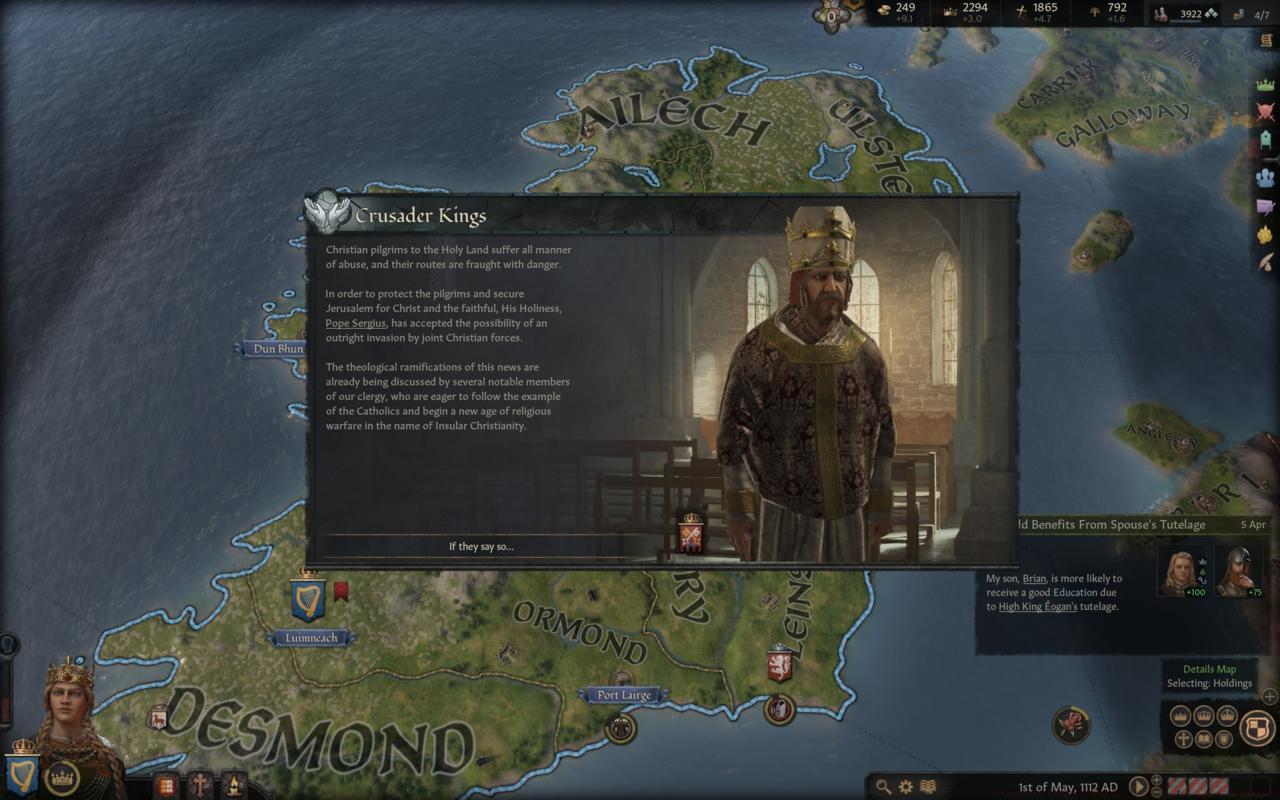
I cannot overstate this recommendation: complete the tutorial thoroughly. It effectively introduces core concepts and specialized terminology while walking you through performing essential actions. While not exhaustive, the tutorial provides solid interface familiarity and feature understanding, though it could better explain the strategic reasoning behind specific actions and their timing. Despite this limitation, the tutorial establishes a secure foothold in Ireland before removing training wheels. Afterwards, you’re not completely abandoned—the in-game encyclopedia (the small book icon at screen bottom center) and hyperlinked tooltips continue offering extensive descriptive information, even if strategic guidance becomes more limited.
When initiating a new game, you’ll encounter three difficulty settings: Normal, Easy, and Very Easy. I strongly recommend Normal difficulty, even during your learning phase. This recommendation stems from how easier settings function—they don’t increase your military effectiveness for territorial expansion. Instead, they reduce the frequency and success of negative events against your rule. Artificial intelligence schemes against you become less successful, rebellious factions demonstrate reduced organization, and similar challenging scenarios occur less frequently. In my experience, this diminishes the game’s overall engagement potential. Remember, Crusader Kings 3 emphasizes storytelling over victory conditions. Consequently, easier difficulty settings actually limit your opportunities for creating diverse, unpredictable narratives that define the CK3 experience.
After securing several counties, you’ll naturally desire additional territories. That appealing region to the east seems perfect for expansion, yet when you right-click its ruler, the declare war option appears unavailable. This occurs because legitimate warfare requires established claims on specific titles (essentially land rights). Occasionally, you or family members/vassals inherit claims that you can legally pursue. Alternatively, you can dispatch your bishop to research historical documents and fabricate claims through legal technicalities. When engaging in warfare, remember you’re fighting specifically for these claims; after completing sieges and battles, the victor receives only the originally contested territory. For instance, if you wage war over Coimbra and achieve victory by besieging Braga castle in Porto, you still only acquire Coimbra. You cannot retain Porto as additional compensation. This outcome often confuses first-time warmongers. Always verify which claim you’re pursuing and carefully review settlement terms when enforcing demands to conclude hostilities.
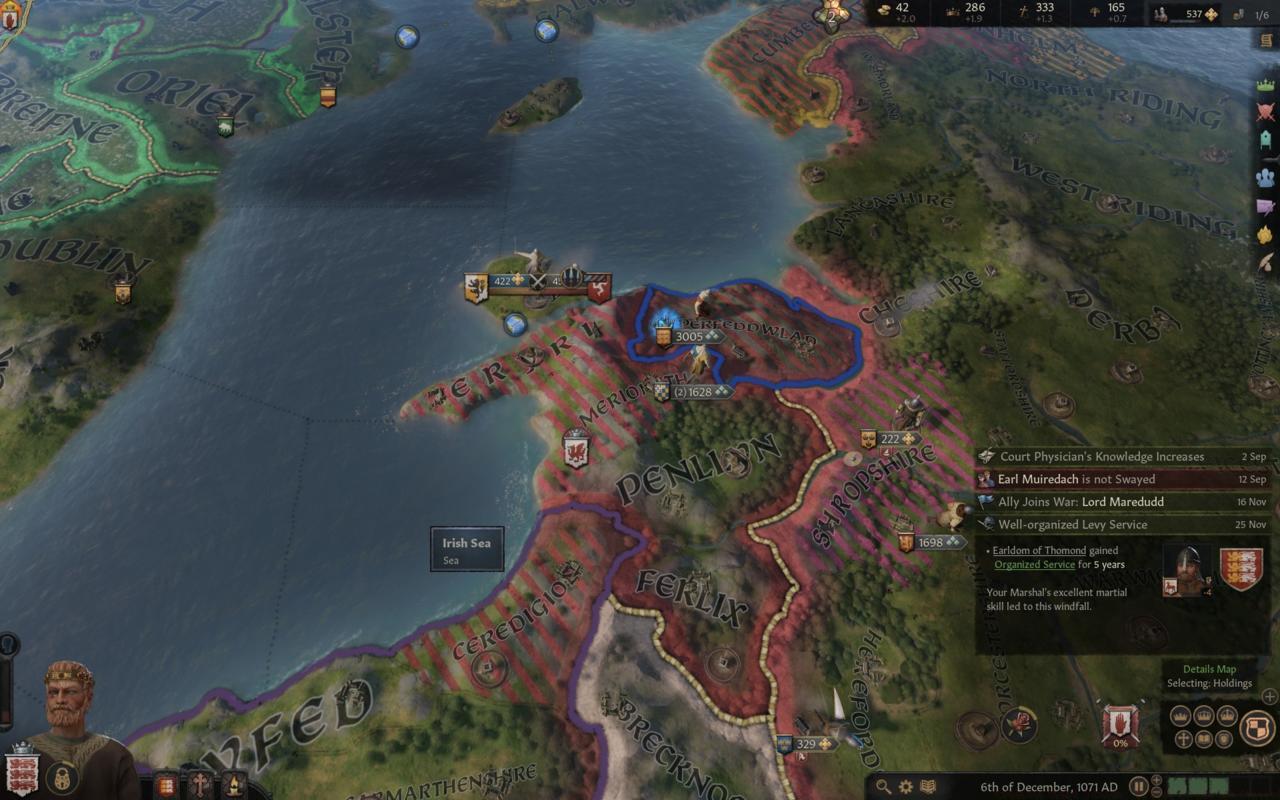
The interface element newcomers should utilize most frequently is the stained glass cross icon at the screen’s top. This activates your Issues tab, typically displaying urgent matters requiring attention. It doesn’t function as an instruction manual, quest log, or objective checklist. Don’t feel obligated to follow every suggestion. However, it provides valuable guidance, effectively nudging your attention toward important developments. I recommend consulting the Issues tab monthly to review new suggestions and seriously consider their implications. However, just because it indicates you can declare war on England doesn’t mean you should immediately initiate hostilities. For deeper understanding of military strategies, explore our BF6 combat mechanics guide for advanced tactical insights.
Many beginners struggle with understanding what constitutes meaningful gameplay progression. Unlike objective-driven games, CK3 rewards embracing emergent narratives and long-term dynasty building. Focus on strengthening your core territories through building construction, managing vassal relationships through diplomacy and marriage alliances, and preparing for succession to ensure smooth transitions between generations. The most common mistake involves overexpansion without proper consolidation, leading to vulnerable realms that collapse under internal strife or external pressure. Successful players recognize that strategic marriages often prove more valuable than military conquests, and that carefully managed internal politics create stronger foundations than rapidly acquired but poorly integrated territories.
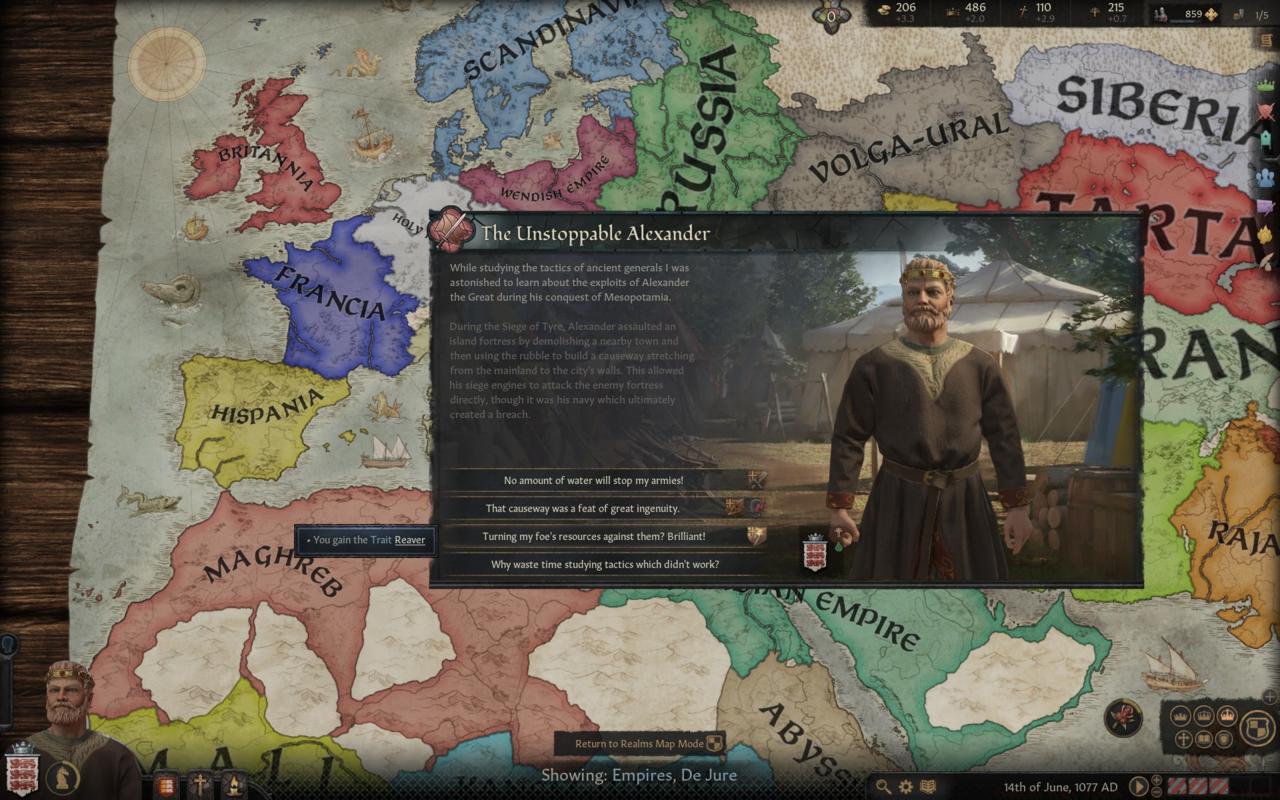
Understanding the layered hierarchy of medieval governance proves essential. As a count, you answer to a duke; as a duke, you serve a king; and as a king, you might still owe allegiance to an emperor. Each relationship tier requires different management approaches—direct control over your immediate vassals while managing relationships with both superiors and subordinates. The complexity of these relationships creates the rich storytelling potential that defines Crusader Kings 3. For comprehensive character development strategies, consult our BF6 class specialization guide for parallel skill-building approaches.
Time management represents another critical skill. Most beginners either pause too frequently (disrupting gameplay flow) or rarely pause (missing crucial developments). Develop the habit of pausing for major decisions—declaring war, arranging marriages, managing succession—while allowing time to pass for events to unfold naturally. The optimal approach involves regular brief pauses to assess situations rather than extended stoppages. This balanced approach maintains engagement while ensuring you don’t miss important opportunities or threats.
Action Checklist
- Complete the full tutorial as Petty King Murchad of Munster
- Begin your first independent campaign in Ireland using Normal difficulty
- Check Issues tab monthly and prioritize 2-3 actionable suggestions
- Practice character switching to understand different gameplay perspectives
- Focus on strengthening 2-3 core counties before territorial expansion
No reproduction without permission:SeeYouSoon Game Club » Crusader Kings 3 Guide: 11 Tips To Get You Started Essential Crusader Kings 3 beginner strategies for mastering dynasty management and medieval politics