
Mastering pump fake mechanics, timing strategies, and advanced deception techniques in College Football 26
Pump Fake Fundamentals
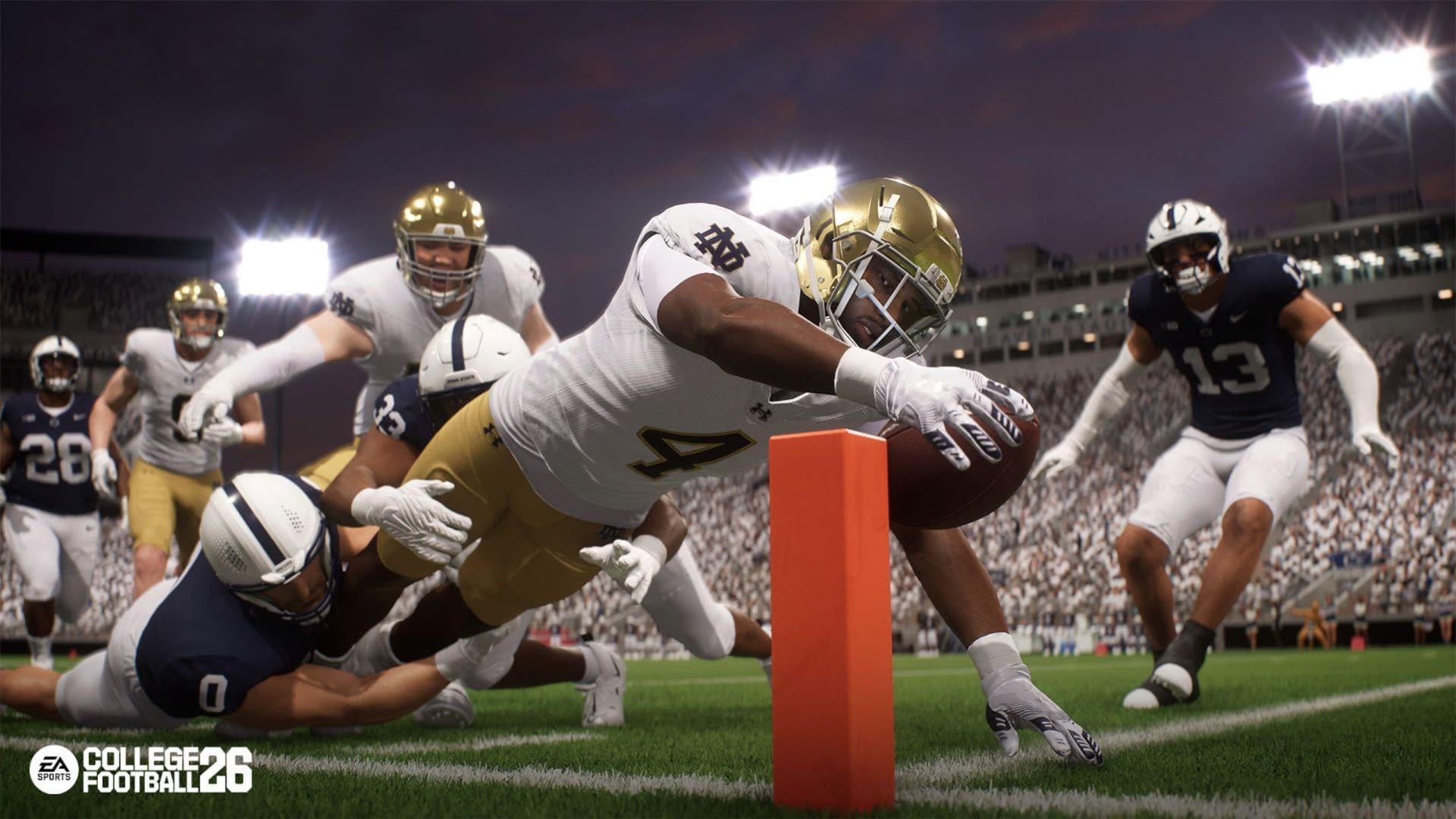
The pump fake represents a fundamental deception tool within College Football 26’s passing arsenal, designed to manipulate defensive reactions and create advantageous passing windows. This technique temporarily freezes defensive backs, disrupts coverage assignments, and generates separation for your intended targets when executed with precision.
Looking for Crossword hints & solutions? Check out latest NYT Mini Crossword Answers, LA Times Crossword Answers, and Atlantic Crossword Answers
- On Xbox: that’s A, B, X, or Y
- On PlayStation: it’s Cross, Circle, Square, or Triangle
Executing the maneuver requires double-tapping your receiver’s corresponding button while maintaining pocket presence. Your quarterback will simulate a throwing motion toward the selected receiver without releasing the football, triggering defensive reactions.
The psychological warfare element forces defenders to commit prematurely, creating temporary coverage breakdowns that savvy quarterbacks can exploit for substantial gains. This technique proves particularly effective against aggressive man coverage schemes and overzealous zone defenders.
Optimal Usage Scenarios
Read more: College Football 26 trailer release
Strategic pump fake deployment requires situational awareness and defensive recognition. These scenarios represent prime opportunities for successful deception implementation.
- Protected Pocket Situations – Only attempt pump fakes when your offensive line establishes firm protection. Against blitz packages or collapsing pockets, prioritize ball security over deception. The extra half-second required for the fake often determines between completion and sack.
- Zone Coverage Manipulation – Against zone defenses, directional fakes effectively pull defenders out of their assigned areas. Targeting the flat defender often opens intermediate crossing routes, while deep safety fakes create vertical seams for post patterns.
- Human Opponent Exploitation – Real players demonstrate significantly higher susceptibility to well-timed fakes compared to AI defenders. Establishing passing tendencies early then breaking patterns with strategic fakes capitalizes on human anticipation and reaction timing.
- Throw Cancellation Safety – When reading coverage post-snap reveals hidden defenders or closing windows, the pump fake serves as an emergency abort mechanism. This prevents disastrous interceptions while maintaining play extension possibilities.
Advanced quarterbacks develop field vision to identify these scenarios pre-snap, anticipating defensive reactions before committing to the fake.
Advanced Pump Fake Techniques
Elevating your pump fake effectiveness requires moving beyond basic execution to sophisticated defensive manipulation. These advanced approaches separate competent quarterbacks from defensive coordinators’ nightmares.
Progressive Read Development: Master reading defender leverage and body positioning. Cornerbacks playing off-coverage with outside leverage become prime fake candidates toward sideline routes, opening inside breaking patterns. Safety depth and alignment indicate vulnerability to deep shot fakes.
Route Combination Synergy: Design play calls with built-in pump fake opportunities. Flood concepts with staggered route depths create natural fake-and-redirect possibilities. Sail routes with crossing patterns underneath establish vertical stretch elements that fakes exacerbate.
Defensive Tendency Exploitation: Track opponent aggression patterns throughout games. Defenders showing consistent jump tendencies on certain route combinations become predictable targets for double-move routes initiated with convincing fakes.
Timing and Rhythm Disruption: Against timing-based defenses, well-placed fakes disrupt coverage synchronization. This proves particularly effective against pattern-match zones that rely on defender coordination and passing lane integrity.
Common Mistakes to Avoid
To make the fake pump work, follow these tips:
- Avoid Pressure Situations – Never attempt fakes with immediate defensive pressure. Pass rushers reaching throwing lanes turn deception attempts into turnover opportunities or substantial losses.
- Directional Misdirection Principles – The classic fake-left-throw-right approach remains effective, but modern variations include high-low fakes (streak then corner) and inside-out manipulations (post then out).
- Strategic Sparing Usage – Overusing pump fakes diminishes effectiveness dramatically. Incorporate as surprise elements within your offensive system rather than primary passing tools. Defenses adapt quickly to predictable deception patterns.
- Play Design Integration – Successful fakes require predetermined secondary options. Design your attack with clear primary reads and developed contingency plans for post-fake opportunities. Avoid improvisational faking without clear progression routes.
Timing Precision: Execute fakes at the exact moment defenders commit to their coverage responsibilities. Early fakes lack conviction, while late attempts miss defensive reaction windows. Practice recognizing defender transition moments for maximum impact.
Also read: Will College Football 26 feature crossplay?
Just make sure you’ve got room to pull it off, use it at the right moment, and don’t get too predictable. With a bit of practice, you’ll start seeing defenders bite and open lanes you didn’t have before
No reproduction without permission:SeeYouSoon Game Club » College Football 26: How to do a pump fake? Mastering pump fake mechanics, timing strategies, and advanced deception techniques in College Football 26