
TL;DR
- Maintain 3+ weapon types for situational combat advantage and elemental coverage
- Create specialized outfits for each environmental hazard with quick-swap functionality
- Prioritize crafting over looting for gear optimization and stat customization
- Rotate special abilities based on enemy types and combat scenarios for maximum effectiveness
- Systematically explore all biomes with glider-equipped mount for maximum loot acquisition
Biomutant presents a uniquely complex combat ecosystem where weapon mastery requires strategic foresight beyond simple damage numbers. This bizarre open-world RPG demands that players understand not just what weapons to use, but when and why specific combinations create synergistic advantages against different enemy archetypes.

Adapting your arsenal mid-combat is crucial for maintaining tactical superiority.
Early in your journey, you’ll unlock diverse combat implements ranging from precision single-handed blades to devastating two-handed crushers, complemented by ranged options including tactical pistols, area-clearing shotguns, and precision rifles. Each category features unique Wung Fu martial arts techniques that dramatically alter combat flow when properly sequenced.
Advanced players should maintain at least three distinct weapon configurations: crowd control specialists for grouped enemies, single-target eliminators for bosses, and mobility-focused tools for evasive foes. Heavy blunt weapons excel at staggering smaller aggressors, creating openings for follow-up attacks. Meanwhile, swift slashing implements allow you to exploit larger adversaries’ blind spots through rapid positioning adjustments.
Shotgun-type armaments provide exceptional area denial against clustered mobs, while single-shot rifles offer precision engagement against airborne threats or dangerous enemies requiring distance management. The most common mistake newcomers make is over-specializing in their starting class weapons, which inevitably leads to combat plateaus around the 10-hour mark.
Elemental affinities represent another critical layer of strategic depth. Fire, cold, electricity, and radiation effects interact with enemy vulnerabilities in predictable ways, allowing prepared players to exploit significant damage multipliers. Always carry weapons covering at least two different elemental damage types to circumvent resistance patterns.
Biomutant’s hazardous environments demand specialized protective gear that many players underestimate until facing catastrophic survival failures. The game’s outfit management system, though under-explained in tutorials, provides life-saving flexibility when navigating toxic, radioactive, or oxygen-deprived zones.
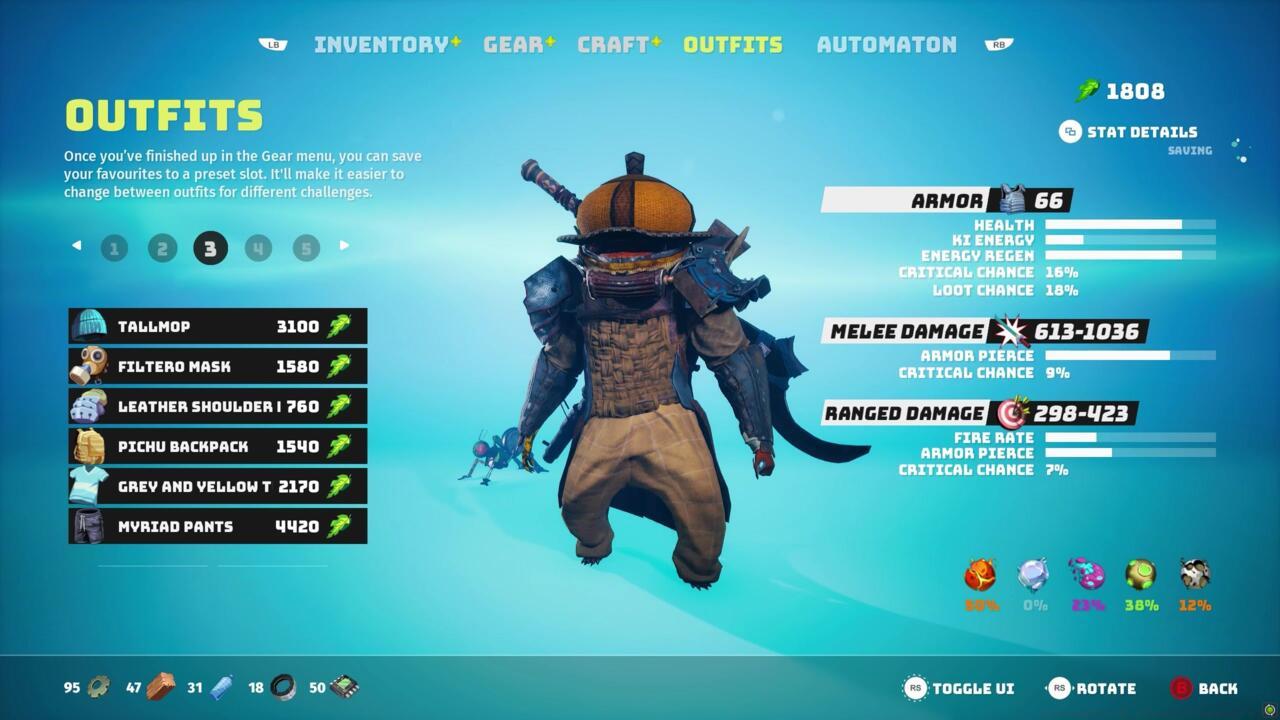
Specialized environmental gear transforms impossible zones into manageable challenges.
Create and save at least four specialized outfits: radiation shielding for nuclear zones, toxin filtration for polluted swamps, thermal insulation for frozen wastes, and oxygen systems for submerged or vacuum areas. The interface allows instant swapping between pre-configured ensembles, provided all components remain in your inventory.
Resistance stacking follows diminishing returns principles, making balanced gear combinations more effective than maxing single resistance types. Aim for 60-70% in your primary resistance with secondary coverage for unexpected environmental transitions.
A critical mistake is discarding lower-stat gear that provides crucial resistance coverage. Always maintain a ‘hazard locker’ of specialized pieces even when they underperform in combat scenarios.
Biomutant’s crafting system represents the most powerful tool for gear optimization, dramatically outperforming random loot in both statistical efficiency and build specialization potential.
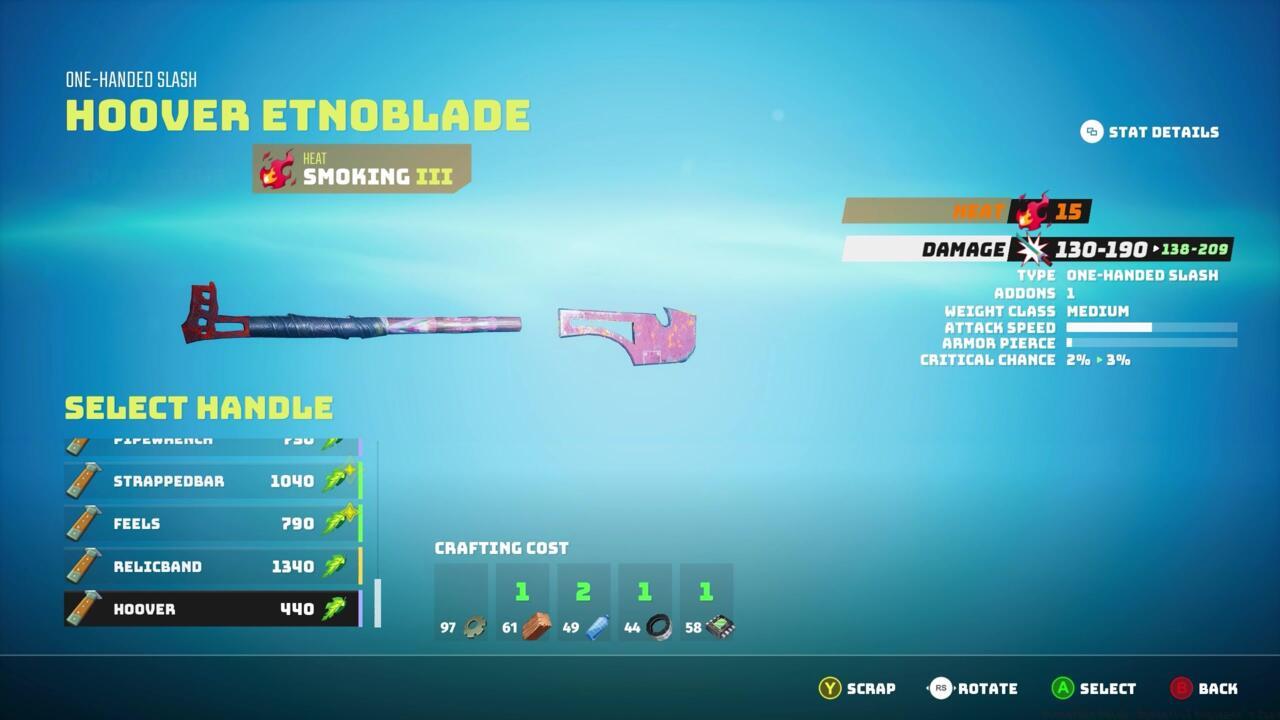
Custom-crafted weapons consistently outperform found equipment through precise stat allocation.
The weapon bench enables unprecedented customization through component mixing and matching. Base parts determine damage types and scaling, handles influence attack speed and critical chance, while add-ons provide elemental effects and special abilities.
Prioritize gathering rare components from world bosses and hidden caches rather than relying on random drops. Specific material farming routes in mid-game zones provide reliable access to upgrade components without excessive grinding.
Common crafting errors include mismatching stat scaling with your build focus and overlooking component set bonuses. Always preview the final weapon stats before committing resources to construction.
Mastering Biomutant’s combat requires understanding ability rotation patterns that maximize damage windows while maintaining defensive coverage. Unlike many action RPGs, cooldown management here determines combat effectiveness more than raw reaction speed.

Strategic ability sequencing creates combat rhythms that control engagement pacing.
Develop at least three distinct special ability loadouts: one for single-target burst damage, another for crowd control, and a third for mobility-focused encounters.
Advanced technique: Chain Wung Fu combos between weapon switches to maintain continuous pressure while abilities recharge. This advanced flow state separates competent players from masters.
Time your ability usage around enemy attack patterns rather than spamming on cooldown. Many specials include invincibility frames that can evade devastating attacks when timed precisely.
Biomutant rewards systematic exploration with game-changing upgrades and resources, but haphazard wandering often misses critical path opportunities.

Methodical area clearing reveals hidden caches and progression-critical items.
Develop a zone-by-zone clearing methodology: first complete main paths, then investigate side areas, finally scour hidden locations marked by environmental clues.
Key exploration priorities include locating crafting stations for gear upgrades, discovering fast travel points to reduce backtracking, and solving environmental puzzles that conceal premium loot.
Common exploration mistakes include progressing too quickly between regions and overlooking vertical spaces. Many valuable resources occupy elevated positions requiring advanced mobility solutions.
Biomutant’s massive world becomes significantly more manageable with proper mobility investments, particularly the glider attachment that transforms traversal efficiency.

The glider upgrade should be acquired within your first 5-7 hours of gameplay.
Prioritize obtaining the glider before tackling major zone transitions. This attachment allows bypassing hazardous terrain, accessing elevated loot, and escaping overwhelming encounters.
Mount customization extends beyond aesthetics – specific saddles and attachments provide statistical bonuses and special abilities. The speed-boosting saddle is particularly valuable for reducing travel time between objectives.
Advanced movement technique: Combine mount sprinting with dismount gliding to maintain momentum across complex terrain. This advanced movement tech significantly reduces exploration time.
Biomutant’s loot system incorporates sophisticated rarity mechanics directly influenced by your Luck statistic, making strategic stat allocation essential for gear progression.
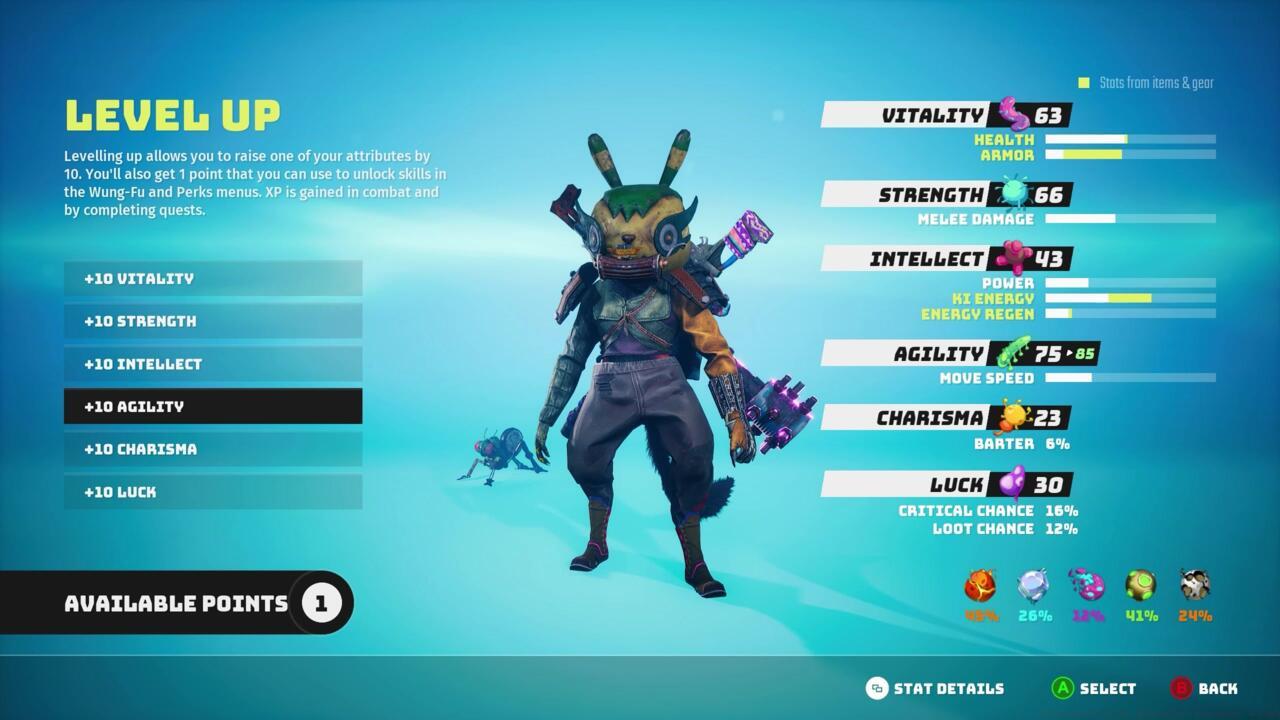
Luck investment dramatically improves both quality and quantity of discovered equipment.
Allocate 15-20 points to Luck by mid-game to ensure consistent access to rare and epic tier items. This stat affects not just drop rates but also the statistical ranges on generated gear.
The rarity hierarchy follows color-coded progression: common (white), uncommon (green), rare (blue), epic (purple), and legendary (orange).
Advanced loot strategy: Farm specific enemy types that have higher chances to drop desired equipment categories. Boss encounters typically guarantee at least rare-quality items with proper Luck investment.
Common statistical error: Over-investing in primary damage stats while neglecting Luck results in slower gear progression despite higher individual damage numbers.
Action Checklist
- Create 3+ weapon loadouts covering different combat scenarios and elemental damage types
- Build 4 specialized outfits for environmental hazards with quick-swap functionality
- Acquire glider attachment within first 7 hours of gameplay
- Allocate 15-20 points to Luck statistic by mid-game progression
- Establish systematic exploration pattern for each new zone
No reproduction without permission:SeeYouSoon Game Club » Biomutant Guide: Essential Beginner’s Tips Master Biomutant's combat and survival systems with expert strategies for loadout optimization and environmental mastery